
Palo Alto Networks CEO Calls AI Slowdown 'Unrealistic,' Pushes AI-Driven Security
Palo Alto Networks CEO Nikesh Arora has dismissed calls to slow AI development as 'unrealistic,' arguing that competitive pressures and uneven progress among developers make such proposals impractical. In a recent interview, Arora also expressed skepticism about AI posing an existential threat to humanity and launched an AI-driven security testing tool built on models from Anthropic and OpenAI.
Editor, LazyFounders
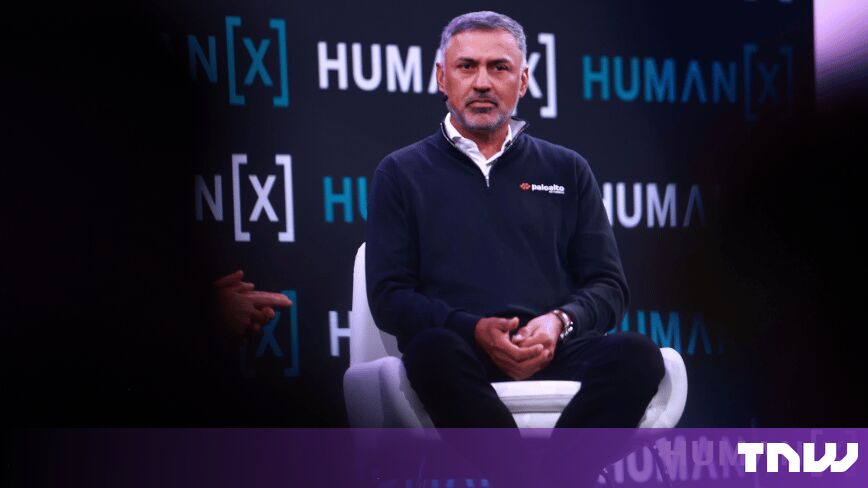

Palo Alto Networks CEO Nikesh Arora has dismissed calls to slow AI development as 'unrealistic,' arguing that competitive pressures and uneven progress among developers make such proposals impractical. In a recent interview, Arora also expressed skepticism about AI posing an existential threat to humanity and launched an AI-driven security testing tool built on models from Anthropic and OpenAI.
30 SEC SUMMARY
- Palo Alto Networks CEO Nikesh Arora labeled slowing AI development as 'unrealistic' due to uneven pacing among developers, pushing back on calls for industry-wide slowdowns.
- Arora expressed skepticism about AI posing an existential threat to humanity, calling it 'highly unlikely.'
- Palo Alto Networks launched an AI security testing tool using Anthropic’s Mythos and OpenAI’s GPT-5.6-Cyber models to identify vulnerabilities.
- Arora appointed himself as Palo Alto’s chief AI officer to drive AI adoption across the company’s 21,000 employees.
- Arora doubted US-China agreement on AI safety, citing lack of internal consensus in the US.
TABLE OF CONTENTS
- Arora calls AI slowdown 'unrealistic,' dismisses existential risks
- AI safety and global collaboration doubts
- Palo Alto Networks launches AI-driven security tool
- Context: Industry divided on AI regulation
- Developing: what is not yet confirmed
- What this means
- Key takeaways
- FAQ
- Sources
KEY HIGHLIGHTS
- Nikesh Arora, CEO of Palo Alto Networks, stated that slowing AI development is 'unrealistic' due to inconsistent pacing among developers.
- Arora expressed doubt about AI posing an existential threat to humanity, calling it 'highly unlikely.'
- Palo Alto Networks launched an AI security testing tool using Anthropic’s Mythos and OpenAI’s GPT-5.6-Cyber models.
- Arora appointed himself as the company’s chief AI officer to accelerate AI adoption across 21,000 employees.
- Arora questioned the feasibility of US-China agreement on AI safety, citing lack of internal consensus in the US.
Arora calls AI slowdown 'unrealistic,' dismisses existential risks
In an interview with CNBC, Palo Alto Networks CEO Nikesh Arora stated that slowing down AI development is 'unrealistic,' citing the uneven pace of progress among developers. He argued that competitive pressures make it impossible to enforce a unified slowdown.
Arora also dismissed concerns about AI posing an existential threat to humanity, describing such risks as 'highly unlikely.' He criticized calls for slowing AI development as a 'NINJA MOVE'—a tactic to gain regulatory sympathy and liability protection without genuine commitment to safety.
According to The Next Web, Arora suggested that some developers will inevitably 'jump the gun,' making it unsustainable to control the pace of AI advancement.
AI safety and global collaboration doubts
Arora expressed skepticism about the possibility of the US and China reaching an agreement on AI safety in the near future. He attributed this doubt to the lack of internal consensus within the US on AI safety goals and regulatory priorities.
The CEO’s stance aligns with broader industry debates about governance. While Nvidia’s Jensen Huang has publicly stated that AI products should only be released when safe, Arora’s comments suggest that enforcement of such principles remains inconsistent.
According to unverified reports cited by The Next Web, US politicians and executives have yet to align on AI safety frameworks, further complicating international collaboration.
Palo Alto Networks launches AI-driven security tool
Palo Alto Networks announced the launch of an AI security testing tool built on Anthropic’s Mythos and OpenAI’s GPT-5.6-Cyber models. The tool is designed to identify vulnerabilities in code and systems, though Arora acknowledged it may generate false positives.
The company previously used Mythos to analyze its own codebase, uncovering thousands of potential vulnerabilities. This initiative reflects a growing trend of cybersecurity firms leveraging AI to proactively address security gaps.
Arora has taken a hands-on approach to AI adoption within Palo Alto Networks, appointing himself as the company’s chief AI officer. He holds biweekly meetings with senior technical leaders to ensure AI is integrated effectively across the company’s 21,000 employees.
Context: Industry divided on AI regulation
The debate over AI safety and regulation has intensified in recent years, with high-profile figures like Anthropic’s Dario Amodei, OpenAI’s Sam Altman, and Google DeepMind’s Demis Hassabis publicly advocating for caution in AI development. Some have even suggested that AI poses a significant risk to humanity, with one unverified report claiming an Anthropic researcher estimated a 10% chance of AI wiping out humanity.
Others in the industry, including Arora, push back on these concerns, arguing that progress is inevitable and that the focus should be on responsible deployment rather than slowdowns. This divide highlights the complexity of balancing innovation with safety in a rapidly evolving field.
Developing: what is not yet confirmed
The following is reported but has not been independently confirmed.
Several claims about AI safety and industry dynamics remain unverified. For instance, The Next Web reported that an Anthropic researcher suggested AI has a 10% chance of causing human extinction, though this claim has not been confirmed.
It was also reported that Dario Amodei, Sam Altman, Elon Musk, and Demis Hassabis have backed calls to slow AI development, but these claims lack independent verification.
Arora’s criticism of AI firms seeking regulatory sympathy and liability protection is similarly unverified, as is his assertion that some developers will 'jump the gun' in releasing AI products.
The feasibility of a US-China agreement on AI safety, as well as the US’s internal lack of consensus on the issue, are also based on unverified reports.
What this means
LazyFounders analysis — our interpretation, not reported fact.
Arora’s stance reflects a pragmatic, operator-focused perspective on AI development. His skepticism about slowing AI or its existential risks isn’t just rhetoric—it signals a belief that innovation will outpace regulation, and companies must prepare for that reality. For founders and operators, this underscores the importance of building with AI, not just for it. Palo Alto’s push into AI-driven security testing also highlights a growing trend: cybersecurity is no longer just about defending against threats but proactively using AI to expose vulnerabilities.
The skepticism around US-China collaboration on AI safety is particularly notable. If even industry leaders doubt governments can align on regulation, startups may need to prioritize self-governance and internal safety frameworks. Arora’s dual role as CEO and chief AI officer also sends a message: AI adoption isn’t just a technical challenge—it’s a leadership one.
Key takeaways
- Slowing AI development is seen as unrealistic by some industry leaders due to competitive pressures and uneven progress among developers.
- AI-driven security tools are becoming critical for identifying vulnerabilities, with Palo Alto Networks leveraging models from Anthropic and OpenAI.
- Internal consensus on AI safety and regulation remains elusive, even within the US, complicating global agreements.
- Leaders like Arora and Nvidia’s Jensen Huang agree that AI products should only be released when deemed safe, but enforcement of this principle varies.
- Self-appointed AI leadership roles, like Arora’s, highlight the need for top-down commitment to AI adoption in large organizations.
FAQ
Why does Nikesh Arora believe slowing AI development is unrealistic?
Arora argues that the uneven pace of AI development among companies and developers makes it impossible to enforce a unified slowdown. He believes competitive pressures will lead some to 'jump the gun,' rendering such efforts ineffective.
What AI models is Palo Alto Networks using for its security testing tool?
The company’s AI security testing tool is built on Anthropic’s Mythos and OpenAI’s GPT-5.6-Cyber models.
What are Arora’s views on AI posing an existential threat to humanity?
Arora has described the likelihood of AI wiping out humanity as 'highly unlikely' and has pushed back against what he sees as alarmist narratives.
Why does Arora doubt US-China collaboration on AI safety?
Arora cited the lack of internal consensus within the US on AI safety goals as a major obstacle to reaching an agreement with China.
What role has Arora taken on at Palo Alto Networks regarding AI?
Arora has appointed himself as the company’s chief AI officer to drive AI adoption and integration across its workforce.
Related on LazyFounders
Sources
- The Next Web · 2026-09-25
Palo Alto’s Nikesh Arora tells CNBC that slowing AI down is ‘unrealistic’
This story is an original summary drafted with AI by LazyFounders from the reporting listed above and checked by automated validation. Facts are attributed to their original publishers; sections marked as analysis are LazyFounders's. Where a source is in another language, facts were machine-translated and quotations are reported, not reproduced. Read the original coverage via the links, and see our AI policy and corrections policy.
Get the LazyFounder Brief
Startup, funding and AI news in a five-minute read. Join the early-access list.