
Hexalog's Revolution in Cross-Border Logistics for Indian MSMEs in 2026
Discover how Hexalog is transforming cross-border logistics for Indian MSMEs in 2026, focusing on coordination and efficiency over speed.
LazyFounders

30 SEC SUMMARY
In 2026, Hexalog is revolutionizing cross-border logistics for Indian MSMEs by emphasizing coordination and efficiency over speed. The startup simplifies international expansion, offering enterprise-grade logistics orchestration to help businesses compete globally.
TABLE OF CONTENTS
INTRODUCTION
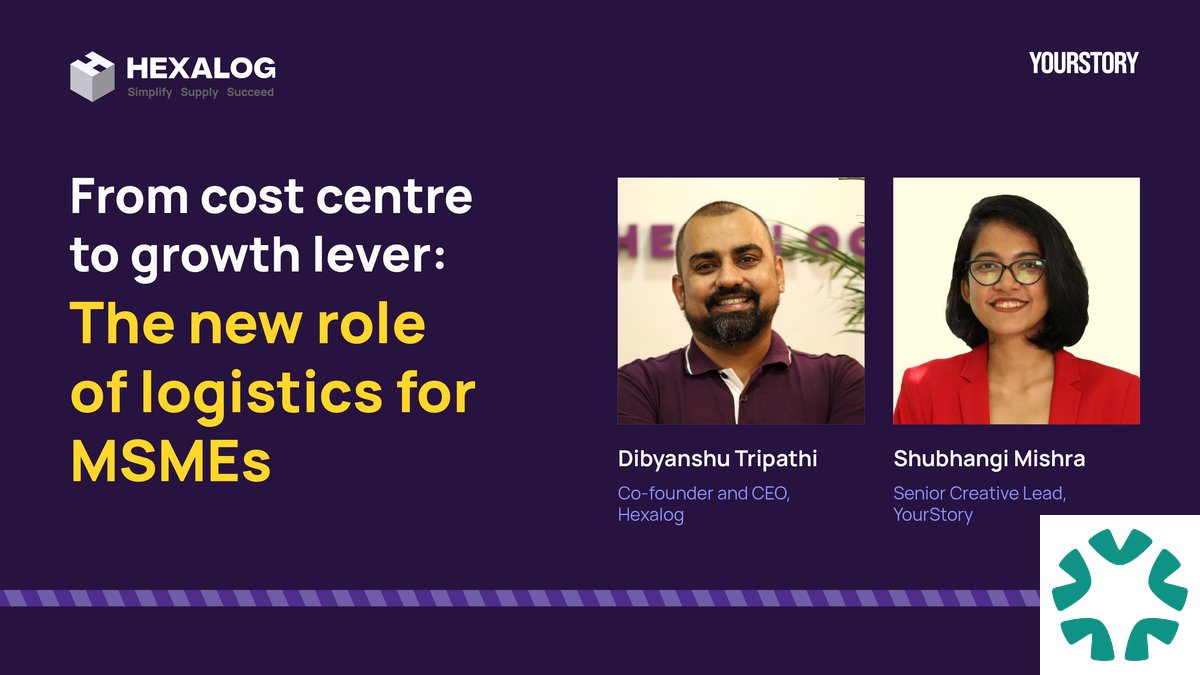
In 2026, the Indian ecommerce boom has transformed logistics from a backend function into a business differentiator. As Direct-to-Consumer (D2C) brands and Micro, Small, and Medium Enterprises (MSMEs) expand beyond their home markets, supply chains influence customer experience, inventory management, working capital, and international growth. Dibyanshu Tripathi, Co-founder and CEO of Hexalog, reflects on this shift and how it has reshaped logistics.
HEXALOG’S JOURNEY
Tripathi entered the logistics industry in 2017 when India's ecommerce ecosystem processed nearly five million orders. Over the next seven years, this number grew fourfold. As businesses began serving customers across geographies, logistics evolved from an operational function into a key part of how brands scale and serve customers.
Today, Hexalog helps D2C brands and MSMEs navigate cross-border commerce with enterprise-grade logistics orchestration, allowing businesses to focus on building products while Hexalog manages the operational complexity behind global trade.
THE SHIFT IN LOGISTICS
From a Google Sheet to global supply chains, Hexalog’s founders spotted an opportunity as ecommerce matured. Manufacturing hubs were emerging in places not traditionally associated with production, while Indian sellers increasingly sourced products from countries such as China, Vietnam, and Thailand before selling them on online marketplaces.
The founding team, Dibyanshu Tripathi, Utkarsh Tripathi, Vineet Malik, and Shobhit Singh, brought together expertise across customs compliance, international operations, product development, and sales.
Rather than building technology first, they chose to understand customer operations.
SIMPLIFYING CROSS-BORDER LOGISTICS
For many MSMEs, expanding internationally is often less about product quality and more about navigating operational complexity. While founders know how to build and market their products, selling across borders means dealing with customs authorities, compliance agencies, freight operators, warehouse partners, and last-mile delivery providers.
According to Tripathi, this lack of operational visibility discourages many businesses from expanding globally. “Suddenly, from a product know-how, MSMEs have to move to an operational know-how.”
Hexalog's approach is to simplify that process. Instead of expecting founders to understand customs regulations, indirect taxation, certifications, and documentation, the company positions itself as a supply chain partner.
ONE CONNECTED SUPPLY CHAIN
Tripathi believes one of the biggest misconceptions about cross-border logistics is that success depends on choosing the right freight company or customs agent. In reality, he says, logistics is only as strong as the coordination between every participant in the supply chain.
A shipment may pass through first-mile operators, customs house agents, freight forwarders, destination partners, and last-mile delivery providers. Even when each performs well individually, poor coordination between them can lead to delays, longer inventory cycles, and a weaker customer experience.
Hexalog focuses on orchestrating the entire journey rather than managing individual parts of it. Its philosophy of taking products “from factory floor to customer's door” extends beyond transportation to managing the complete customer journey.
WORKING CAPITAL AS A GROWTH LEVER
Tripathi believes one of the most important metrics lies elsewhere: working capital. He argues that efficient supply chains improve working capital by reducing the time inventory spends in transit or sitting idle. That allows businesses to reinvest capital more quickly and scale sustainably.
Faster inventory turns, he says, are more than a financial metric. They also reflect healthy demand and efficient operations. Rather than viewing logistics purely as an expense, founders should see it as a business function that can improve profitability, support growth, and strengthen the business over the long term.
HEXALOG’S UNIQUE APPROACH
One of the company's key innovations is its Value Add Center, where products undergo quality inspection before leaving the country of origin. This helps identify defective products before they reach India or overseas markets, reducing reverse logistics costs and avoiding delays.
The company also helps brands calculate true landed costs by factoring in freight, insurance, compliance costs, and import duties instead of evaluating sourcing decisions based only on manufacturing costs. Unlike traditional logistics providers that manage individual stages of transportation, Hexalog oversees the complete workflow, aiming to maintain consistent service levels across every stage.
Its asset-light operating model is central to that approach. Rather than owning warehouses or transportation assets, the company relies on existing infrastructure while retaining accountability for customer experience and service delivery.
FAQs
What services does Hexalog offer?
Hexalog offers enterprise-grade logistics orchestration for D2C brands and MSMEs, focusing on cross-border logistics, customs compliance, and supply chain coordination.
How does Hexalog help businesses expand internationally?
Hexalog simplifies the complexities of international expansion by managing the entire supply chain journey, from factory pickup to international delivery, allowing businesses to focus on product development and customer acquisition.
Why is coordination important in logistics?
Coordination between all participants in the supply chain is crucial for maintaining consistent service levels, reducing delays, and ensuring a smooth customer experience.
CONCLUSION
In 2026, Hexalog continues to revolutionize cross-border logistics for Indian MSMEs by emphasizing coordination and efficiency over speed. By simplifying international expansion and bringing better coordination across the supply chain, Hexalog aims to help MSMEs and emerging brands expand internationally with greater confidence.
CALL-TO-ACTION
Discover more about Hexalog’s solutions and how they can help your business thrive in the global market by visiting blogy.in.
Sources
This story is an original summary and analysis written by LazyFounders from the reporting listed above. Facts are attributed to their original publishers; sections marked as analysis are LazyFounders's opinion. Where a source is in another language, facts were machine-translated and quotations are reported, not reproduced. Read the original coverage via the links.
