
Handloom Revival: India's Looms in 2026
Explore India's handloom revival in 2026. Discover the economic challenges, policy interventions, and future prospects for India's handloom industry.
LazyFounders

30 SEC SUMMARY
In 2026, India celebrates its handloom heritage, yet the economic challenges persist. Despite producing 95% of the world's handloom products, weavers face shrinking income and limited work days. This article delves into policy interventions, market dynamics, and future prospects for India's handloom industry.
TABLE OF CONTENTS
- Introduction
- The Economic Landscape
- Gender Dynamics in Handloom
- The Role of Intermediaries
- Certification and Branding
- Digital Marketplaces
- Government Interventions
- Scaling Success
- Turning Service Centres into Commercial Hubs
- Financing the Order
- Measuring Outcomes
- Future Prospects
- Conclusion
- Call-to-Action
KEY HIGHLIGHTS
- India produces nearly 95% of the world's handloom products.
- Despite this, handloom exports constitute only 0.42% of the total textile exports.
- Women constitute 72.29% of the handloom workforce.
- Government interventions have shown positive outcomes in productivity and earnings.
- The focus should shift from beneficiaries to income metrics.
Introduction
India's handloom industry is a testament to its rich cultural heritage and traditional craftsmanship. However, the economic sustainability of this sector remains a challenge. This article explores the current state of India's handloom industry in 2026, the economic hurdles, and potential policy interventions to ensure its revival and prosperity.
The Economic Landscape
In 2026, India continues to be the global hub for handloom products, with nearly 95% of the world's handloom products made in the country. The Union Textiles Minister revealed that around 35.22 lakh weavers and allied workers and over 28 lakh looms are engaged in this sector. However, the economic position of these weavers is far from prosperous.
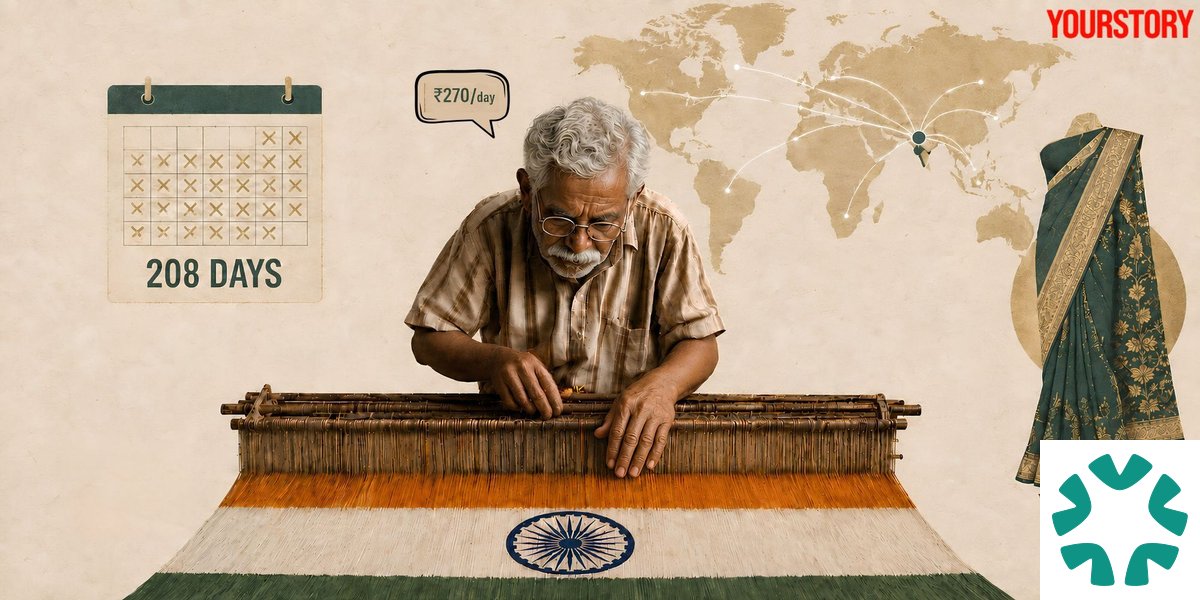
The contrast between the retail price of a handcrafted Kanjeevaram sari and the average daily earnings of a weaver highlights the economic disparity. While a sari can retail for ₹30,000 or more, the average value added per worker per month is roughly ₹7,000, translating to about ₹270 a day.
Gender Dynamics in Handloom
Women make up 72.29% of India’s handloom workforce, underscoring the gender dynamics in this sector. Despite their significant contribution, a specific study on women weavers’ incomes and working conditions has not been conducted by the Ministry of Textiles. This oversight highlights the need for gender-disaggregated data to understand and address the economic challenges faced by women weavers.
The Role of Intermediaries
Intermediaries play a crucial role in the handloom supply chain, managing functions such as yarn procurement, design distribution, quality control, and market risk absorption. Removing intermediaries without replacing these functions would leave weavers worse off. The real issue lies in the imbalance of information and bargaining power between weavers and intermediaries.
Certification and Branding
India has attempted to address the authenticity issue through certification programs like the Handloom Mark and the India Handloom Brand. While these initiatives have set standards, they need to generate buyer confidence, higher prices, and repeat orders for certified producers.
Digital Marketplaces
Digital platforms have expanded the geographic reach of handloom products. However, the growth in sales does not necessarily translate to increased income for individual weavers. The seller of record is often a cooperative or aggregator, and platform metrics rarely disclose net payouts after commissions and other deductions.
Government Interventions
The Ministry of Textiles has implemented various interventions to boost the handloom sector. These include providing electronic jacquards, workshed support, and Weaver MUDRA loans. The reported outcomes include a 55% increase in daily production and a 56% rise in daily wages.
Scaling Success
While these interventions have shown positive results, they have reached a small fraction of the total workforce. The challenge lies in scaling these successful initiatives to benefit the remaining 99% of weavers. The current scheme cycle provides an opportunity to benchmark future efforts against the metrics the Ministry has demonstrated it can produce.
Turning Service Centres into Commercial Hubs
India has 29 Weaver Service Centres and a network of Indian Institutes of Handloom Technology. These centers possess technical expertise in CAD design, dyeing, and loom improvement. By adopting specific cluster hubs and engaging in product development and marketing, these centers can become accountable commercial bridges between public investment and actual order flow.
Financing the Order
The financing problem in the handloom sector begins before a piece of cloth reaches the customer. A confirmed order does not guarantee financial stability for weavers, who often depend on advances for yarn, dyes, and wages. Backend cluster infrastructure, such as purchase order financing against confirmed brand orders, can alleviate this dependence.
Measuring Outcomes
The infrastructure for a more commercially accountable handloom economy is in place, including handloom producer companies, Weaver Service Centres, and a government e-commerce channel. The next step is to connect these systems around outcomes rather than beneficiaries. A scorecard should be developed to measure changes in annual income, paid weaving days, repeat orders, and payment timelines, with a focus on gender-disaggregated data.
Future Prospects
The Textiles Minister has set ambitious targets for the handloom sector, including raising weavers' annual income to ₹5 lakh and achieving $10 billion in exports by 2031. To reach these goals, weavers need to capture more value from their products. This requires a shift in focus from selling the same cloth at the same price to capturing a larger share of the cloth's worth.
Conclusion
India's handloom industry holds immense potential, but economic sustainability remains a challenge. By addressing the economic hurdles, scaling successful interventions, and measuring outcomes, India can ensure that weaving remains a viable and prosperous career for future generations.
Call-to-Action
For more insights into India's handloom industry and its future prospects, visit blogy.in.
Sources
This story is an original summary and analysis written by LazyFounders from the reporting listed above. Facts are attributed to their original publishers; sections marked as analysis are LazyFounders's opinion. Where a source is in another language, facts were machine-translated and quotations are reported, not reproduced. Read the original coverage via the links.