
Electric Scooter Battery Recycling: India's Path to Self-Reliance in Critical Minerals
Explore how India can turn electric scooter battery waste into a treasure trove of critical minerals, reducing import dependence and boosting domestic industries by 2032.
LazyFounders
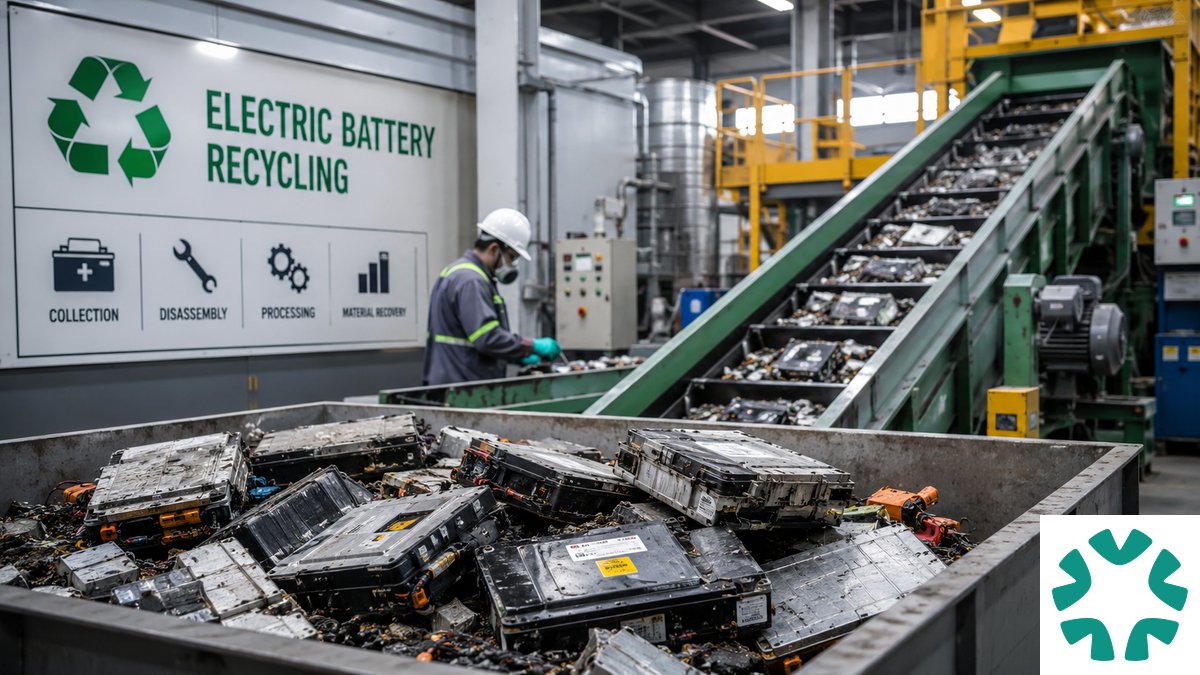

Electric Scooter Battery Recycling: India's Path to Self-Reliance in Critical Minerals
30 SEC SUMMARY
Discover how India can transform electric scooter battery waste into a valuable source of critical minerals, driving self-reliance and economic growth by 2032. This shift not only reduces import dependence but also strengthens domestic industries.
TABLE OF CONTENTS
- Introduction
- The Value in Waste
- The Recycling Process
- Economic and Industrial Implications
- Challenges and Solutions
- Conclusion
- FAQs
KEY HIGHLIGHTS
- India aims for 30 million EV sales by 2032.
- Recycling can yield significant quantities of lithium, nickel, cobalt, and graphite.
- A circular battery economy offers a $9 billion market opportunity.
- Extended Producer Responsibility (EPR) is crucial for effective recycling.
- Chemistry-specific incentives are needed for economically viable recycling.
Introduction
Electric scooters are revolutionizing daily commutes, but their batteries face a critical phase after five years. When the State of Health drops below 70%, most discard them. However, the industry sees a treasure trove of critical minerals. This transformation marks the beginning of a monumental industrial transition.
The Value in Waste
End-of-life lithium-ion batteries contain materials essential for the next generation of energy storage. By 2032, India's EV segment alone is expected to generate approximately 128 GWh of battery waste (NITI Aayog and Green Growth Equity Fund Technical Cooperation Facility, 2022). This waste can yield 17,500 tonnes of lithium, 22,600 tonnes of nickel, 2,600 tonnes of cobalt, and 141,800 tonnes of graphite (WRI India, Battery Recycling in India, 2022). For a country with limited domestic reserves, extracting these minerals is a macroeconomic necessity.
The Recycling Process
Recovering critical minerals from batteries is a sophisticated process. Each battery pack varies in chemistry, design, physical condition, and remaining charge, making safe handling the first engineering challenge. After controlled discharge, batteries are mechanically dismantled and shredded in a controlled environment to separate plastics, copper, and aluminum foils. The resultant output from the shredding process is a dark fine powder known as “black mass”, which contains concentrated active metals that drive the energy transition. Advanced refining techniques can extract lithium, nickel, cobalt, and graphite as metal or salts, with a recovery efficiency of over 90%.
Economic and Industrial Implications
A circular battery economy represents a $9 billion market opportunity for India (Rocky Mountain Institute report). By 2050, a robust domestic recycling infrastructure could supply over 40% of the nation's lithium, nickel, and cobalt needs, insulating manufacturing from volatile global commodity markets. Domestic refining retains value within the country’s own manufacturing ecosystem and strengthens battery, chemical, and advanced materials industries.
Challenges and Solutions
Operating a recycling facility requires more than just metallurgy; it also demands efficient process design. Technologies with multiple chemical extraction stages increase reagent consumption, waste generation, and operating costs. Lithium Iron Phosphate (LFP) batteries, preferred for their safety and longevity, present a commercial challenge due to their low metal content. Unlike Nickel Manganese Cobalt (NMC) batteries, LFPs contain zero nickel and cobalt, making their processing economically unviable at current commodity prices. To save LFP packs from becoming a stranded asset, the industry requires Viability Gap Funding (VGF) or differentiated, chemistry-specific incentives tailored to make the processing of low-value chemistries financially sustainable.
Conclusion
Securing feedstock is a significant hurdle, with an estimated 70% to 90% of India's battery waste disappearing into the unregulated informal sector, causing environmental damage and massive material loss. The Battery Waste Management Rules (BWMR) 2022 introduced the Extended Producer Responsibility (EPR) to direct waste to recyclers, but enforcement remains critical. Enabling traceability across a battery’s lifecycle ensures batteries remain within the formal circular economy. Ultimately, the transition of battery waste into strategic resources is the defining industrial challenge of the electric mobility era. By scaling advanced refining, supporting economically challenging chemistries like LFP, and strengthening EPR enforcement and battery traceability, battery recycling will transform into a strategic industrial capability.
FAQs
What is the significance of recycling electric scooter batteries?
Recycling electric scooter batteries is significant as it transforms waste into valuable critical minerals, reducing import dependence and boosting domestic industries.
How does recycling contribute to India's economic growth?
Recycling contributes to India's economic growth by creating a $9 billion market opportunity and insulating manufacturing from volatile global commodity markets.
What challenges does the recycling industry face?
The recycling industry faces challenges such as inefficient process designs, economic viability of low-value chemistries, and securing feedstock from the informal sector.
Call-to-Action
For more insights on India's industrial transition and recycling advancements, visit blogy.in.
Sources
- yourstory.com
Turning battery waste into strategic resources: The next opportunity for Indian industry
This story is an original summary and analysis written by LazyFounders from the reporting listed above. Facts are attributed to their original publishers; sections marked as analysis are LazyFounders's opinion. Where a source is in another language, facts were machine-translated and quotations are reported, not reproduced. Read the original coverage via the links.