
Deepak Dhar Wins 2026 Dirac Medal: A Milestone for Indian Physics
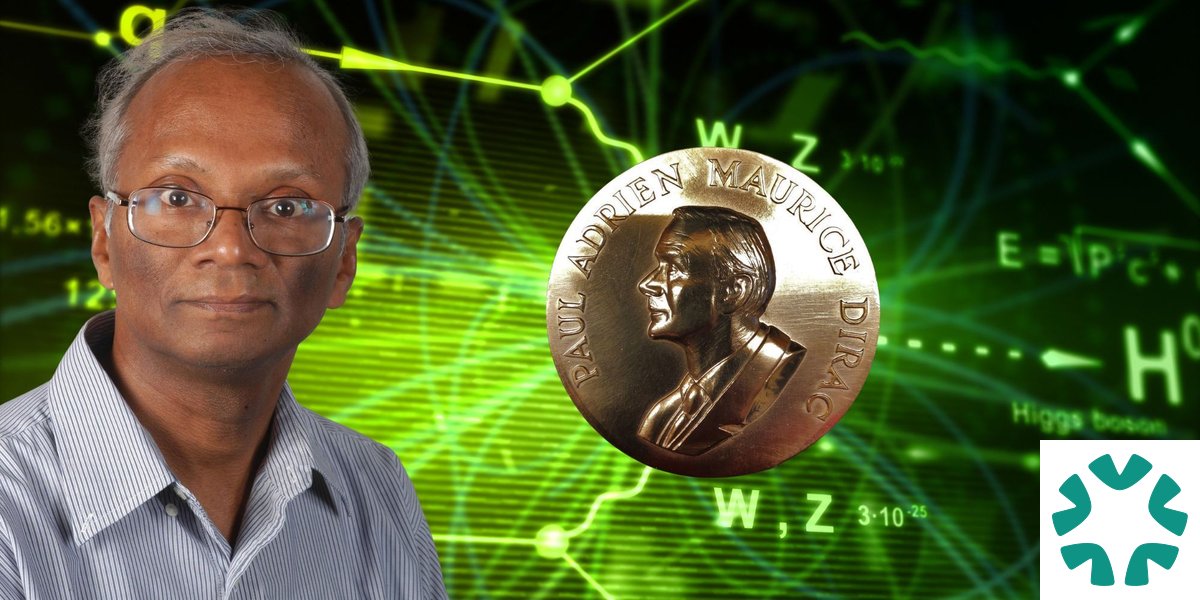
Deepak Dhar, INSA Distinguished Professor, wins the 2026 Dirac Medal for pioneering work in statistical mechanics and complex systems. This milestone highlights India's role in global theoretical physics.
LazyFounders

30 SEC SUMMARY
Deepak Dhar, INSA Distinguished Professor at ICTS-TIFR, has been awarded the prestigious 2026 Dirac Medal by ICTP for his groundbreaking contributions to statistical mechanics and complex systems. This recognition underscores his work connecting physics with optimization, theoretical neuroscience, and artificial intelligence, marking a significant achievement for Indian theoretical physics.
TABLE OF CONTENTS
KEY HIGHLIGHTS
- Deepak Dhar awarded the 2026 Dirac Medal
- Pioneering work in statistical mechanics and complex systems
- Recognized for contributions to optimization, neuroscience, and AI
- Second Indian scientist to receive the Dirac Medal
- Highlights India’s role in global theoretical physics
Introduction
In a significant achievement for Indian theoretical physics, Deepak Dhar, INSA Distinguished Professor at the International Centre for Theoretical Sciences (ICTS-TIFR), has been awarded the 2026 Dirac Medal by the International Centre for Theoretical Physics (ICTP). This prestigious honour recognizes his pioneering contributions to statistical mechanics and complex systems, including work connecting physics with optimization, theoretical neuroscience, and artificial intelligence.
About the Dirac Medal
The Dirac Medal, first presented in 1985 in honour of British physicist Paul Dirac, is awarded annually to scientists who have made significant contributions to theoretical physics. It was announced on 10 August 2026 by ICTP. Dhar shares this award with Bernard Derrida, Marc Mézard, and Haim Sompolinsky, three internationally recognized researchers whose work has also shaped modern statistical physics.
Deepak Dhar’s Contributions
Deepak Dhar’s research has significantly advanced our understanding of how simple rules can produce complex behaviour in large systems. One of his best-known contributions is his work on the mathematical structure of the sandpile model, which became an important example of self-organised criticality.
Imagine a pile of sand. Adding grains one at a time may produce no visible change for a while. But once the pile reaches a critical state, one additional grain can trigger a much larger avalanche. This type of behaviour appears in many complex systems, where small changes can sometimes produce disproportionately large effects.
Cross-Disciplinary Impact
Dhar’s work extends beyond traditional physics. Statistical mechanics provides mathematical tools for understanding systems made up of many interacting parts. Over time, researchers have applied similar ideas to areas such as computer science, biology, optimization, and neuroscience.
ICTP Director Atish Dabholkar emphasized that the work of the 2026 medallists has helped establish statistical mechanics as a framework for addressing questions well beyond its traditional boundaries, including in biology, computer science, and AI.
Recognitions and Honors
The Dirac Medal adds to Deepak Dhar’s long list of honours. In 2022, he became the first Indian recipient of the Boltzmann Medal, one of the major international awards in statistical physics. He was also awarded the Padma Bhushan in 2023.
His recognition has highlighted the role of India’s theoretical physics community in global research. ICTS Director Rajesh Gopakumar described the award as a matter of pride for both ICTS and India, noting that many previous Dirac medallists have gone on to receive the Nobel Prize.
Why the Dirac Medal Matters
The Dirac Medal is more than a recognition of a single research result. It honours work that has significantly expanded the understanding of theoretical physics. Dhar’s 2026 award reflects how statistical mechanics has evolved into a broader toolkit for studying complex systems. From avalanches in physical models to optimization and AI, the same mathematical ideas can help researchers understand how large systems behave.
For India, the award puts another spotlight on the country’s contribution to fundamental science and reinforces Bengaluru’s growing role as a centre for theoretical research.
Conclusion
Deepak Dhar’s receipt of the 2026 Dirac Medal is a testament to his pioneering contributions to theoretical physics and complex systems. This recognition not only highlights his individual achievements but also underscores the growing influence of Indian theoretical physics on the global stage.
FAQ Section
What is the Dirac Medal?
The Dirac Medal is an annual award given by the International Centre for Theoretical Physics (ICTP) to scientists who have made significant contributions to theoretical physics.
Why is the Dirac Medal important?
The Dirac Medal honours work that has significantly expanded the understanding of theoretical physics and its applications to other fields such as biology, computer science, and AI.
What other awards has Deepak Dhar received?
Deepak Dhar received the Boltzmann Medal in 2022 and the Padma Bhushan in 2023.
Call-to-Action
Explore more about theoretical physics and its global impact on blogy.in. Dive deeper into the fascinating world of complex systems and statistical mechanics.
Sources
This story is an original summary and analysis written by LazyFounders from the reporting listed above. Facts are attributed to their original publishers; sections marked as analysis are LazyFounders's opinion. Where a source is in another language, facts were machine-translated and quotations are reported, not reproduced. Read the original coverage via the links.