
Aule Space's Innovative Satellite 'Jetpack' to Extend Satellite Lifespan
Discover how Aule Space's innovative 'jetpack satellite' aims to extend the lifespan of geostationary satellites, saving billions and reducing launch costs in 2026.
LazyFounders

Aule Space's Innovative Satellite 'Jetpack' to Extend Satellite Lifespan
30 SEC SUMMARY
Aule Space, a Bengaluru-based deep-tech startup, is pioneering a revolutionary 'jetpack satellite' technology to extend the operational life of geostationary satellites. This innovation aims to save billions by avoiding costly new satellite launches, targeting a market expected to reach $5.5 billion by 2030.
TABLE OF CONTENTS
- Introduction
- The Problem Aule Space Aims to Solve
- Aule Space's Technology and Achievements
- Competitive Landscape
- Future Plans and Goals
- FAQs
- Conclusion
- Call-to-Action
Introduction
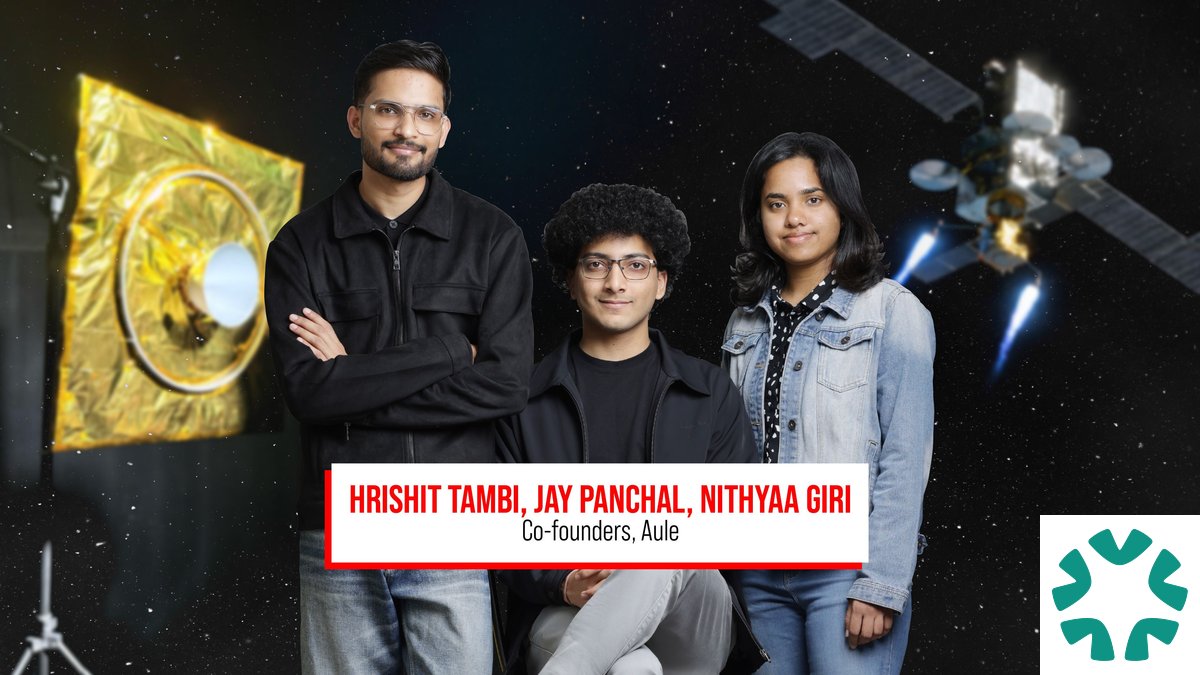
Imagine driving a car that runs out of fuel just as you reach your destination. It’s frustrating and inconvenient. Jay Panchal, co-founder and CEO of Aule Space, asks a similar question about satellites. Many geostationary satellites, worth over $100 billion, are retired simply because they run out of fuel. Panchal and his team aim to solve this problem with a novel 'jetpack satellite' technology.
The Problem Aule Space Aims to Solve
Panchal explains that extending the operational life of satellites avoids launching new ones, which can cost hundreds of millions of dollars. Aule Space's 'jetpack satellite' docks with fuel-depleted satellites and provides propulsion using its own fuel, allowing the satellite to continue operating for several more years.
Aule Space's Technology and Achievements
Aule Space, founded barely a year ago, has already validated its technology at ISRO’s facilities and reached Technology Readiness Level (TRL) 6. This technology is expected to reach TRL 9 next year, indicating readiness for commercial deployment. The company raised $2 million in a pre-seed funding round led by pi Ventures and is also backed by the Transpose Platform.
Competitive Landscape
The only other company that has demonstrated docking in the past is Northrop Grumman, an American aerospace and defence technology firm. However, Aule Space aims to achieve similar capabilities at a much lower cost, targeting roughly twenty times less expense compared to previous missions.
Future Plans and Goals
Aule Space targets extending the lifespan of communication satellites by approximately five years. The on-orbit satellite servicing market is expected to reach about $5.5 billion by 2030, growing at around 10–11% CAGR. The company’s goal is to distribute the operational life of the servicing spacecraft across multiple customer satellites.
FAQs
What is Aule Space's 'jetpack satellite'?
Aule Space's 'jetpack satellite' is a spacecraft that docks with a fuel-depleted satellite and provides propulsion using its own fuel, extending the satellite's operational life.
How does Aule Space plan to achieve docking with existing satellites?
Aule Space is developing vision-based systems using cameras to understand the satellite’s position and orientation, instead of relying on expensive LiDARs or radars.
What are Aule Space's future goals?
Aule Space aims to expand into extraterrestrial robotics and asteroid mining by 2050, starting with satellite servicing as the first application.
Conclusion
Aule Space is at the forefront of satellite servicing technology, aiming to revolutionize the way we extend the life of geostationary satellites. By achieving this at a significantly lower cost, the company is poised to make a substantial impact on the space industry in 2026 and beyond.
Call-to-Action
Discover more about the future of satellite servicing and how Aule Space is leading the way at blogy.in.
Sources
This story is an original summary and analysis written by LazyFounders from the reporting listed above. Facts are attributed to their original publishers; sections marked as analysis are LazyFounders's opinion. Where a source is in another language, facts were machine-translated and quotations are reported, not reproduced. Read the original coverage via the links.
