Alibaba and Meta Lead Open-Weight AI Models for Local Use in 2026
Discover how Alibaba and Meta are pioneering open-weight AI models for local use in 2026, signaling a shift towards decentralized AI. Learn about the benefits and limitations of running AI locally.
LazyFounders
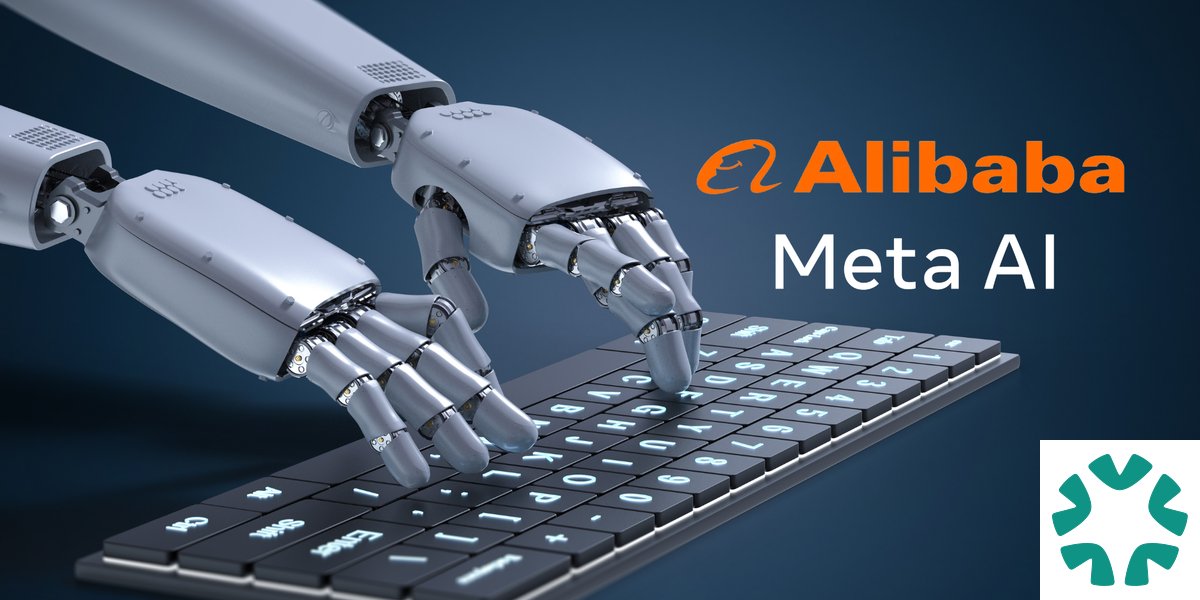

Alibaba and Meta Lead Open-Weight AI Models for Local Use in 2026
30 SEC SUMMARY
In 2026, Alibaba and Meta are revolutionizing AI by introducing open-weight models that can run on personal computers. This shift allows developers and advanced users to download and run AI locally, reducing dependency on cloud services and enhancing data security.
TABLE OF CONTENTS
- Why Open-Weight AI Matters
- Alibaba’s Qwen Family
- Meta’s Muse Models
- What Local AI Could Mean for Users
- FAQs
- Conclusion
KEY HIGHLIGHTS
- Open-weight AI models allow for local AI execution.
- Alibaba’s Qwen family offers versatile models for various tasks.
- Meta’s Muse Glimmer is designed for personal device use.
- Local AI enhances data security and reduces cloud dependency.
Why Open-Weight AI Matters
Open-weight AI models make a trained model's parameters available for users to download and run themselves. This gives developers more control to test, customize, and deploy AI without relying entirely on a company's cloud service. It is worth noting that open-weight does not always mean fully open-source. The model weights may be available while the training data, code, or development process remains private. Running AI locally can have several advantages. Prompts and files can remain on the device, reducing the need to send sensitive information to a cloud service. Local models can also work without an internet connection and may reduce ongoing API costs for some users.
Alibaba’s Qwen Family
Alibaba's Qwen family has become a major player in the open-model ecosystem. The company offers models in different sizes, including Qwen3 variants designed for reasoning, coding, and multimodal tasks. Alibaba's documentation lists Qwen3 models ranging from 8B to much larger versions, giving developers options based on available computing resources. The smaller models are particularly relevant to local AI because they require considerably less memory and processing power than the largest systems. This makes them more practical for developers using powerful laptops or desktop computers.
Meta’s Muse Models
Meta is taking a similar approach with its Muse family. The company recently released Muse Glimmer as an open-weight model designed to run on personal devices, including Macs and PCs with a single graphics card. Meta is also doubling down on its commitment to open-weight AI. The company is known for its Llama models, and CEO Mark has argued that AI should not be controlled by a small group of companies or governments.
What Local AI Could Mean for Users
The shift could make AI assistants more personal and useful. A locally running model could help users write, summarize documents, code, or organize information without sending every request to a remote server. However, local AI still has limits. Larger models require significant memory and computing power, while smaller models may not match the capabilities of the most powerful cloud systems. Battery consumption, speed, storage, and model safety also remain practical concerns. Even so, Alibaba and Meta are helping push AI beyond the data center. As smaller and more efficient models improve, laptops could become an increasingly important part of the AI ecosystem, giving users greater control over where and how their AI tools run.
FAQs
What is open-weight AI?
Open-weight AI refers to models whose parameters are available for users to download and run themselves, providing more control and flexibility compared to cloud-based models.
How does local AI enhance data security?
Local AI keeps prompts and files on the device, reducing the need to send sensitive information to a cloud service.
What are the limitations of local AI?
Larger models require significant memory and computing power, and battery consumption, speed, storage, and model safety remain practical concerns.
Conclusion
In 2026, the advancements by Alibaba and Meta in open-weight AI models for local use signify a significant shift towards decentralized AI. While there are still limitations, the potential for more personal and secure AI interactions is promising. As technology progresses, the role of personal devices in the AI ecosystem will likely expand, offering users greater control and efficiency.
Call-to-Action
For more insights into the future of AI, visit blogy.in.
Sources
- yourstory.com
Alibaba and Meta bring open AI models to laptops
This story is an original summary and analysis written by LazyFounders from the reporting listed above. Facts are attributed to their original publishers; sections marked as analysis are LazyFounders's opinion. Where a source is in another language, facts were machine-translated and quotations are reported, not reproduced. Read the original coverage via the links.