
Alaska’s Rivers Turn Orange as Permafrost Thaw Releases Toxic Metals
Rivers in Alaska’s Brooks Range are turning orange due to thawing permafrost, a phenomenon scientists attribute to rising temperatures. The contamination, which introduces high levels of metals and acidity into waterways, is spreading over 60 miles downstream and raising concerns about long-term ecological impacts.
Editor, LazyFounders
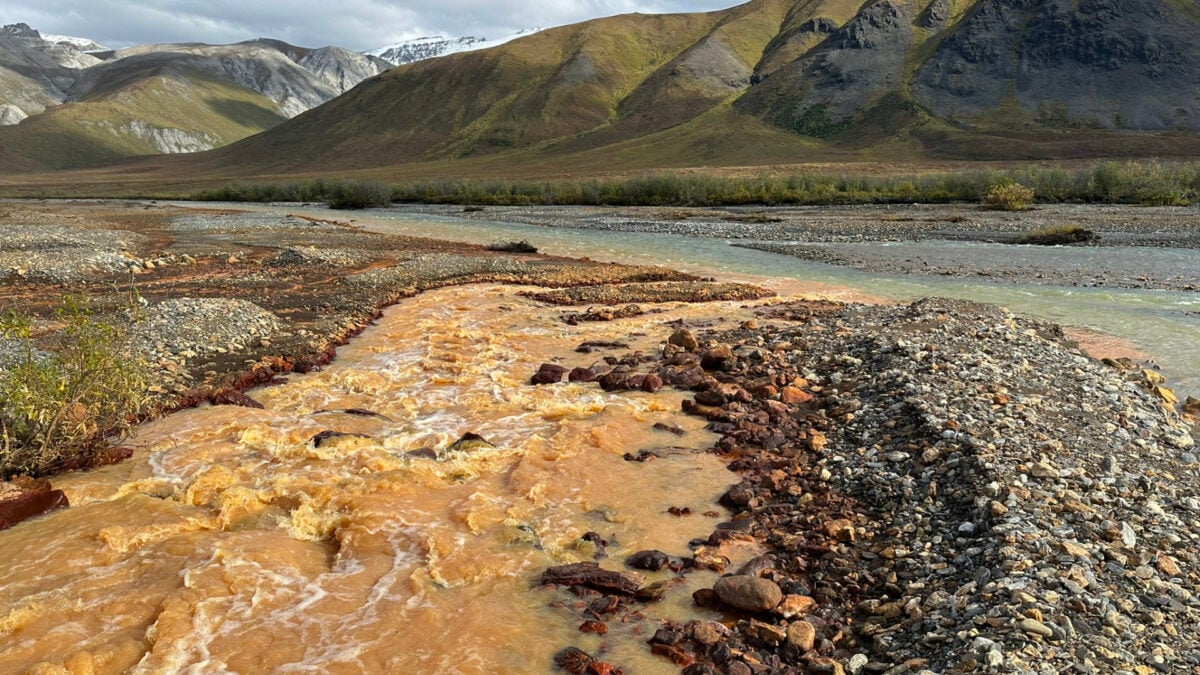

Rivers in Alaska’s Brooks Range are turning orange due to thawing permafrost, a phenomenon scientists attribute to rising temperatures. The contamination, which introduces high levels of metals and acidity into waterways, is spreading over 60 miles downstream and raising concerns about long-term ecological impacts.
30 SEC SUMMARY
- Scientists from the University of California, Davis, have documented rivers in Alaska’s Brooks Range turning orange due to thawing permafrost.
- The contamination, driven by rising temperatures, introduces high levels of metals and acidity into waterways, comparable to drainage from metal mines.
- Metal concentrations in affected rivers have increased by up to 70 times, extending over 60 miles downstream.
- Thawing permafrost exposes minerals to oxygen, releasing iron, sulfuric acid, and other metals into Arctic ecosystems.
- The phenomenon reflects broader environmental shifts linked to climate change, with uncertain long-term impacts on wildlife and local communities.
TABLE OF CONTENTS
- Alaska’s Rivers Turn Orange as Permafrost Thaws
- Thawing Permafrost Introduces High Metal Concentrations
- Broader Environmental and Ecological Concerns
- What this means
- Key takeaways
- FAQ
- Sources
KEY HIGHLIGHTS
- Rivers in Alaska’s Brooks Range are turning orange due to thawing permafrost, a phenomenon linked to rising temperatures.
- Contaminated water is traveling over 60 miles downstream, with metal concentrations increasing by up to 70 times.
- The issue is comparable to acid rock drainage from metal mines, introducing high acidity and metals like iron and zinc into ecosystems.
- Large spikes in sulfate and zinc were recorded in 2019 during Alaska’s warmest summer on record.
- Hundreds of watersheds are affected, signaling a broader environmental shift in Arctic regions.
Alaska’s Rivers Turn Orange as Permafrost Thaws
Scientists from the University of California, Davis, have documented a striking and alarming phenomenon in Alaska’s Brooks Range: rivers and streams are turning orange. According to reports, the discoloration is caused by thawing permafrost, which is exposing minerals to oxygen and releasing high levels of metals and acidity into waterways.
The study, led by environmental scientist Brett Poulin and PhD student Taylor Evinger, found that the contaminated water is being transported over 60 miles downstream. Metal concentrations in these rivers have increased by up to 70 times compared to normal levels, a spike comparable to drainage from metal mines.
Thawing Permafrost Introduces High Metal Concentrations
The phenomenon is attributed to acid rock drainage, a process typically associated with mining activity. When permafrost thaws, it exposes reservoirs of carbon, nutrients, and minerals to oxygen, triggering chemical reactions that release iron, sulfuric acid, and other metals into nearby streams. The result is water with high acidity and metal concentrations, similar to runoff from active or abandoned mines.
In 2019, during Alaska’s warmest summer on record, researchers observed large spikes in sulfate and zinc concentrations in affected rivers. While rivers have shown some resiliency—with gradual decreases in these concentrations after spikes—the recovery periods are minor compared to the dramatic shifts observed in recent years.
Broader Environmental and Ecological Concerns
The contamination is not isolated. Hundreds of watersheds in Alaska’s Arctic region are now affected by acid rock drainage, a sign of broader environmental changes driven by climate change. The long-term impact on wildlife and rural communities remains uncertain, though no massive fish die-offs or water quality issues have been directly observed so far.
The study highlights the need for continued monitoring, as the Arctic continues to warm at a rate nearly four times faster than the global average. The findings also raise questions about the future of ecosystems in national parks like Gates of the Arctic, where pristine rivers like the Kutuk River are now showing signs of contamination.
What this means
LazyFounders analysis — our interpretation, not reported fact.
This research underscores a growing climate feedback loop with tangible consequences for ecosystems and communities. For founders and operators in climate tech, water management, or remote sensing, the findings highlight an emerging market need: tools to monitor, mitigate, or adapt to environmental contamination in polar regions.
The study also signals potential regulatory and reputational risks for industries operating near Arctic ecosystems, particularly those reliant on water quality. While the immediate impact on wildlife and rural communities remains unclear, the scale of contamination suggests that proactive solutions—such as remote water-quality sensors or low-cost filtration systems—could become critical.
For investors, this is a reminder that climate change isn’t just a long-term abstraction; it’s already reshaping landscapes and creating new challenges—and opportunities—in real time.
Key takeaways
- Alaska’s Brooks Range rivers are turning orange due to thawing permafrost, releasing metals and acidity into waterways.
- Contamination levels are comparable to drainage from metal mines, with metal concentrations increasing by up to 70 times.
- Thawing permafrost exposes minerals to oxygen, introducing iron, sulfuric acid, and other metals into rivers.
- The phenomenon reflects broader climate change impacts, particularly in Arctic ecosystems.
- While rivers show some resiliency, recovery periods are minor compared to the scale of recent shifts.
- Uncertainty remains about the long-term impact on wildlife and rural communities.
FAQ
What is causing Alaska’s rivers to turn orange?
The discoloration is caused by thawing permafrost, which exposes minerals to oxygen and releases iron, sulfuric acid, and other metals into rivers. This process, known as acid rock drainage, is typically associated with mining activity.
How widespread is the contamination?
The contamination has been observed over 60 miles downstream from affected tributaries. Hundreds of watersheds in Alaska’s Arctic region are now impacted by acid rock drainage.
What are the potential long-term effects of this contamination?
The long-term impact on wildlife and rural communities remains uncertain. While no massive fish die-offs or water quality issues have been directly observed, the dramatic shifts in metal concentrations and acidity could pose risks to ecosystems and human health over time.
Is this phenomenon linked to climate change?
Yes. The thawing of permafrost is directly linked to rising temperatures, which are accelerating in the Arctic at nearly four times the global average rate. This process is exposing minerals and introducing contaminants into waterways, reflecting broader climate change impacts.
Related on LazyFounders
Sources
- Gizmodo · 2026-09-25
Alaska’s Orange Rivers Are Carrying Metals Up to 70 Times Above Normal Levels
This story is an original summary drafted with AI by LazyFounders from the reporting listed above and checked by automated validation. Facts are attributed to their original publishers; sections marked as analysis are LazyFounders's. Where a source is in another language, facts were machine-translated and quotations are reported, not reproduced. Read the original coverage via the links, and see our AI policy and corrections policy.
Get the LazyFounder Brief
Startup, funding and AI news in a five-minute read. Join the early-access list.
