
AI Botsitting: The Hidden Productivity Drain in 2026
Explore the hidden productivity drain of 'AI botsitting' in 2026. Learn how extra supervision of AI tools is impacting employee efficiency.
LazyFounders
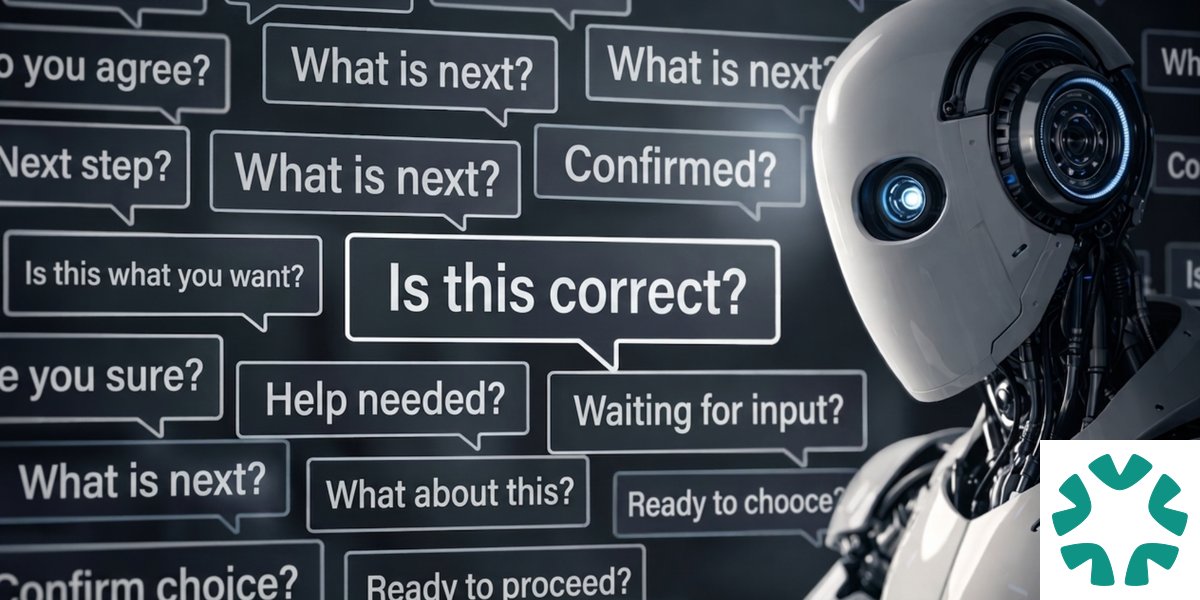

AI Botsitting: The Hidden Productivity Drain in 2026
30 SEC SUMMARY
- In 2026, 'AI botsitting' refers to the hidden work employees do to manage AI tools, including correcting errors and verifying outputs.
- A Glean report found that digital workers spend 6.4 hours weekly on botsitting, consuming more time than actual AI-generated work.
- Despite AI's promise, only 13% of organizations see significant performance improvements due to the extra effort required to supervise AI outputs.
TABLE OF CONTENTS
- Understanding AI Botsitting
- The Productivity Paradox
- Key Challenges in AI Supervision
- Strategies to Mitigate Botsitting
- Conclusion
- Call-to-Action
KEY HIGHLIGHTS
- AI botsitting involves managing AI tools, leading to hidden productivity drains.
- Digital workers spend more time on botsitting than on AI-generated work.
- Only a small fraction of organizations see significant productivity gains from AI.
- Better governance and employee training can reduce botsitting efforts.
Understanding AI Botsitting
In 2026, the term 'AI botsitting' has emerged to describe the hidden work employees do to manage AI tools. This includes adding context, correcting weak responses, verifying facts, debugging workflows, and cleaning up AI-generated output before it can be shared. As companies integrate generative AI and AI agents into everyday work, this extra layer of supervision could be quietly eroding the productivity gains promised by automation.
The Productivity Paradox
A report by Glean’s Work AI Institute revealed that digital workers spend 6.4 hours weekly on botsitting. The study surveyed 6,000 full-time digital workers across the US, UK, and Australia, alongside workplace AI usage data. It found that 37% of the time employees spend with AI goes into botsitting, slightly more than the 36% spent using AI to produce actual work. This creates an interesting gap.
While 87% of digital workers use AI at work and 75% say it makes them more productive, only 13% said AI had significantly improved their organization’s performance. In short, an employee may finish an individual task faster, but the organization still has to pay for the time spent checking, correcting, and coordinating AI output.
Key Challenges in AI Supervision
Glean, led by founder and CEO Arvind Jain, links much of this problem to AI tools lacking business context. Employees may have to enter the same information into different applications, compare responses from multiple tools, or catch answers that sound confident but are simply wrong.
This becomes more important in areas such as finance, legal, healthcare, and customer support, where an unchecked AI response can create compliance or reputational problems.
Strategies to Mitigate Botsitting
The problem goes beyond any single AI tool. Gartner has warned that growing interest in AI agents is accompanied by concerns around governance, trust, hallucination protection, and whether organizations are ready to deploy them effectively.
Office productivity is also often the default AI use case when companies have not clearly identified the business problems they want the technology to solve. For India, where enterprises, startups, and IT services companies are rapidly experimenting with AI-enabled workflows, that distinction matters.
Simply measuring how many employees use AI, how many licenses are purchased, or how many prompts are generated will not show the full productivity picture. Firms may also need to measure the time employees spend reviewing AI output, switching between tools, correcting mistakes, and supplying missing context.
Better access to company data, clearer review standards, employee training, and stronger governance could help reduce that burden. AI can still deliver meaningful productivity gains, particularly for repetitive and information-heavy work.
Conclusion
In 2026, the hidden work of 'AI botsitting' is a significant productivity drain for organizations. While AI tools promise to make work more efficient, the extra effort required to supervise and correct AI outputs can negate these gains. By addressing the challenges of AI supervision and implementing better governance, organizations can mitigate botsitting and unlock the true potential of AI.
Call-to-Action
Start your day with impactful startup stories and concise news! All delivered in a quick five-minute read in your inbox.
Subscribe to our Daily Newsletter
Copyright © 2026 YourStory Media Pvt. Ltd. All rights reserved.
Sources
This story is an original summary and analysis written by LazyFounders from the reporting listed above. Facts are attributed to their original publishers; sections marked as analysis are LazyFounders's opinion. Where a source is in another language, facts were machine-translated and quotations are reported, not reproduced. Read the original coverage via the links.