
Artcraft releases open-source AI clones of Adobe Creative Cloud apps
Artcraft, a team led by software developer Brandon Thomas, has released open-source clones of Adobe’s Photoshop and Lightroom using AI-driven reverse engineering. The clones, designed to mimic Adobe’s interface and functionality, are free to use and have sparked debates over legality, ethics, and the sustainability of subscription-based software models.

Editor, Lazyfounder
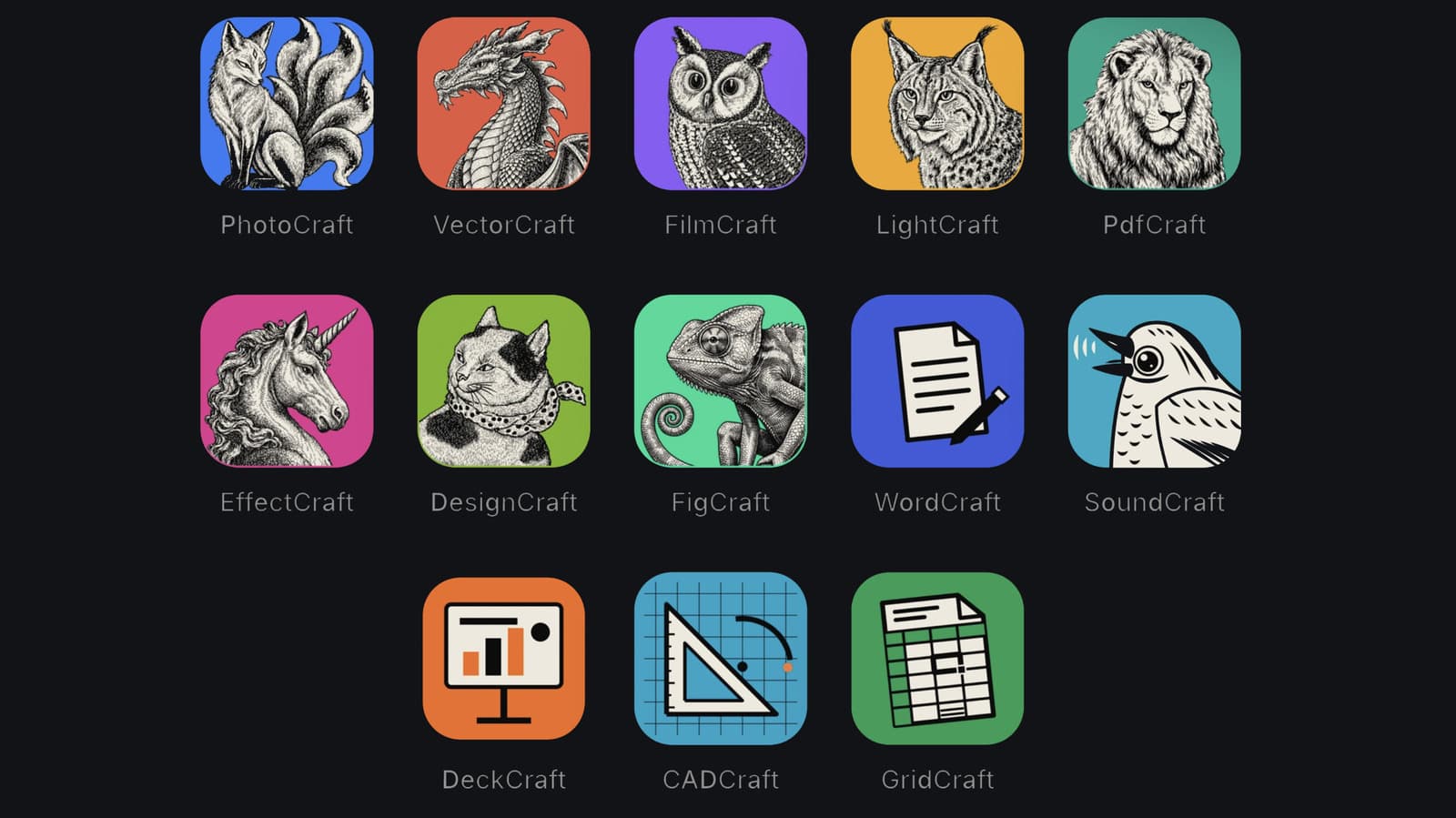
TABLE OF CONTENTS
How Artcraft created the clones
Artcraft, a team led by software developer Brandon Thomas, used the AI tool Claude Opus 5.5 to reverse-engineer Adobe’s Creative Cloud applications, including Photoshop and Lightroom. The result is open-source clones, such as Photocraft for Photoshop, which are designed to replicate Adobe’s user interface and core functionality without requiring a subscription.
Thomas launched the clones in early October, citing frustration with Adobe’s subscription model as a primary motivation. The project, named REA (Reverse Engineer Anything), has gained significant traction on GitHub, with 87,000 forks and 346,000 stars as of October 20.
According to Engadget, Thomas claims the clones are "clean room" implementations written in pure Rust, which he says are more performant than Adobe’s original applications. However, Artcraft’s approach may violate Adobe’s trademarks and patents, even though the team insists no Adobe code was directly used.
Capabilities and limitations of the clones
Photocraft, Artcraft’s Photoshop clone, can perform basic tasks like resizing, masking, and color adjustments but lacks advanced features such as AI-powered tools. Its menus and controls closely resemble Photoshop’s, reducing the learning curve for users transitioning from Adobe’s software.
However, the clone has critical flaws. According to Engadget, Photocraft cannot open native PSD files, a significant limitation for users reliant on Photoshop’s native format. It also suffers from stability issues, including bugs that can delete images or randomly merge layers.
These limitations highlight the challenges of AI-driven reverse engineering, particularly when attempting to replicate complex software without access to the original source code.
Legal and ethical concerns
Artcraft’s initiative has reignited debates over the legality and ethics of AI-driven reverse engineering. Adobe’s terms of use explicitly prohibit reverse engineering its software to determine how it works, and Artcraft’s clones may infringe on Adobe’s trademarks or patents, even if no direct code was copied.
The project’s popularity on platforms like GitHub and Reddit underscores broader frustration with subscription-based software models, particularly among users who prefer ownership or one-time purchases. However, the legal risks could deter widespread adoption or prompt action from Adobe.
This case also reflects a growing trend of AI tools being used to decompile and reconstruct software, a practice that has already led to the shutdown of communities like decomp.dev, which focused on human-driven reverse engineering.
Connection to Adobe’s AI advancements
This development contrasts with Adobe’s recent AI initiatives, such as EditAgent, an AI system designed to refine image editing by replicating professional workflows in Photoshop. While Adobe integrates AI to enhance its proprietary software, Artcraft’s approach leverages AI to create open-source alternatives, challenging Adobe’s dominance in the creative software market.
The implications of this trend extend beyond Adobe. As AI tools become more capable of reverse engineering complex applications, companies relying on proprietary software and subscription models may face increased pressure to justify their pricing or risk losing users to free alternatives.
What this means
Lazyfounder analysis — our interpretation, not reported fact.
Artcraft’s release of open-source clones of Adobe’s software is a direct challenge to the subscription-based model that dominates the creative software industry. For founders and operators, this story highlights three critical dynamics:
-
The threat and opportunity of AI-driven disruption: AI tools like Claude Opus 5.5 are lowering the barrier to reverse engineering complex software, enabling small teams to create viable alternatives to industry-standard applications. This could accelerate the development of open-source alternatives in other sectors, particularly where users are dissatisfied with pricing or licensing terms. Founders should consider how their own products might be vulnerable to similar disruption—or how they could leverage AI to create competitive alternatives.
-
Legal risks in uncharted territory: Artcraft’s project operates in a legal gray area. While the team claims no direct use of Adobe’s code, the clones’ similarity to Adobe’s interface and functionality could lead to trademark or patent disputes. For startups, this underscores the importance of understanding the legal boundaries of reverse engineering, particularly when using AI tools to reconstruct proprietary software. The outcome of potential litigation could set precedents for how far AI-driven cloning can go.
-
The fragility of subscription models: Adobe’s subscription model, once a gold standard for recurring revenue, is facing growing backlash. Artcraft’s clones are a symptom of broader frustration with software that users cannot own outright. Founders relying on subscription models should take note: if a team can reverse-engineer Adobe’s software, no subscription-based product is entirely safe from disruption. Companies may need to innovate beyond pricing models to retain users, such as offering unique features, integrations, or performance advantages that open-source alternatives cannot easily replicate.
Related on Lazyfounder
Sources
- Engadget · 2026-11-01
AI Software Clones Are Coming For Big-Name Companies Like Adobe
This story is an original summary drafted with AI by Lazyfounder from the reporting listed above and checked by automated validation. Facts are attributed to their original publishers; sections marked as analysis are Lazyfounder's. Where a source is in another language, facts were machine-translated and quotations are reported, not reproduced. Read the original coverage via the links, and see our AI policy and corrections policy.

About the author
Editor, Lazyfounder
Tarun Mottlia edits LazyFounders, covering Indian startups, funding rounds, AI and product launches. Every story on the site is AI-assisted and checked against its cited sources before publication.
More stories by Tarun MottliaGet the LazyFounder Brief
Startup, funding and AI news in a five-minute read. Join the early-access list.
