
AI-driven cyber threats force shift from prevention to recovery, say industry leaders
A roundtable hosted by Rubrik and YourStory Media in Bengaluru brought together engineering and cybersecurity leaders from companies like Freshworks, Meesho, PayU, and Postman. They agreed that as AI accelerates software development and expands the attack surface, organizations must prioritize recovery and resilience alongside prevention to manage inevitable breaches.

Editor, Lazyfounder
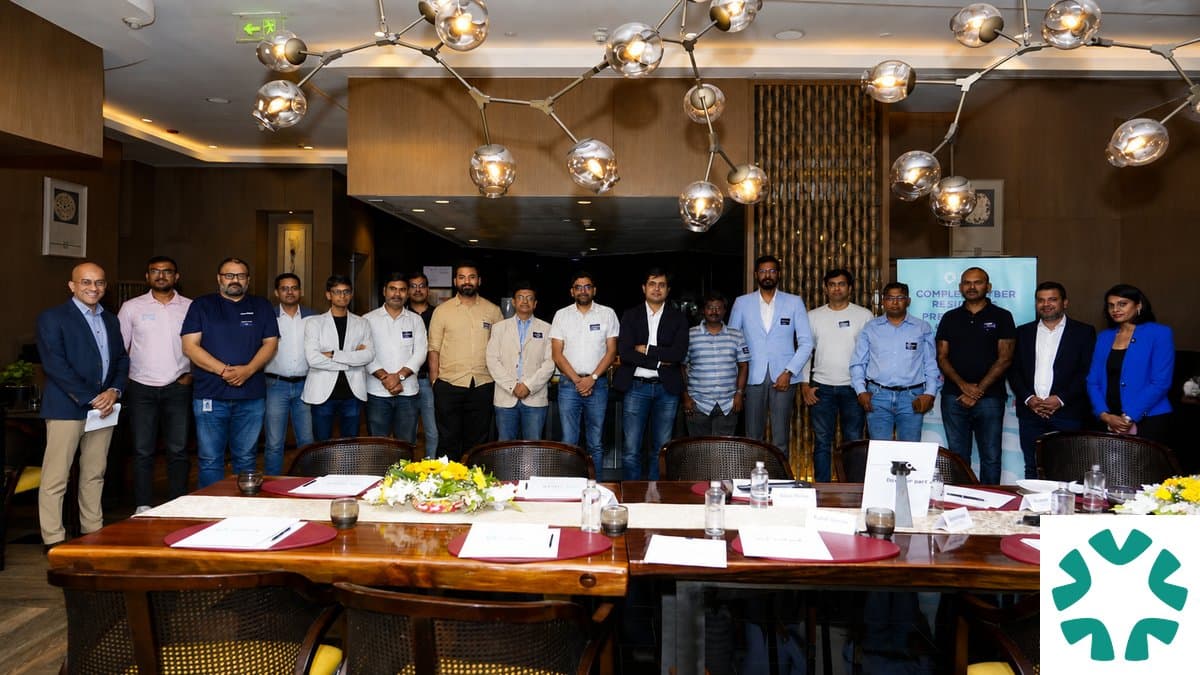
TABLE OF CONTENTS
Why prevention alone is no longer enough
AI is transforming both software development and cyber threats, creating a cycle where vulnerabilities are introduced and exploited at unprecedented speed, according to participants at a Bengaluru roundtable hosted by Rubrik and YourStory Media. The discussion highlighted that while AI tools like Mythos identify vulnerabilities faster, they also enable attackers to exploit weaknesses more quickly, shrinking attack windows.
Leaders from fintech, ecommerce, logistics, and enterprise software sectors agreed that traditional prevention strategies are insufficient. AI-generated code, prompt injection attacks, non-human identities, and third-party dependencies were cited as new challenges that expand the attack surface beyond what organizations can secure in real time.
Karthikeyan Ramasamy, Senior Director of Engineering at Freshworks, emphasized that established security principles—such as layered architecture, identity-based access, and least-privilege permissions—remain critical. However, he noted that AI agents must now operate within these guardrails to limit the impact of potential breaches.
The case for prioritizing recovery and resilience
Ananth Nag, Vice President APAC at Rubrik, argued that the focus must shift from prevention to recovery. He cited recent incidents involving Jaguar Land Rover and Marks & Spencer, where even mature security programs could not prevent prolonged business disruption. The lesson, he said, is that breaches are inevitable, and organizations must be prepared to restore operations quickly.
Participants agreed that the question is no longer whether an attack can be stopped but how quickly systems can be restored. This shift requires organizations to treat cyber resilience as a core business capability, not just a security function. Regular breach simulations, recovery drills, and tabletop exercises were recommended to ensure teams can respond effectively.
Aditya Chandra, Vice President of Platform Engineering at MoEngage, criticized the compliance-driven approach to cybersecurity in many Indian organizations. He argued that treating security as a checkbox exercise rather than an engineering discipline leaves companies unprepared for real-world threats.
Cyber recovery vs. disaster recovery
A key distinction discussed was between disaster recovery and cyber recovery. Disaster recovery assumes backup systems remain intact, but cyberattacks can compromise both production systems and backups, leaving organizations uncertain about data integrity.
Nag explained that cyber recovery requires clean, isolated environments and verified backups that can be trusted after an attack. He emphasized the need for organizations to prepare for scenarios where backups themselves may be compromised, necessitating multiple layers of verification.
One participant shared an example of a disgruntled employee deleting critical databases. Recovery was only possible because the organization maintained isolated, secure backups. The incident underscored the importance of having immutable copies and clearly defined recovery strategies.
Securing AI agents and AI-generated code
As enterprises deploy AI agents, participants stressed the need to treat them like digital identities with defined permissions, monitoring, and accountability. Prompt injection attacks and rogue agents were highlighted as major concerns, requiring adversarial testing, sandboxing, and continuous monitoring.
Utkarsh Tiwari, Head of Security Engineering at Meesho, described the company’s approach to securing AI-generated code at the source. Meesho implements guardrails on coding agents to ensure the code they produce is secure by default, addressing vulnerabilities early in the development process.
The roundtable also discussed the risks of AI agents acting autonomously, often in non-deterministic ways. This unpredictability complicates traditional security testing, requiring new approaches to governance and observability.
Cyber resilience as a board-level priority
Participants agreed that cyber resilience must move beyond the realm of technology and security teams to become a board-level priority. Recovery planning should be treated as an investment in business continuity, not just a security initiative.
The group noted that many organizations still view cybersecurity as a compliance requirement rather than a core business capability. To build true resilience, companies must integrate cybersecurity into their engineering culture, with continuous monitoring, behavioral threat detection, and operational readiness.
The discussion concluded that as AI accelerates software development and threat cycles, organizations must prepare for faster, more sophisticated attacks. The goal is no longer to prevent every breach but to ensure rapid detection, recovery, and restoration of business operations.
What this means
Lazyfounder analysis — our interpretation, not reported fact.
For founders and operators, this discussion signals a fundamental shift in how cybersecurity must be approached. The assumption that breaches can be entirely prevented is outdated; instead, the focus must expand to include rapid recovery and resilience. This has several implications:
First, the cost of complacency is rising. Organizations that treat cybersecurity as a checkbox exercise—focusing only on compliance—risk prolonged downtime, reputational damage, and financial losses when breaches occur. The example of Jaguar Land Rover and Marks & Spencer shows that even mature security programs can face significant disruption if recovery is not prioritized.
Second, AI introduces both opportunities and risks. While AI can accelerate development and improve threat detection, it also creates new attack vectors, such as non-human identities, prompt injection attacks, and AI-generated code vulnerabilities. Founders must ensure their teams are not only leveraging AI for efficiency but also implementing guardrails, adversarial testing, and continuous monitoring to mitigate these risks.
Third, recovery is not just a technical problem but a business one. Founders need to advocate for cyber resilience as a board-level priority, integrating it into their company’s culture and operations. This means investing in regular recovery drills, maintaining immutable backups, and treating resilience as a core engineering discipline rather than an afterthought.
Finally, the discussion underscores that cybersecurity is no longer just about defending against attacks but also about ensuring business continuity. In an AI-driven threat landscape, the ability to recover quickly and restore operations may become a competitive advantage.
Sources
This story is an original summary drafted with AI by Lazyfounder from the reporting listed above and checked by automated validation. Facts are attributed to their original publishers; sections marked as analysis are Lazyfounder's. Where a source is in another language, facts were machine-translated and quotations are reported, not reproduced. Read the original coverage via the links, and see our AI policy and corrections policy.

About the author
Editor, Lazyfounder
Tarun Mottlia edits LazyFounders, covering Indian startups, funding rounds, AI and product launches. Every story on the site is AI-assisted and checked against its cited sources before publication.
More stories by Tarun MottliaGet the LazyFounder Brief
Startup, funding and AI news in a five-minute read. Join the early-access list.