
7-Eleven shuts all 31 India stores after ₹90 crore loss in FY26
Japanese convenience store chain 7-Eleven has closed all its remaining 31 outlets in India, marking the end of its five-year franchise agreement with Reliance Retail. The decision follows a reported net loss of ₹90 crore in FY26 and stiff competition from kirana stores and quick-commerce platforms.

Editor, Lazyfounder
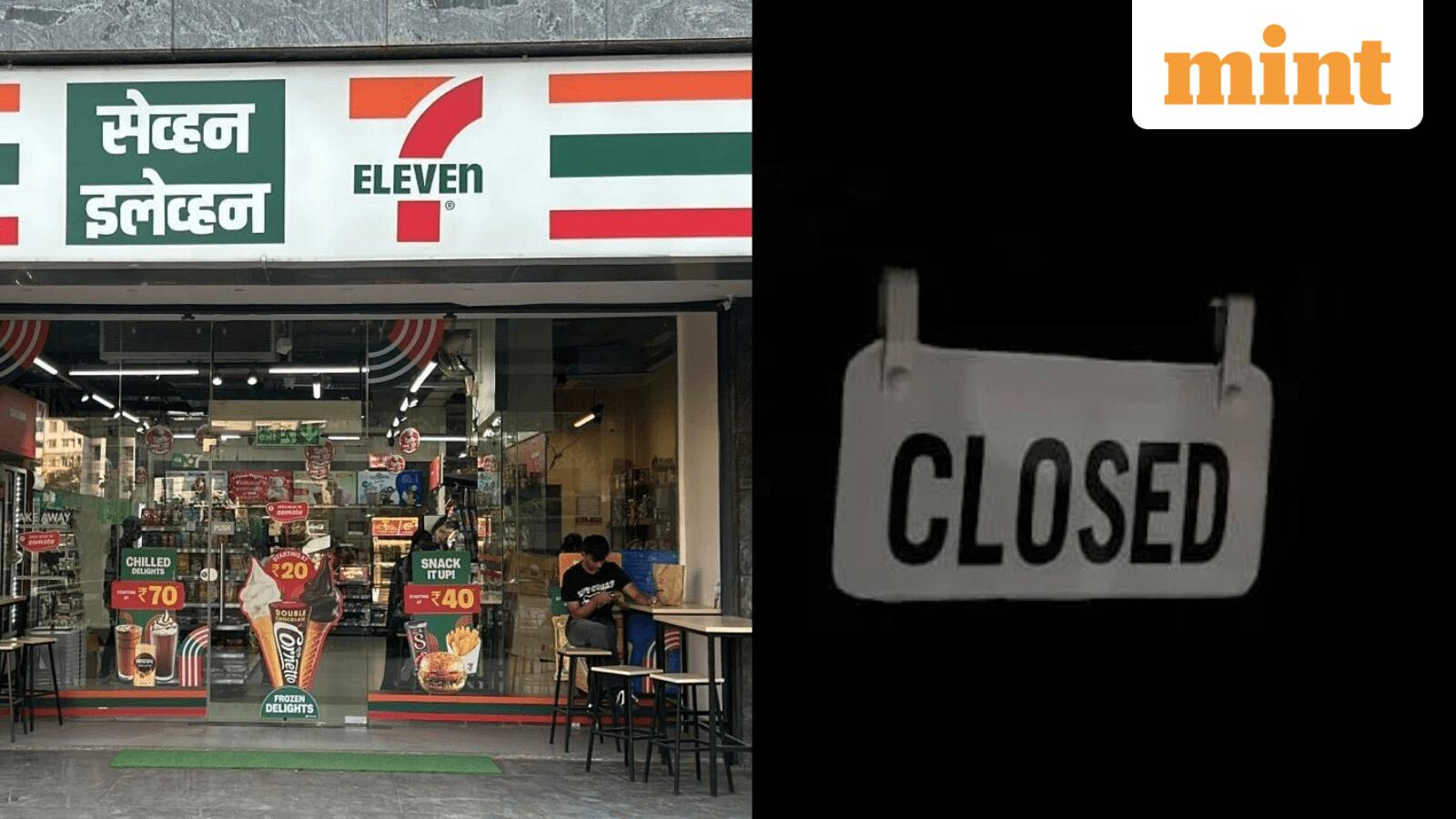
TABLE OF CONTENTS
End of a five-year franchise partnership
7-Eleven has permanently closed all 31 of its outlets in India, according to Mint. The stores, located in Mumbai and Pune, were shut on September 30, 2026, ending a five-year franchise partnership with Reliance Retail.
The closure follows the company’s reported net loss of ₹90 crore in FY26. At its peak, 7-Eleven operated around 60 outlets in India but struggled to achieve profitability due to competition from neighbourhood kirana stores and quick-commerce platforms.
How 7-Eleven entered and exited India
7-Eleven made its debut in India on October 9, 2021, through a franchise agreement with Reliance Retail. This partnership followed the termination of an earlier agreement with Future Retail, which failed to meet store-opening targets and franchise fee obligations.
The decision to exit does not appear to be tied to a single factor. Neither Reliance Retail nor Seven & i Holdings, the parent company of 7-Eleven, has publicly cited a specific reason for the shutdown. However, industry observers note that 7-Eleven faced challenges in adapting its business model to India’s retail environment, which is dominated by kirana stores and rapidly growing quick-commerce players.
What happens next for employees and the brand
Employees from the closed 7-Eleven outlets are being absorbed into Reliance Retail’s broader grocery and neighbourhood retail operations, according to reports. This transition is expected to mitigate job losses for the affected staff.
Seven & i Holdings has indicated that it remains interested in the Indian market and is exploring alternative strategies for a potential re-entry. The company has not shared details about these plans or whether it will pursue a different business model.
Earlier reporting on 7-Eleven’s India strategy
In earlier reporting, Lazyfounder highlighted 7-Eleven’s decision to close all 31 stores in India while hinting at long-term ambitions. The company had suggested a possible shift away from the franchise model, though specifics were not disclosed at the time.
What this means
Lazyfounder analysis — our interpretation, not reported fact.
7-Eleven’s exit from India underscores the challenges foreign convenience store chains face in penetrating the country’s fragmented retail market. While kirana stores and quick-commerce platforms dominate the space, organised retail players like 7-Eleven have struggled to carve out a sustainable niche. For founders and operators, this development signals the need for localised strategies that account for India’s unique retail dynamics, including price sensitivity, last-mile delivery expectations, and the resilience of traditional retail formats.
The company’s consideration of alternative re-entry strategies also suggests that the Indian market remains attractive, albeit with a recognition that the franchise model may not be the right fit. This could encourage other international brands to explore joint ventures, wholly owned subsidiaries, or hybrid models to navigate India’s regulatory and operational complexities.
Related on Lazyfounder
Sources
- Mint (Technology) · 2026-10-22
7-Eleven shuts remaining 31 India outlets after ₹90 cr FY26 loss: When did it open first with Reliance; what’s next?
This story is an original summary drafted with AI by Lazyfounder from the reporting listed above and checked by automated validation. Facts are attributed to their original publishers; sections marked as analysis are Lazyfounder's. Where a source is in another language, facts were machine-translated and quotations are reported, not reproduced. Read the original coverage via the links, and see our AI policy and corrections policy.

About the author
Editor, Lazyfounder
Tarun Mottlia edits LazyFounders, covering Indian startups, funding rounds, AI and product launches. Every story on the site is AI-assisted and checked against its cited sources before publication.
More stories by Tarun MottliaGet the LazyFounder Brief
Startup, funding and AI news in a five-minute read. Join the early-access list.
