
Zoom’s AI vision: From meeting notes to task completion
Zoom is expanding its ambitions beyond video calls, positioning itself as a platform for AI-driven productivity. The company’s Chief Technology Officer, XD Huang, recently outlined a strategy to shift from passive meeting assistance to active task completion, with a goal of achieving this by 2026. Zoom’s Scribe API, which powers tools like My Notes and ZoomMate, is now available to third-party developers, signaling a push to become a foundational layer in the AI productivity stack.

Editor, Lazyfounder
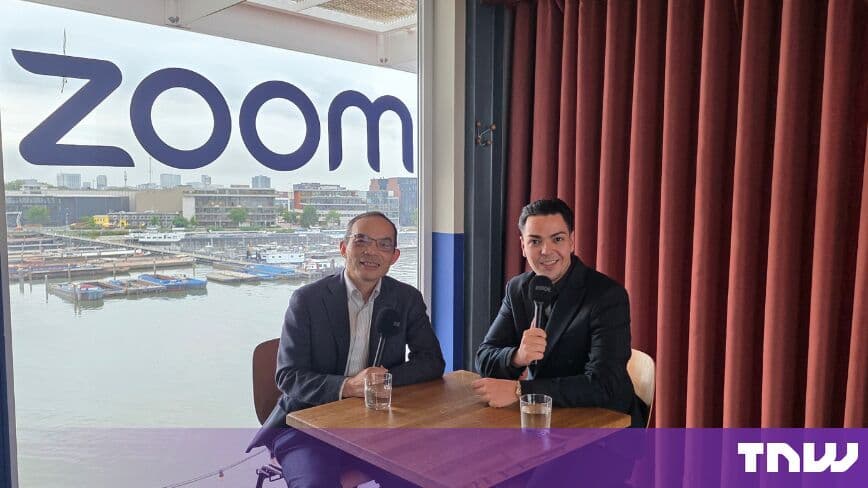
Zoom is expanding its ambitions beyond video calls, positioning itself as a platform for AI-driven productivity. The company’s Chief Technology Officer, XD Huang, recently outlined a strategy to shift from passive meeting assistance to active task completion, with a goal of achieving this by 2026. Zoom’s Scribe API, which powers tools like My Notes and ZoomMate, is now available to third-party developers, signaling a push to become a foundational layer in the AI productivity stack.
30 SEC SUMMARY
- Zoom CTO XD Huang outlined the company’s AI strategy, focusing on speech recognition and task completion during meetings.
- Zoom’s Scribe API, powering tools like My Notes and ZoomMate, is now available to third-party companies, including AI note-taking firms.
- Huang envisions 2026 as 'the year of completion,' where AI finishes tasks before meetings end.
- Zoom uses a federated AI approach, combining models from OpenAI, Anthropic, and its own to improve accuracy and reduce costs.
- The company partners with hardware firms like Neat and Logitech but does not manufacture its own devices.
TABLE OF CONTENTS
- Zoom opens Scribe API to third parties
- AI as a task completer, not just assistant
- Accuracy and cost advantages
- Hardware partnerships, not manufacturing
- Huang’s background and AI philosophy
- Background: Zoom’s role in AI-driven productivity
- What this means
- Key takeaways
- FAQ
- Sources
KEY HIGHLIGHTS
- Zoom has opened its Scribe API, which powers its My Notes and ZoomMate tools, to third-party companies.
- CTO XD Huang envisions AI completing tasks during meetings before they end, calling 2026 'the year of completion.'
- Zoom uses a federated AI approach, combining models from OpenAI, Anthropic, and its own to improve accuracy and reduce hallucinations.
- The company’s meeting summarization model rivals ChatGPT at a lower cost and remains top-ranked in speech recognition.
- Zoom partners with hardware firms like Neat, HP Poly, Logitech, and Yealink but does not manufacture its own devices.
Zoom opens Scribe API to third parties
According to The Next Web, Zoom has made its speech recognition technology, Scribe API, available to other companies. The API powers tools like My Notes and ZoomMate, which capture conversations across Zoom, Microsoft, and Google meetings, as well as in-person discussions.
The move signals Zoom’s ambition to become a foundational layer for AI-driven productivity tools. The company is reportedly in talks with AI note-taking firms that may switch to its technology.
AI as a task completer, not just assistant
XD Huang, Zoom’s Chief Technology Officer, outlined a vision where AI doesn’t just assist during meetings but completes tasks before they end. Huang referred to 2026 as 'the year of completion,' emphasizing a shift from passive note-taking to active workflow execution.
This approach aligns with Zoom’s federated AI strategy, which combines models from OpenAI, Anthropic, and its own small language model. The goal is to improve accuracy and reduce errors like hallucinations, a common challenge in AI-driven tools.
Accuracy and cost advantages
Zoom’s Scribe API has maintained a top position on the Open ASR Leaderboard since its launch, reflecting its accuracy in speech recognition. The company claims its meeting summarization model performs as well as ChatGPT but at a significantly lower cost.
Huang noted that while Scribe’s error rate is around 3% for standard use cases, it rises to 5-6% for specialized datasets, such as those from the Speech Accessibility Project at the University of Illinois Urbana-Champaign. Zoom currently supports transcription in about ten languages but aims to expand to all 24 official EU languages.
Hardware partnerships, not manufacturing
While Zoom’s main client has been downloaded over a billion times, the company does not manufacture its own hardware. Instead, it partners with manufacturers like Neat, HP Poly, Logitech, and Yealink to integrate its software into meeting room devices.
This strategy allows Zoom to focus on AI and software innovation while leveraging the expertise of established hardware providers.
Huang’s background and AI philosophy
XD Huang, who leads Zoom’s AI strategy, brings over three decades of experience in speech recognition and AI. He spent 30 years at Microsoft, where he served as a technical fellow and CTO of Azure AI, and helped launch the Azure OpenAI Service.
Huang’s teams achieved human parity in speech recognition, machine translation, and natural language understanding. He holds over 170 US patents and is a member of the US National Academy of Engineering.
He emphasized that while AI can augment decision-making, humans retain the final say. This philosophy underpins Zoom’s approach to AI development, prioritizing accuracy, transparency, and user control.
Background: Zoom’s role in AI-driven productivity
Zoom’s expansion into AI reflects broader trends in enterprise software, where companies are increasingly integrating AI to automate workflows and improve efficiency. The shift from passive tools to active task completion mirrors developments in other productivity platforms, such as Microsoft’s Copilot and Google’s Workspace AI.
The company’s decision to open its Scribe API aligns with a growing emphasis on interoperability in AI. By allowing third-party developers to build on its speech recognition technology, Zoom is positioning itself as a key player in the AI productivity ecosystem.
What this means
Lazyfounder analysis — our interpretation, not reported fact.
Zoom’s AI strategy reflects a broader shift in enterprise technology: moving from passive assistance to active task completion. By opening its Scribe API to third parties, Zoom is positioning itself as a foundational layer for AI-driven productivity, not just a meeting platform. This could pressure competitors like Microsoft and Google to accelerate their own API strategies or risk ceding ground in the speech recognition space.
The federated approach to AI—that is, combining multiple models rather than relying on a single provider—is a pragmatic response to accuracy issues like hallucinations and cost concerns. For founders and operators, this underscores the importance of flexibility in AI integration. Companies that can seamlessly plug into multiple models (or switch providers based on performance or cost) will have a competitive edge, especially in regulated or high-stakes industries.
Finally, Huang’s focus on 'completion' over mere assistance suggests a future where AI tools are judged not just on how well they summarize meetings but on how effectively they execute follow-up actions. This could redefine product development, shifting priorities from note-taking to workflow automation—integrating with tools like Slack, Jira, or Salesforce to close the loop on meeting outcomes.
Key takeaways
- Zoom’s Scribe API is now available to third-party developers, including AI note-taking companies.
- The company aims for AI to complete tasks during meetings, with 2026 dubbed 'the year of completion.'
- Zoom uses a federated AI model, combining OpenAI, Anthropic, and its own technology to improve accuracy and reduce costs.
- Scribe API powers Zoom’s My Notes and ZoomMate and remains a leader in speech recognition accuracy.
- Zoom partners with hardware companies but does not manufacture its own devices.
FAQ
What is Zoom’s Scribe API?
Scribe API is Zoom’s speech recognition technology, powering tools like My Notes and ZoomMate. It is now available to third-party companies, including AI note-taking firms.
How does Zoom’s federated AI model work?
Zoom combines models from OpenAI, Anthropic, and its own small language model to improve accuracy and reduce errors like hallucinations.
What does 'the year of completion' mean for Zoom?
XD Huang envisions 2026 as a milestone where AI will not just assist during meetings but complete tasks before they end, shifting from passive to active workflow execution.
Does Zoom manufacture its own hardware?
No. Zoom partners with companies like Neat, HP Poly, Logitech, and Yealink to integrate its software into meeting room devices.
How accurate is Zoom’s speech recognition technology?
Scribe API has maintained a top position on the Open ASR Leaderboard, with an error rate of about 3% for standard use cases. The rate rises to 5-6% for specialized datasets.
Related on Lazyfounder
Sources
- The Next Web · 2026-10-06
Zoom CTO XD Huang on bringing Steve Jobs to every meeting
This story is an original summary drafted with AI by Lazyfounder from the reporting listed above and checked by automated validation. Facts are attributed to their original publishers; sections marked as analysis are Lazyfounder's. Where a source is in another language, facts were machine-translated and quotations are reported, not reproduced. Read the original coverage via the links, and see our AI policy and corrections policy.

About the author
Editor, Lazyfounder
Tarun Mottlia edits LazyFounders, covering Indian startups, funding rounds, AI and product launches. Every story on the site is AI-assisted and checked against its cited sources before publication.
More stories by Tarun MottliaGet the LazyFounder Brief
Startup, funding and AI news in a five-minute read. Join the early-access list.
