

Xovian Aerospace develops nanosatellites for radio frequency intelligence
Xovian Aerospace, a Bengaluru-based startup, is building a constellation of nanosatellites designed to detect and interpret radio frequency signals for applications like maritime and aerial monitoring. The company aims to provide low-latency insights through in-orbit AI processing, positioning itself in the sovereign RF intelligence space.

Editor, Lazyfounder
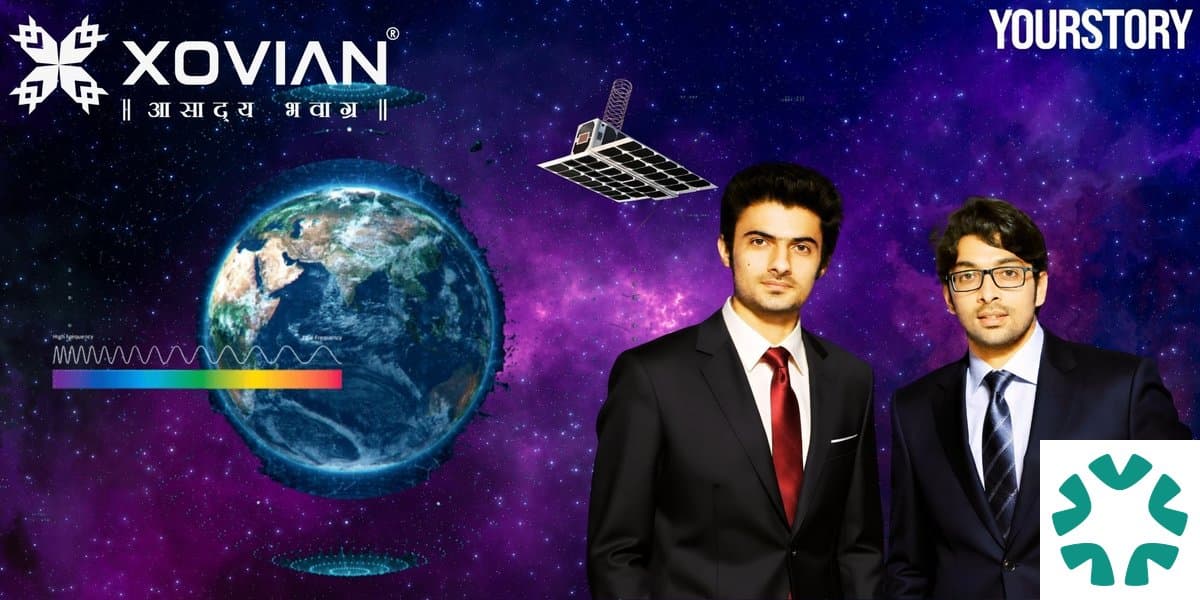
TABLE OF CONTENTS
What Xovian Aerospace does
Xovian Aerospace, founded in 2019 and based in Bengaluru, is developing a constellation of nanosatellites designed to capture and interpret radio frequency (RF) signals rather than optical images. Unlike imaging satellites, which rely on clear skies and daylight, RF sensing detects signals emitted by ships, aircraft, or radar systems regardless of weather or light conditions. This approach aims to reveal what optical systems cannot: the operational status and behavior of targets, such as vessels that have disabled their transponders.
The company’s focus is on sovereign RF intelligence, meaning India-owned capability rather than reliance on external providers. It targets applications across government, enterprise, and humanitarian sectors, with plans for pilots in India, Southeast Asia, and the Middle East.
How the technology works
Xovian’s satellites are designed to process RF data in orbit, a departure from conventional systems that send raw data to the ground for analysis. This "AI-native" approach aims to deliver low-latency insights, which the company claims is critical for time-sensitive applications like tracking vessels or aircraft that have gone dark or monitoring radar activity.
The hardware involves a multi-frequency RF sensor developed in India. At the time of its pre-seed funding, Xovian stated plans to validate the technology via an ISRO launch vehicle, with space trials expected by the end of 2025. However, no updates on these trials have been announced.
Funding and development status
Xovian has raised a total of about $4.5 million across two rounds. The pre-seed round, announced in August 2025, brought in $2.5 million led by Piper Serica and Turbostart, with participation from Inflection Point Ventures and Eaglewings Ventures. A subsequent round in April 2026 raised approximately ₹18.7 crore ($2 million), led by investor Ashish Kacholia, with Inflection Point Ventures returning.
The latest funding is allocated for developing its first RF satellite, expanding engineering and AI teams, and building commercial partnerships. According to the company, the payload has yet to fly, despite earlier expectations of space trials by the end of 2025.
Market and competition
Xovian operates in a growing sector of satellite data startups in India, though its focus on RF intelligence sets it apart from companies like Pixxel, SatSure, and Dhruva Space, which specialize in optical imaging and analytics. The company’s economic model relies on nanosatellites, which are smaller and cheaper to launch in large numbers, enabling frequent revisits to the same areas for monitoring.
What this means
Lazyfounder analysis — our interpretation, not reported fact.
Xovian Aerospace’s focus on RF intelligence fills a gap in satellite monitoring, particularly for applications where optical systems fall short. For founders and operators, this signals a potential shift in how maritime and aerial tracking are approached, especially in scenarios where vessels or aircraft evade detection. The emphasis on in-orbit processing also reflects a broader trend toward real-time data analysis, which could influence how startups design satellite constellations for latency-sensitive use cases.
The company’s ambition to develop sovereign capability aligns with India’s push for self-reliance in critical technologies. For Indian startups, this could mean opportunities in supply chain partnerships, co-development, or ancillary services. However, the lack of updates on space trials suggests delays, a common challenge in hardware-heavy sectors. Founders in similar domains may need to factor in longer timelines for validation and commercialization.
Sources
This story is an original summary drafted with AI by Lazyfounder from the reporting listed above and checked by automated validation. Facts are attributed to their original publishers; sections marked as analysis are Lazyfounder's. Where a source is in another language, facts were machine-translated and quotations are reported, not reproduced. Read the original coverage via the links, and see our AI policy and corrections policy.

About the author
Editor, Lazyfounder
Tarun Mottlia edits LazyFounders, covering Indian startups, funding rounds, AI and product launches. Every story on the site is AI-assisted and checked against its cited sources before publication.
More stories by Tarun MottliaGet the LazyFounder Brief
Startup, funding and AI news in a five-minute read. Join the early-access list.
