
Volkswagen’s Canadian battery plant slips to 2029, while its German one is already running
PowerCo commissioned Salzgitter in December and its cells now go to Martorell in Spain for the four small electric cars outselling Volkswagen's petrol models at home, but the Ontario plant has moved two years
Curated by Tarun Mottlia
Via TNW | Battery
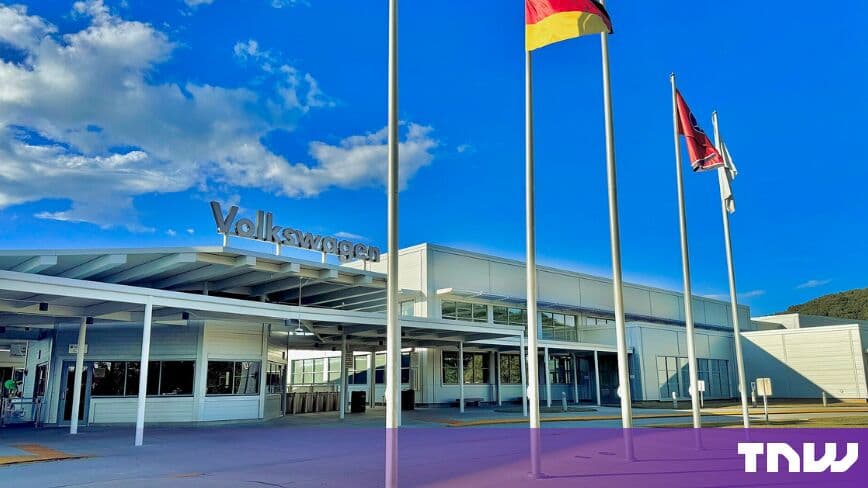
Volkswagen’s battery subsidiary PowerCo has delayed its Ontario plant by two years to 2029, and the ID Buzz will skip another American model year. Its Salzgitter plant in Germany has been making cells since December and supplies a new assembly line at SEAT’s Martorell site in Spain.
Volkswagen’s battery subsidiary PowerCo has delayed its Ontario plant by two years, to 2029, InsideEVs reported. The company also said the ID Buzz will skip another American model year and return as a 2028 car. Tariffs and slower than expected demand are behind both.
The European plant is already running.
PowerCo commissioned Salzgitter on 17 December, producing the first Unified Cells made in Europe, starting at up to 20 GWh a year and expandable to 40, or roughly 250,000 cars. The cell is a prismatic nickel manganese cobalt design about 10% denser than its predecessor. Oliver Blume called Volkswagen the first European carmaker to establish its own cell development and production.
The cells go to Spain.
Salzgitter supplies a new battery assembly facility at SEAT’s Martorell plant for cell-to-pack work, with Mobis at Pamplona helping during the ramp. The cells debut this year in the ID Polo, the ID Cross, the Skoda Epiq and the Cupra Raval. PowerCo is meant to cover about half of the group’s unified cell demand.
Those are the cars selling.
Volkswagen is now taking more orders for electric cars than for petrol and diesel in Germany, and has cancelled extra shifts at Wolfsburg while adding them at Emden and Zwickau. The four models drawing that demand are the four the Salzgitter cells feed. Roughly 100,000 orders sit behind them.
Spain is next, then Canada.
Cell production at Valencia is scheduled to begin in July 2027. Ontario has now moved to 2029. The European chain was built first and is the one turning out cells today.
North America is the weak part.
Volkswagen’s two Mexican plants face American tariffs, and its Tennessee factory now builds only the petrol Atlas and Atlas Cross Sport after the ID.4 was dropped to make room for them. The ID Buzz has slipped again. The company is leaning on a joint venture with Rivian for software architecture.
Home is not comfortable either.
Volkswagen closed a German plant last year for the first time in its 88-year history, and up to 100,000 job cuts have been reported and never confirmed. The difference is where the batteries are. One chain is running and the other has moved to the end of the decade.
Published September 28, 2026 - 5:28 pm UTC
Back to top
Courtesy
This story was originally published by TNW | Battery. All rights belong to the original publisher.
Read the original on thenextweb.com ↗