

Simple Energy launches family escooter lineup Simple Wave at ₹1.1 Lakh
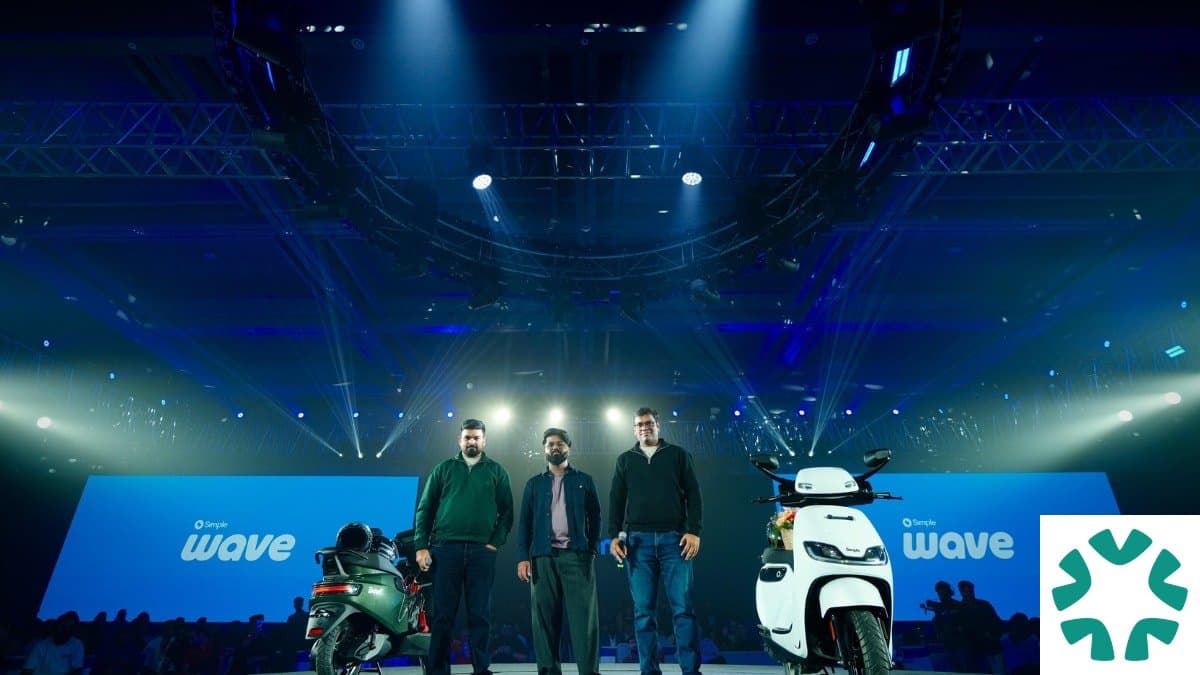
Bengaluru-based electric two-wheeler startup Simple Energy has introduced its first family-oriented escooter lineup, the Simple Wave, starting at ₹1.10 Lakh. The launch reflects a strategic push into India’s affordable electric two-wheeler segment, as competition intensifies to capture mass-market buyers.

Editor, Lazyfounder
KEY HIGHLIGHTS
- Simple Energy has launched the Simple Wave, a family-oriented electric scooter lineup, with six models across three variants starting at ₹1.10 Lakh (ex-showroom).
- The lineup includes the Simple Wave S, Simple Wave, and Simple Wave+, each offering different battery capacities, displays, and connected features.
- The top-end Simple Wave+ variant offers a 243 km IDC range and a top speed of 90 kmph.
- Simple Energy aims to scale monthly sales to 10,000 units by March 2027, up from around 1,500 units currently.
Product launch and pricing
Simple Energy, a Bengaluru-based electric two-wheeler startup, has launched its first family electric scooter, the Simple Wave, with an introductory starting price of ₹1.10 Lakh (ex-showroom). The lineup includes six models across three variants: Simple Wave S, Simple Wave, and Simple Wave+. Each variant differs in battery capacity, display features, and connected technology, catering to a range of customer needs.
Market strategy and competition
The launch comes as India’s electric two-wheeler (E2W) manufacturers increasingly focus on affordable, commuter-friendly scooters with practical range. This shift aims to expand beyond the premium early-adopter segment, which has dominated the market so far. Simple Energy’s move reflects a broader trend of companies competing to capture the mass-market audience amid rising competition in the sector.
Performance and sales targets
The top-end variant, Simple Wave+, offers a 243 km IDC range and a top speed of 90 kmph, positioning it as a competitive option for daily commuters. Simple Energy plans to scale its monthly sales from the current 1,500 units to 10,000 units by March 2027, signalling aggressive growth ambitions in the affordable E2W segment.
What this means
Lazyfounder analysis — our interpretation, not reported fact.
Simple Energy’s launch of an affordable, family-oriented electric scooter lineup signals a strategic shift in India’s electric two-wheeler (E2W) market. For founders and operators, this move underscores the growing competition to capture the mass-market segment, which has largely been underserved by premium-focused offerings. The emphasis on practical range, varied battery capacities, and connected features also highlights the need for startups in this space to balance cost with technology to appeal to a broader audience.
For investors, the company’s ambition to scale monthly sales tenfold within two years suggests confidence in demand, but it also raises questions about execution risks in a crowded market. The focus on affordability could pressure margins, making it critical for startups to differentiate through product quality, after-sales service, or financing options. This launch serves as a reminder that the E2W sector is maturing beyond early adopters, and startups that fail to adapt to mass-market expectations may struggle to sustain growth.
Key takeaways
- Simple Energy’s entry into the affordable E2W segment reflects intensifying competition to capture India’s mass-market buyers, a shift from premium early adopters.
- The emphasis on practical range, battery variants, and connected features shows startups must balance cost with technology to appeal to families and daily commuters.
- Scaling sales from 1,500 to 10,000 units monthly within two years signals confidence in demand but also highlights execution risks in a competitive market.
- Affordability-focused pricing may pressure margins, pushing startups to differentiate through product quality, financing, or service offerings.
Sources
- inc42.com · 2026-09-02
Simple Energy Launches Wave Family Escooter At ₹1.1 Lakh
This story is an original summary drafted with AI by Lazyfounder from the reporting listed above and checked by automated validation. Facts are attributed to their original publishers; sections marked as analysis are Lazyfounder's. Where a source is in another language, facts were machine-translated and quotations are reported, not reproduced. Read the original coverage via the links, and see our AI policy and corrections policy.

About the author
Editor, Lazyfounder
Tarun Mottlia edits LazyFounders, covering Indian startups, funding rounds, AI and product launches. Every story on the site is AI-assisted and checked against its cited sources before publication.
More stories by Tarun MottliaGet the LazyFounder Brief
Startup, funding and AI news in a five-minute read. Join the early-access list.
