
Underwater umbrellas reduce coral bleaching in Caribbean study
A team of researchers at Nova Southeastern University has tested a simple yet innovative solution to combat coral bleaching: "underwater umbrellas" that reduce solar exposure. The study, published in Frontiers in Marine Science, found that shaded corals in the Caribbean suffered less bleaching and even showed signs of recovery, though challenges remain in scaling the approach.

Editor, Lazyfounder
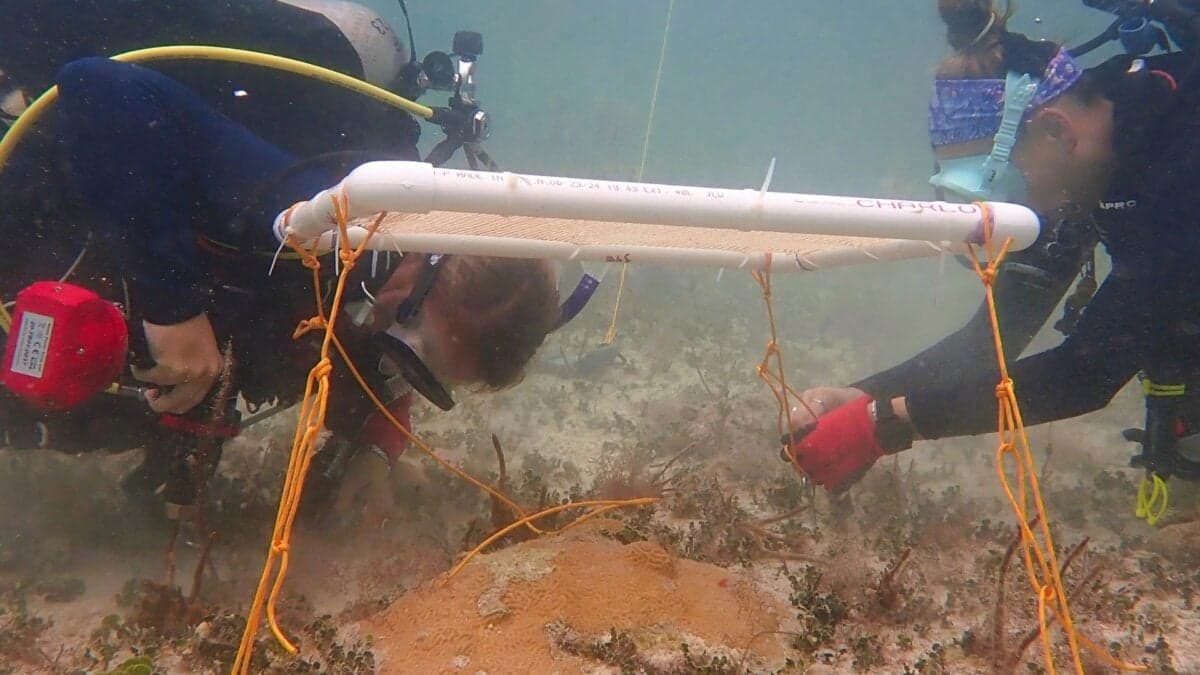
A team of researchers at Nova Southeastern University has tested a simple yet innovative solution to combat coral bleaching: "underwater umbrellas" that reduce solar exposure. The study, published in Frontiers in Marine Science, found that shaded corals in the Caribbean suffered less bleaching and even showed signs of recovery, though challenges remain in scaling the approach.
30 SEC SUMMARY
- Researchers at Nova Southeastern University tested "underwater umbrellas" to shade coral reefs and reduce bleaching caused by solar exposure and warming waters.
- Shaded corals in the Caribbean showed 60% less light exposure and experienced less bleaching, with some signs of recovery.
- The study, published in Frontiers in Marine Science, suggests the umbrellas could be scaled for larger reefs but are currently limited to small areas.
- Unshaded corals also fared better than expected, potentially due to heat-tolerant algae.
- Most coral reefs are projected to suffer annual mass bleaching by 2050 due to ocean warming.
TABLE OF CONTENTS
- Underwater umbrellas reduce coral bleaching in study
- Why coral bleaching matters
- Limitations and unexpected findings
- What this means
- Key takeaways
- FAQ
- Sources
KEY HIGHLIGHTS
- Researchers at Nova Southeastern University developed "underwater umbrellas" to shade corals and reduce bleaching caused by solar exposure and warming waters.
- Shaded corals in the Caribbean experienced 60% less light exposure and showed less bleaching, with some recovery observed.
- The study, published in Frontiers in Marine Science, found no evidence the shades harm other parts of the ecosystem.
- Unshaded corals also suffered less bleaching than expected, potentially due to heat-tolerant algae like Durusdinium.
- Scientists warn most coral reefs will face annual mass bleaching by 2050 without deeper cuts to global emissions.
Underwater umbrellas reduce coral bleaching in study
Researchers from Nova Southeastern University have developed and tested "underwater umbrellas" designed to shade coral reefs and reduce bleaching caused by solar exposure and warming waters. According to Gizmodo, the study, published in Frontiers in Marine Science, found that shaded corals in the Caribbean experienced 60% less light exposure. This reduction correlated with less bleaching and even signs of recovery in some corals.
The umbrellas were inspired by similar structures used in Dominica during a 2023 marine heatwave, as reported by the researchers. While the current design is effective for small-scale applications, the team believes it could be scaled up for larger reef systems with further development.
Why coral bleaching matters
Coral bleaching occurs when corals expel symbiotic algae called zooxanthellae due to stress from temperature changes, light, or nutrient availability. Gizmodo explains that these algae provide corals with their vibrant colors and serve as their primary food source. Without them, corals turn white and begin to starve, a phenomenon known as bleaching.
The world is reportedly experiencing its fourth global coral bleaching event, with scientists projecting that most reefs will suffer annual mass bleaching by 2050 due to ocean warming. According to Gizmodo, current global efforts to cut greenhouse gas emissions and remove carbon from the atmosphere are insufficient to prevent this trend. The collapse of coral reefs threatens marine biodiversity, coastal protections, and industries like fishing, which rely on healthy reef ecosystems.
Limitations and unexpected findings
While the study’s results are promising, Gizmodo reports that unshaded corals in the same area also experienced less bleaching than expected. The researchers suggest this could be due to the presence of heat-tolerant algae, such as Durusdinium, which may help corals withstand warmer conditions but is also linked to slower growth and higher susceptibility to disease.
The study acknowledges key limitations, including the timing of shade deployment. According to Gizmodo, the umbrellas might have been more effective if installed before water temperatures reached levels that trigger bleaching. Additionally, the researchers found no significant differences in algae density or species between shaded and unshaded corals, which they attribute to sampling constraints.
Despite these challenges, the umbrellas had a measurable positive impact and did not appear to harm other parts of the ecosystem, per the study’s findings.
What this means
Lazyfounder analysis — our interpretation, not reported fact.
For founders and operators in climate tech, marine conservation, or sustainable infrastructure, this study offers a glimpse into how low-tech, adaptive solutions can help ecosystems under climate stress. The "underwater umbrellas" aren’t a cure-all, but they demonstrate that targeted interventions can mitigate damage—even in extreme environments like coral reefs.
The broader implication? Innovation in climate adaptation doesn’t always require breakthrough technology. Sometimes, it’s about repurposing existing concepts (like shade) for new challenges. However, scaling such solutions will demand creative thinking around materials, logistics, and cost. For startups, this could open doors to partnerships with research institutions, modular marine infrastructure projects, or renewable materials designed for underwater use.
That said, the study also serves as a reminder that adaptation alone won’t save coral reefs. Without deeper cuts to global emissions, even the most effective local interventions will only delay, not prevent, ecosystem collapse. Founders in this space may need to balance short-term solutions with long-term systemic change.
Key takeaways
- Underwater umbrellas reduced coral light exposure by 60% and mitigated bleaching in the Caribbean, with some shaded corals showing signs of recovery.
- The study highlights the potential of localized, low-tech solutions to protect ecosystems under climate stress.
- Scaling such technologies remains a challenge, requiring innovation in materials, logistics, and cost efficiency.
- Heat-tolerant algae may help corals survive warming waters but come with trade-offs like slower growth and higher disease risk.
- Global coral bleaching events are projected to worsen, with most reefs facing annual mass bleaching by 2050 unless emissions are reduced.
FAQ
What are underwater umbrellas?
Underwater umbrellas are shading devices designed to reduce the amount of sunlight reaching coral reefs. By lowering light exposure, they help mitigate the stress that causes corals to bleach, particularly in warming waters.
How effective were the umbrellas in the study?
The umbrellas reduced light exposure by 60% and were associated with less bleaching and partial recovery in shaded corals. However, some unshaded corals also fared better than expected, possibly due to heat-tolerant algae.
Can this solution be scaled for larger reefs?
The current design is best suited for small areas, but researchers believe it could be adapted for larger reefs with further development. Scaling would require advancements in materials, logistics, and cost efficiency.
What are the limitations of this approach?
The umbrellas may be less effective if deployed after bleaching has already begun. The study also notes that heat-tolerant algae, while helpful in the short term, may have trade-offs like slower coral growth and increased disease risk.
Related on Lazyfounder
Sources
- Gizmodo · 2026-10-02
Scientists Invent Underwater Umbrellas to Protect Coral Reefs—and It Appears to Be Working
This story is an original summary drafted with AI by Lazyfounder from the reporting listed above and checked by automated validation. Facts are attributed to their original publishers; sections marked as analysis are Lazyfounder's. Where a source is in another language, facts were machine-translated and quotations are reported, not reproduced. Read the original coverage via the links, and see our AI policy and corrections policy.

About the author
Editor, Lazyfounder
Tarun Mottlia edits LazyFounders, covering Indian startups, funding rounds, AI and product launches. Every story on the site is AI-assisted and checked against its cited sources before publication.
More stories by Tarun MottliaGet the LazyFounder Brief
Startup, funding and AI news in a five-minute read. Join the early-access list.
