

Unacademy-upGrad acquisition began with 2020 founder pitch, says Screwvala
Ronnie Screwvala has revealed that the $200 million acquisition of Unacademy by upGrad, completed in 2026, originated from a bold pitch by Gaurav Munjal in 2020. In a post reflecting on the deal, Screwvala shared how Munjal’s proposal to merge the companies and lead the combined entity set the stage for years of dialogue—and ultimately, consolidation when market conditions changed.

Editor, Lazyfounder
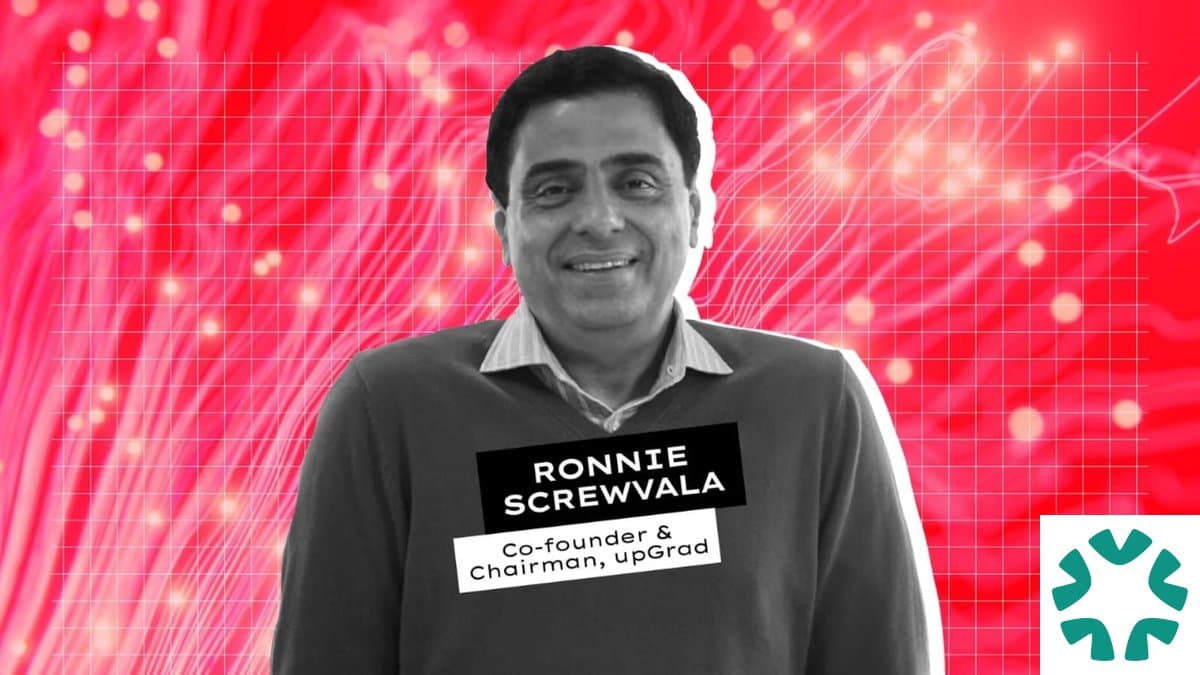
TABLE OF CONTENTS
How the pitch began
In 2020, Gaurav Munjal, founder of Unacademy, approached Ronnie Screwvala and Mayank Kumar of upGrad with a proposal to merge the two companies. The meeting took place over lunch at Taj Lands End in Mumbai, where Munjal not only suggested a merger but also expressed his ambition to run the combined entity.
Screwvala described Munjal’s pitch as audacious, noting that while the idea of a CEO from Unacademy leading the merged company was unexpected, it demonstrated Munjal’s confidence and willingness to engage openly with a larger player in the edtech space.
Different paths to the same market
At the time of the initial pitch, Unacademy and upGrad were pursuing distinct strategies. Unacademy had built its model around competitive exam preparation and educator-driven content, while upGrad, founded in 2015 by Screwvala, Kumar and Phalgun Kompalli, focused on higher education, professional learning and career development.
Despite these differences, both companies were riding the wave of India’s growing online education market, which saw accelerated adoption during the pandemic. Unacademy had reached a valuation of about $1.5 billion by September 2020, reflecting its rapid growth in the test-preparation segment.
A relationship built on respect and timing
The 2020 pitch did not immediately lead to a deal, but it laid the groundwork for a personal and professional relationship between the founders. Screwvala recalled multiple meetings over the years, some delayed by Munjal’s tardiness, but noted that mutual respect and trust remained consistent.
Screwvala emphasised that relationships like these can create opportunities for significant collaboration, even years later. He wrote that trust, respect and liking for one another were key to keeping the conversation alive.
Market shifts revived the conversation
By July 2025, the edtech landscape had changed dramatically. The pandemic-driven exuberance had subsided, valuations had corrected and investors were prioritising sustainable economics over growth at all costs. Munjal reached out to Screwvala again to discuss Unacademy’s position at this crossroads.
According to Screwvala, these new market realities made the structural fit between Unacademy and upGrad more compelling. upGrad’s strength in higher education, online degrees and professional upskilling complemented Unacademy’s consumer base, test-preparation expertise and product-driven culture.
Why the acquisition makes sense
Screwvala highlighted the strategic advantages of combining the two companies. Unacademy brought a large user base, a technology-first mindset and a brand built on resilience and adaptability. upGrad, on the other hand, offered depth in professional learning, career development and higher education—areas where Unacademy had less presence.
He framed the acquisition as more than a financial transaction, suggesting it reflects a broader shift in edtech from a focus on technology to a focus on tangible impact for India’s workforce and economic goals.
What this means
Lazyfounder analysis — our interpretation, not reported fact.
This story is a case study in how founder relationships and timing shape consolidation in crowded markets like edtech. For founders, Screwvala’s account underscores that mergers or acquisitions are rarely impulsive—many begin as conversations years before deals materialise, often built on personal rapport and trust. The fact that Munjal’s 2020 pitch resurfaced in a very different market also shows how structural compatibility can outlast hype cycles. For Indian edtech operators, the deal signals that scale alone is no longer enough; investors are rewarding combinations that create complementary strengths, especially in segments like professional upskilling where demand is steady. The narrative also subtly warns that early-stage founders betting on hypergrowth without a path to unit economics may need to rethink their strategy as funding conditions tighten.
Sources
This story is an original summary drafted with AI by Lazyfounder from the reporting listed above and checked by automated validation. Facts are attributed to their original publishers; sections marked as analysis are Lazyfounder's. Where a source is in another language, facts were machine-translated and quotations are reported, not reproduced. Read the original coverage via the links, and see our AI policy and corrections policy.

About the author
Editor, Lazyfounder
Tarun Mottlia edits LazyFounders, covering Indian startups, funding rounds, AI and product launches. Every story on the site is AI-assisted and checked against its cited sources before publication.
More stories by Tarun MottliaGet the LazyFounder Brief
Startup, funding and AI news in a five-minute read. Join the early-access list.
