
UK rail nationalisation shows early challenges as public support grows
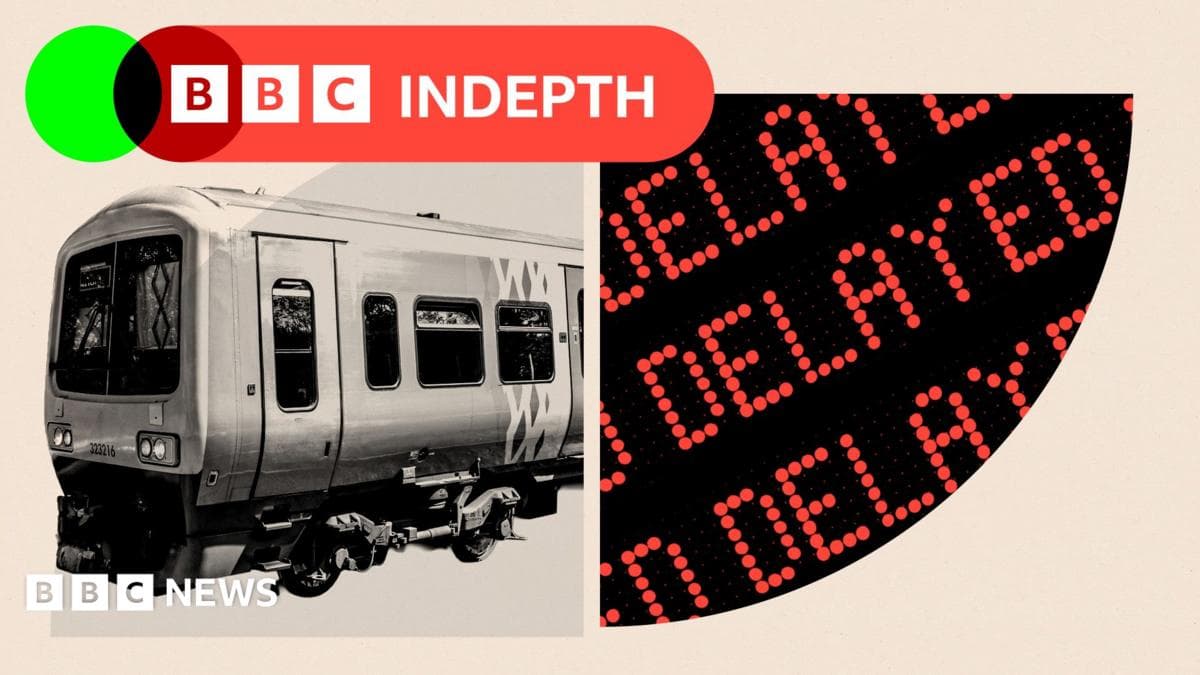
The UK government has started nationalising passenger rail services under Labour, beginning with South Western Railway (SWR) in May 2025. While public support for nationalisation is high, early performance under public ownership presents mixed results, with ongoing issues like cancellations and delays.

Editor, Lazyfounder
30 SEC SUMMARY
- The UK Labour government is nationalising passenger rail services, starting with South Western Railway in May 2025.
- Nearly two-thirds of the public support rail nationalisation, according to a YouGov poll.
- Early performance under public ownership shows mixed results, with improvements in some areas but persistent challenges like cancellations and delays.
- Experts warn it may take a decade to fully assess the impact of nationalisation on rail performance.
- Great British Railways (GBR) is planned to unify rail operations, but its enabling legislation is still in progress.
TABLE OF CONTENTS
KEY HIGHLIGHTS
- Labour is nationalising passenger rail services, with South Western Railway (SWR) as the first of six services brought into public ownership in May 2025.
- Public support for rail nationalisation stands at nearly two-thirds, per a YouGov poll.
- SWR saw increased cancellations in its first year under public ownership, though the government attributes this to external factors like signal failures and trespass incidents.
- TransPennine Express, nationalised in 2023 under the Conservatives, reduced cancellations but still performs above the national average.
- The rail industry receives around £12bn annually in subsidies, excluding major projects like HS2.
- Great British Railways (GBR) is intended to unify rail operations, but its enabling legislation is still progressing through parliament.
Public ownership begins with South Western Railway
The UK government, led by the Labour Party, has begun nationalising passenger rail services, with South Western Railway (SWR) becoming the first operator brought into public ownership in May 2025. This follows the nationalisation of TransPennine Express in 2023 under the previous Conservative government. Five additional operators are slated for public ownership in the coming years, including c2c, Thameslink, LNER, Northern, and others.
According to BBC News, SWR experienced a rise in cancellations during its first year under public control. The government attributes this to external factors such as high summer temperatures, signal failures, and trespass incidents. Alex Hynes, chief executive of DfT Operator Limited (DfTO), the government-owned company overseeing public rail services, stated that efforts to improve SWR include introducing delayed new trains on suburban routes and recruiting more drivers.
TransPennine Express shows improvement but challenges remain
TransPennine Express, nationalised in May 2023, has seen a reduction in cancellations since coming under public ownership. However, its performance remains above the national average for cancellations and delays. The government claims that publicly owned operators are outperforming private operators under Department for Transport (DfT) contracts in terms of punctuality and cancellations.
Despite these improvements, experts caution that it is too early to draw definitive conclusions about the impact of nationalisation. Stephen Glaister, emeritus professor of transport and infrastructure at Imperial College London, emphasised that a decade may be needed to fully assess the effects of public ownership on rail performance.
Public support and financial subsidies
Public support for rail nationalisation stands at nearly two-thirds, according to a YouGov poll cited by BBC News. The UK rail industry currently receives around £12bn annually in subsidies, excluding major projects like HS2. Transport Secretary Heidi Alexander has stated that the government aims to reduce subsidy levels over time.
The government’s long-term plan involves unifying rail operations under a new publicly run body, Great British Railways (GBR). Legislation to create GBR is currently progressing through parliament, though its implementation timeline remains unclear.
Expert perspectives on rail nationalisation
Experts remain divided on the potential long-term impact of nationalisation. Jon Shaw, a professor at the University of Plymouth, noted that while private operators made strategic cuts that improved efficiency, they also contributed to fragmentation in the rail network. Shaw suggested that public ownership alone will not address underlying issues without significant investment in infrastructure.
Leo, a commuter in Manchester, expressed frustration with ongoing disruptions, stating to BBC News that the situation has not improved under public ownership. His experience reflects broader concerns about whether nationalisation will deliver tangible benefits for passengers in the short term.
What this means
Lazyfounder analysis — our interpretation, not reported fact.
Labour’s push to nationalise UK rail services reflects a broader political and public appetite for returning core infrastructure to public control. However, the early challenges faced by South Western Railway and TransPennine Express highlight the complexity of reversing decades of privatisation. For founders and operators, this shift signals potential opportunities in infrastructure investment, public-sector contracts, and workforce development—but also underscores the risks of operating in a sector prone to external disruptions and political scrutiny.
The mixed performance of nationalised operators suggests that structural issues, such as aging infrastructure and industrial relations, may not be resolved by ownership changes alone. Founders in adjacent sectors, like technology or logistics, should monitor how GBR’s establishment could reshape procurement, data sharing, and service integration. Meanwhile, the government’s emphasis on reducing subsidies could lead to tighter budgets for operators, forcing innovation in cost efficiency or alternative revenue streams.
Key takeaways
- Early performance under public ownership is mixed, with improvements in some areas but persistent challenges like cancellations and delays.
- Public support for nationalisation is strong, but tangible benefits for passengers may take years to materialise.
- The £12bn annual subsidy for rail operations could face pressure to decrease, impacting funding and investment priorities.
- Great British Railways (GBR) could reshape the sector, but its success depends on legislative progress and execution.
- Founders in rail-adjacent sectors should prepare for potential shifts in procurement, infrastructure investment, and service integration under GBR.
FAQ
Why is the UK nationalising its rail services?
The UK government, under Labour, is nationalising rail services to bring them under public ownership, citing public support and a desire to improve performance and reduce fragmentation in the rail network.
How has nationalisation affected rail performance so far?
Early results are mixed. TransPennine Express saw a reduction in cancellations, but South Western Railway experienced increased cancellations in its first year. Experts warn it may take a decade to fully assess the impact.
What is Great British Railways (GBR)?
GBR is a planned publicly run body intended to unify rail operations in the UK. Its enabling legislation is currently progressing through parliament, but its implementation timeline remains uncertain.
Related on Lazyfounder
Sources
- BBC News (Tech & Business) · 2026-10-12
Publicly owned rail is popular. But is it making the trains run on time?
This story is an original summary drafted with AI by Lazyfounder from the reporting listed above and checked by automated validation. Facts are attributed to their original publishers; sections marked as analysis are Lazyfounder's. Where a source is in another language, facts were machine-translated and quotations are reported, not reproduced. Read the original coverage via the links, and see our AI policy and corrections policy.

About the author
Editor, Lazyfounder
Tarun Mottlia edits LazyFounders, covering Indian startups, funding rounds, AI and product launches. Every story on the site is AI-assisted and checked against its cited sources before publication.
More stories by Tarun MottliaGet the LazyFounder Brief
Startup, funding and AI news in a five-minute read. Join the early-access list.
