
Burnham announces Great British Grid to accelerate UK energy infrastructure
UK Prime Minister Andy Burnham is set to announce a new publicly owned company, Great British Grid, during the Labour Party conference in Liverpool. The initiative aims to accelerate electricity grid connections and reduce energy costs, while also increasing competition in the sector. The announcement comes alongside plans to fund a new NHS-style social care system, with speculation about reforms to the state pension ‘triple lock’ policy to support these ambitions.

Editor, Lazyfounder
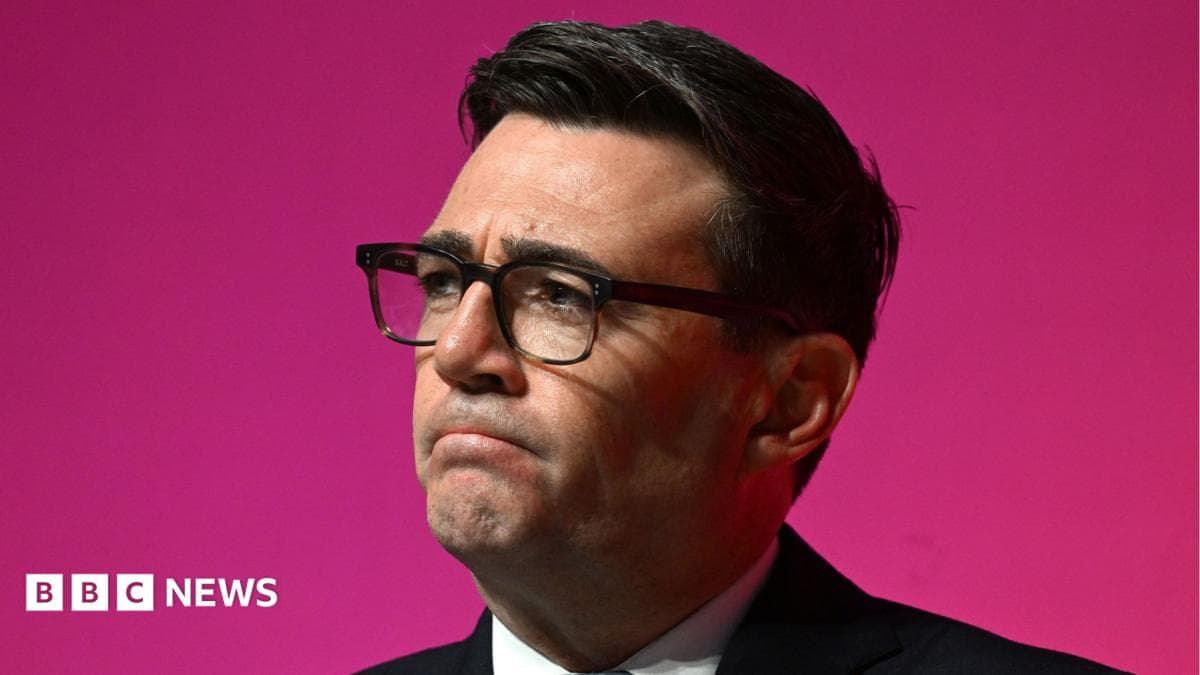
UK Prime Minister Andy Burnham is set to announce a new publicly owned company, Great British Grid, during the Labour Party conference in Liverpool. The initiative aims to accelerate electricity grid connections and reduce energy costs, while also increasing competition in the sector. The announcement comes alongside plans to fund a new NHS-style social care system, with speculation about reforms to the state pension ‘triple lock’ policy to support these ambitions.
30 SEC SUMMARY
- UK Prime Minister Andy Burnham to announce a new publicly owned company, Great British Grid, to accelerate electricity grid connections.
- Great British Grid will compete with private firms for transmission projects, aiming to reduce energy costs to European levels within a decade.
- Funding will come from the existing budget of GB Energy, Labour’s public green investment company.
- Burnham will also outline plans for free social care services in England, potentially funded by reviewing the ‘triple lock’ pension policy.
- The announcement will be made during Labour’s party conference, framing the initiative as part of a broader push for public control of utilities.
TABLE OF CONTENTS
- Announcement of Great British Grid
- Funding and Fiscal Context
- Industry and Political Reactions
- Broader Policy Ambitions
- What this means
- Key takeaways
- FAQ
- Sources
KEY HIGHLIGHTS
- Great British Grid will invest in and compete for electricity transmission projects, aiming to speed up connections and reduce energy costs.
- Funding for the initiative will come from the existing budget of GB Energy, Labour’s public green investment company.
- Burnham will also reveal plans for free social care services in England, potentially funded by reviewing the ‘triple lock’ pension policy.
- Ofgem estimates £70bn in grid investment is needed between 2025 and 2031, quadrupling the current rate.
Announcement of Great British Grid
UK Prime Minister Andy Burnham is set to announce the creation of a new publicly owned company, Great British Grid, during his keynote speech at the Labour Party conference in Liverpool. The company is intended to invest in and accelerate Britain’s electricity grid connections, addressing delays that have slowed renewable energy projects.
According to BBC News, Great British Grid will compete with the three private companies currently managing the grid for transmission projects. The initiative aims to drive up competition, speed up connections, and reduce energy costs to levels comparable with other European nations within ten years.
Burnham will frame the move as the first step in a broader ambition to increase public control over utilities, though the bulk of grid investment will continue to come from private sources. Transmission owners have reportedly planned £90bn in spending over the next five years.
Funding and Fiscal Context
Funding for Great British Grid will be drawn from the existing budget of GB Energy, the public green investment company established by Labour and headquartered in Aberdeen. The government has not announced additional funding for the initiative.
The announcement comes as Burnham prepares to outline plans for a new NHS-style social care system for England, which will be rolled out from 2030. However, the government faces a challenging fiscal landscape, with rising borrowing costs and speculation about potential reforms to the ‘triple lock’ pension policy to free up resources.
Chancellor John Healey has declined to guarantee that the ‘triple lock’—which ensures state pensions rise in line with inflation, wages, or 2.5%, whichever is highest—will remain in Labour’s next election manifesto. The policy is expected to add billions to pension costs due to the UK’s ageing population.
Industry and Political Reactions
The UK’s electricity grid is currently fully privatised, a model critics argue has led to underinvestment and sluggish development. According to BBC News, delays in grid connection projects have increased, with a significant backlog of projects waiting to be connected. Ofgem, the energy regulator, estimates that £70bn of investment is required between 2025 and 2031, quadrupling the current rate of spending.
Sharon Graham, General Secretary of the Unite union, and Matthew Lawrence, founder of the think tank Common Wealth, have previously highlighted the need for greater public investment in utilities to address these challenges.
The announcement has drawn criticism from the Conservative Party. Andrew Bowie, Shadow Energy Secretary, accused Burnham of attempting to nationalise the grid, framing the move as a step away from private sector competition.
Broader Policy Ambitions
Burnham’s speech will also include plans for the UK’s first national energy strategy, alongside proposals to devolve stronger powers to mayors and local leaders. The Prime Minister is expected to emphasise ‘honest conversations’ about difficult policy choices, including the sustainability of pensions and the funding of social care.
The next UK general election must be held by August 2029, setting a timeline for Labour to implement its agenda. Burnham’s speech will seek to position the party’s policies as a ‘serious prospectus’ for economic and social reform, with ‘hope’ as the central theme of the conference.
What this means
Lazyfounder analysis — our interpretation, not reported fact.
For founders and operators in the energy sector, Great British Grid represents a significant shift in the UK’s approach to utility infrastructure. While the initiative aims to accelerate grid connections—critical for renewable energy projects—its reliance on existing budgets and competition with private firms suggests a hybrid model rather than full nationalisation. This could create opportunities for public-private partnerships, particularly in co-investing for grid upgrades.
However, the broader fiscal context is a reminder of the trade-offs inherent in large-scale public investment. Burnham’s willingness to revisit the ‘triple lock’ pension policy signals a pragmatic approach to funding priorities, but it also underscores the political risks of reform. For businesses, the emphasis on competition and local devolution may offer new avenues for collaboration, though uncertainties remain about how these policies will be implemented in practice.
Key takeaways
- Great British Grid is designed to increase competition and speed up grid connections, addressing delays in renewable energy projects.
- The initiative signals a shift toward greater public sector involvement in utilities, though private investment will remain dominant.
- Funding challenges persist, with speculation about reforms to the state pension ‘triple lock’ to support social care expansion.
- The announcement underscores Labour’s focus on infrastructure investment as a key pillar of its economic strategy.
FAQ
What is Great British Grid?
Great British Grid is a new publicly owned company announced by UK Prime Minister Andy Burnham. It will invest in and compete for electricity transmission projects, aiming to speed up grid connections and reduce energy costs.
How will Great British Grid be funded?
Funding for Great British Grid will come from the existing budget of GB Energy, Labour’s public green investment company. No additional funding has been announced.
What is the ‘triple lock’ pension policy, and why is it under review?
The ‘triple lock’ ensures that state pensions rise annually by the highest of inflation, wage growth, or 2.5%. It is under review due to concerns about its long-term sustainability, as the UK’s ageing population is expected to increase pension costs significantly.
How will Great British Grid affect private companies in the energy sector?
Great British Grid will compete with private companies for transmission projects but will also support firms in financing their own grid connections. Private investment will continue to play a dominant role in grid development.
What are the broader implications of Labour’s energy policy?
Labour’s energy policy includes greater public sector involvement in utilities, a national energy plan, and stronger powers for local leaders. The focus on grid infrastructure and renewable energy aims to reduce costs and accelerate the transition to cleaner energy, though fiscal constraints may limit the scope of these reforms.
Related on Lazyfounder
Sources
- BBC News (Tech & Business) · 2026-09-28
Andy Burnham to unveil public body to invest in electricity grid - BBC News (Tech & Business) · 2026-09-28
Andy Burnham to unveil public body to invest in electricity grid - BBC News (Tech & Business) · 2026-09-28
Andy Burnham to unveil public body to invest in electricity grid - BBC News (Tech & Business) · 2026-09-28
Andy Burnham to unveil public body to invest in electricity grid - BBC News (Tech & Business) · 2026-09-28
GB Grid: Andy Burnham says public body will invest in electricity grid
This story is an original summary drafted with AI by Lazyfounder from the reporting listed above and checked by automated validation. Facts are attributed to their original publishers; sections marked as analysis are Lazyfounder's. Where a source is in another language, facts were machine-translated and quotations are reported, not reproduced. Read the original coverage via the links, and see our AI policy and corrections policy.

About the author
Editor, Lazyfounder
Tarun Mottlia edits LazyFounders, covering Indian startups, funding rounds, AI and product launches. Every story on the site is AI-assisted and checked against its cited sources before publication.
More stories by Tarun MottliaGet the LazyFounder Brief
Startup, funding and AI news in a five-minute read. Join the early-access list.
