
Russia’s United Aircraft Corporation tests GigaChat AI for aircraft design
Russia’s United Aircraft Corporation is experimenting with Sberbank’s GigaChat AI model to assist in the preliminary design of military and civilian aircraft. The initiative follows Western sanctions that cut off access to major engineering software suppliers, prompting a shift to domestically developed alternatives.

Editor, Lazyfounder
AI adoption driven by sanctions
Russia’s United Aircraft Corporation (UAC) is experimenting with Sberbank’s GigaChat AI model to explore configurations for future military and civilian aircraft, according to reporting by TechRadar. The shift follows Western sanctions that forced UAC to replace engineering software from Dassault Systèmes, Siemens, and Autodesk with domestically developed alternatives.
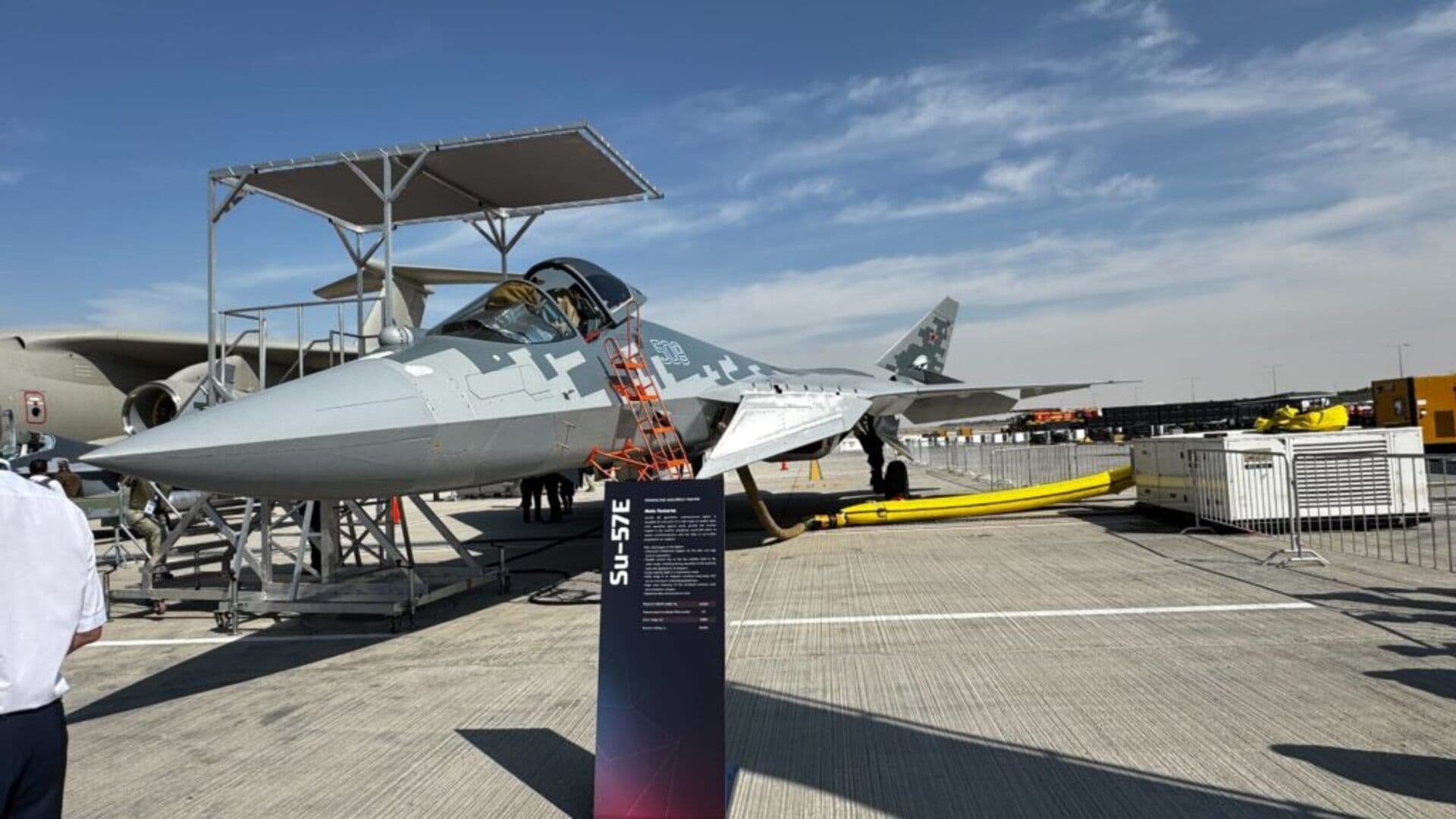
UAC has deployed local software across 4,000 engineering workstations, reducing reliance on foreign tools. GigaChat is being tested during the preliminary design phase, where it generates and evaluates possible aircraft layouts before detailed engineering begins. While UAC has not confirmed military applications, the technology could eventually support structural and aerodynamic assessments for projects like the Su-57 and Su-35 fighter jets.
Impact on civilian programs
The sanctions and transition to domestic software have disrupted UAC’s civilian projects. The MC21 passenger jet program has faced delays of nearly two years due to challenges in wing production and component substitution. First Deputy Prime Minister Denis Manturov has set late 2027 as the target for certifying a fully Russian-made version of the aircraft.
Broader technological shift
The adoption of AI tools like GigaChat reflects Russia’s broader push to develop domestic alternatives in response to restricted access to Western technology. While UAC has not identified any project aimed at challenging platforms like the F-22, the integration of AI into early-stage design suggests an effort to accelerate development cycles despite engineering constraints.
What this means
Lazyfounder analysis — our interpretation, not reported fact.
For founders and operators in aerospace, defense, or AI-driven engineering, UAC’s move underscores how geopolitical disruptions can force rapid adoption of local alternatives. The reliance on GigaChat—rather than established Western tools—highlights both the risks of supply chain dependence and the potential for AI to bridge gaps in constrained environments. However, delays in programs like the MC21 also serve as a cautionary note: substituting critical software and components can introduce technical debt and timeline slippages, even with AI assistance.
Related on Lazyfounder
Sources
- TechRadar · 2026-10-28
Moscow could design an F-22 rival using an AI model from Russia's JPMorgan Chase — Sberbank GigaChat used its LLM for a 'generative design of a new aircraft'
This story is an original summary drafted with AI by Lazyfounder from the reporting listed above and checked by automated validation. Facts are attributed to their original publishers; sections marked as analysis are Lazyfounder's. Where a source is in another language, facts were machine-translated and quotations are reported, not reproduced. Read the original coverage via the links, and see our AI policy and corrections policy.

About the author
Editor, Lazyfounder
Tarun Mottlia edits LazyFounders, covering Indian startups, funding rounds, AI and product launches. Every story on the site is AI-assisted and checked against its cited sources before publication.
More stories by Tarun MottliaGet the LazyFounder Brief
Startup, funding and AI news in a five-minute read. Join the early-access list.
