
Tu-160M bomber adopts modular avionics to simplify future upgrades
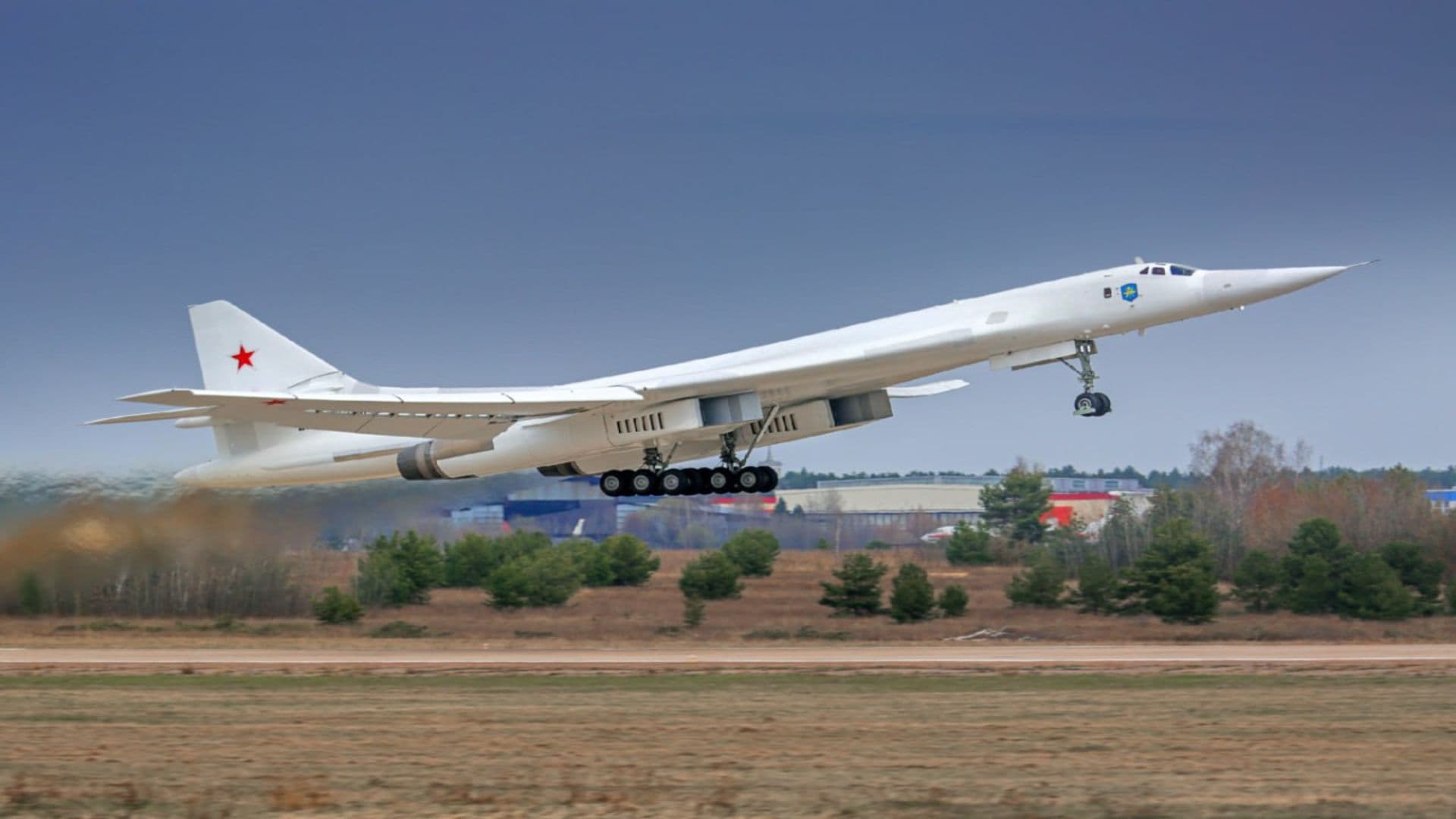
Russia’s Tupolev Tu-160M strategic bomber is being modernized with modular avionics, a shift aimed at extending its operational life by allowing incremental technological upgrades. While the aircraft retains its Soviet-era exterior, its internal systems—including radar, cockpit displays, and engines—have undergone significant updates. Production and delivery delays, however, continue to challenge the program.

Editor, Lazyfounder
Modular avionics as a longevity strategy
Tupolev is equipping the Tu-160M strategic bomber with modular avionics, a design choice intended to streamline future upgrades. According to claims from TechRadar, the new electronics architecture allows individual components to be replaced as technology advances, avoiding the need for a complete rebuild of the aircraft’s electronic infrastructure. This approach mirrors the U.S. B-52 Stratofortress’s ability to integrate new systems over decades.
The upgrade includes redesigned radar, digital cockpit displays, improved communications and navigation systems, and NK-32-02 engines. Tupolev claims 80% of the Tu-160M’s onboard equipment has been modernized, though the aircraft’s external appearance remains unchanged from its Soviet-era origins.
Production delays and operational constraints
A 2018 agreement between Tupolev and Russia’s Ministry of Defense covered the manufacture of 10 new Tu-160M bombers at an estimated cost of 160 billion rubles (~$1.9 billion). However, production delays have disrupted the delivery timeline. The first newly manufactured Tu-160M flew in January 2022, but by late 2025, only two aircraft had been delivered to Russia’s Aerospace Forces.
Ukrainian aviation monitoring group AviVector reported in May that only seven of Russia’s reported fleet of 18 Tu-160 bombers were actively conducting combat operations. The group’s assessment suggested that maintenance capacity and production bottlenecks at the Kazan Aviation Plant could limit the bomber’s operational availability.
What this means
Lazyfounder analysis — our interpretation, not reported fact.
The Tu-160M’s shift to modular avionics reflects a broader trend in defense technology: designing platforms for incremental upgrades rather than costly overhauls. For founders and operators in the aerospace and defense sector, this highlights the growing importance of flexible architectures in long-lived assets. While Russia’s execution faces delays, the strategy itself underscores how military procurement is adapting to rapid technological change—something companies in adjacent industries, like commercial aviation or drones, may need to consider.
Related on Lazyfounder
Sources
- TechRadar · 2026-10-22
Russia's B-1 bomber clone set to get new avionics and a 'modular' architecture — new kit can be added later to boost longevity, not unlike the B-52 Stratofortress
This story is an original summary drafted with AI by Lazyfounder from the reporting listed above and checked by automated validation. Facts are attributed to their original publishers; sections marked as analysis are Lazyfounder's. Where a source is in another language, facts were machine-translated and quotations are reported, not reproduced. Read the original coverage via the links, and see our AI policy and corrections policy.

About the author
Editor, Lazyfounder
Tarun Mottlia edits LazyFounders, covering Indian startups, funding rounds, AI and product launches. Every story on the site is AI-assisted and checked against its cited sources before publication.
More stories by Tarun MottliaGet the LazyFounder Brief
Startup, funding and AI news in a five-minute read. Join the early-access list.
