
Trump declares robot imports a national security threat, kicking off trade talks
US President Donald Trump has declared robot imports a national security threat under Section 232 of the Trade Expansion Act of 1962. The move, following a Commerce Department investigation, initiates trade talks that could lead to tariffs or quotas—but imposes no immediate restrictions. The proclamation highlights reliance on foreign-made robots by US manufacturers like Tesla and Ford.

Editor, Lazyfounder
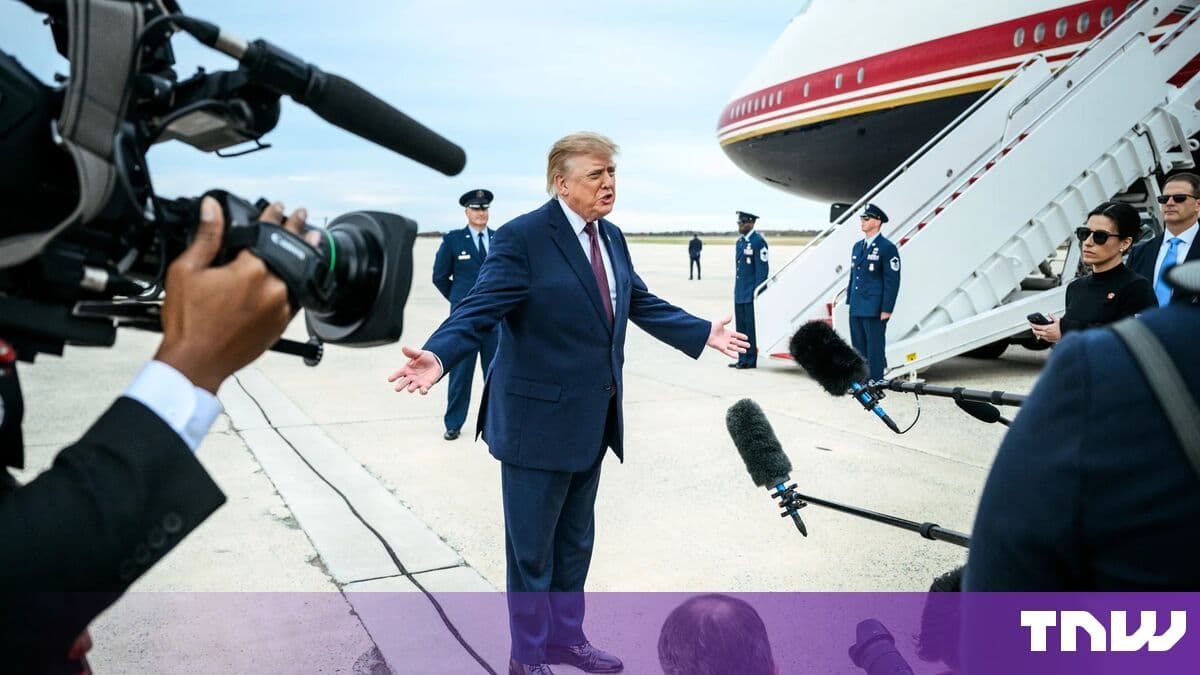
TABLE OF CONTENTS
KEY HIGHLIGHTS
- US President Donald Trump declared robot imports a national security threat under Section 232 of the Trade Expansion Act of 1962.
- The proclamation, signed on 28 October, initiates trade talks but imposes no immediate tariffs or restrictions.
- The Commerce Department’s investigation found foreign-made robots and industrial machinery pose risks to US national security.
- The US installed 38,500 industrial robots in 2025, making it the world’s second-largest market after China.
- Major US manufacturers like General Motors, Ford, Tesla, Boeing, and Lockheed Martin rely on foreign-made heavy robot arms.
Why the US is treating robot imports as a security risk
US President Donald Trump signed a proclamation on 28 October declaring robot imports a national security threat under Section 232 of the Trade Expansion Act of 1962. The move follows a Commerce Department investigation, led by Commerce Secretary Howard Lutnick, which concluded that foreign-made robots and industrial machinery pose risks to US national security. The proclamation covers robots, industrial machinery, and their components.
Section 232 allows the president to restrict imports on national security grounds. While the proclamation does not impose immediate tariffs or quotas, it initiates trade talks with foreign governments. If negotiations fail, the US could impose tariffs, duties, or quotas, or encourage investment in domestic production.
No immediate restrictions—but future tariffs are on the table
The proclamation does not name specific countries as targets for trade talks. However, it states that the "quantities and circumstances" of robot imports threaten to impair US national security. It also notes that US companies do not produce enough robots or industrial machinery to meet national security needs.
If trade talks do not yield a satisfactory outcome, the US could impose tariffs, duties, quotas, or fees, or take steps to boost domestic production. The Commerce Department opened its investigation into robot imports on 2 September 2025.
US firms rely on foreign-made robots
The US installed nearly 38,500 industrial robots in 2025, a 12% increase, making it the world’s second-largest market for industrial robotics after China, according to the International Federation of Robotics. Major US companies, including General Motors, Ford, Tesla, Boeing, and Lockheed Martin, depend on foreign-made heavy robot arms for their manufacturing operations.
These companies typically source robot arms from Japanese and European suppliers like FANUC, ABB, Yaskawa, and KUKA. No US manufacturer currently produces comparable heavy-duty robot arms, leaving supply chains vulnerable to potential restrictions.
This reliance is not new: in July, the Federal Communications Commission moved to ban certain foreign-made robots, including robot vacuums, robot dogs, and humanoids, but exempted industrial robot arms and fixed robots used in car plants and warehouses. China threatened retaliation over that ban.
Precedents for Section 232 actions
The Trump administration’s use of Section 232 to address robot imports follows earlier actions on products like steel, copper, pharmaceuticals, polysilicon, semiconductors, and drones. These measures were often justified on national security grounds but sparked trade disputes and retaliation from affected countries.
What this means
Lazyfounder analysis — our interpretation, not reported fact.
This proclamation signals a potential shift in how the US treats imported robotics and industrial machinery, with implications for cost, supply chain resilience, and domestic innovation. For founders and operators, the lack of immediate tariffs means no sudden cost increases—but the initiation of trade talks suggests future restrictions are possible.
The reliance of US automakers and aerospace firms on foreign-made robot arms, particularly from companies like FANUC, ABB, Yaskawa, and KUKA, highlights a critical vulnerability. If trade talks fail, tariffs or quotas could disrupt production lines, forcing companies to seek alternatives or accelerate domestic robotics development.
For startups in robotics or advanced manufacturing, this could create opportunities—either in filling gaps left by restricted imports or in collaborating with US firms to build domestic capacity. However, the uncertainty could also delay investment decisions, especially for hardware-heavy ventures.
Key takeaways
- Founders in automotive, aerospace, and manufacturing should assess their exposure to foreign-made robotics and explore domestic alternatives or partnerships.
- Startups in robotics or industrial machinery may see new demand if trade restrictions tighten, but must navigate regulatory uncertainty.
- The lack of US manufacturers producing comparable heavy-duty robot arms underscores a gap in domestic capability—potentially an opportunity for innovation or a risk for supply chain resilience.
Related on Lazyfounder
Sources
- The Next Web · 2026-10-31
Trump declares robot imports a national security threat
This story is an original summary drafted with AI by Lazyfounder from the reporting listed above and checked by automated validation. Facts are attributed to their original publishers; sections marked as analysis are Lazyfounder's. Where a source is in another language, facts were machine-translated and quotations are reported, not reproduced. Read the original coverage via the links, and see our AI policy and corrections policy.

About the author
Editor, Lazyfounder
Tarun Mottlia edits LazyFounders, covering Indian startups, funding rounds, AI and product launches. Every story on the site is AI-assisted and checked against its cited sources before publication.
More stories by Tarun MottliaGet the LazyFounder Brief
Startup, funding and AI news in a five-minute read. Join the early-access list.
