

Lenskart pivots to productivity-led growth in Q1 FY27
Lenskart’s latest quarterly results reflect a deliberate move away from rapid expansion toward a focus on profitability, margin improvement, and international scaling. The shift follows years of heavy investment in stores, manufacturing, and technology.

Editor, Lazyfounder
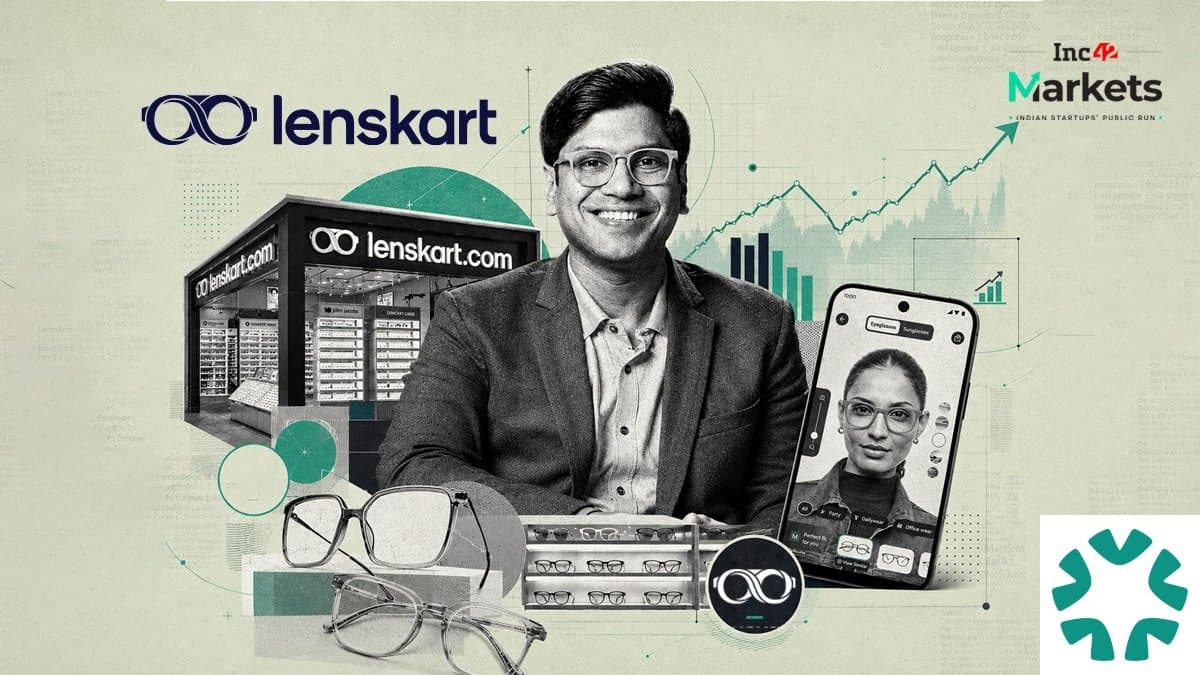
KEY HIGHLIGHTS
- Lenskart shifts strategy from expansion-led growth to productivity-led growth in Q1 FY27.
- The company aims to improve margins, deepen customer spending, and scale its international business.
What the Q1 FY27 results indicate
According to Inc42, Lenskart’s first-quarter results for the financial year 2026-27 (Q1 FY27) suggest the company is transitioning from a growth-at-all-costs model to one focused on productivity. For years, Lenskart prioritized expanding its store network, building brands, and penetrating India’s unorganized eyewear market through investments in physical retail, manufacturing, and technology.
The report highlights that Lenskart now aims to "improve margins, deepen customer spending, and scale its international business," signaling a phase where returns on past investments take precedence over further expansion.
Why the shift matters for founders
Lenskart’s strategic pivot may reflect broader investor expectations in India’s consumer startup ecosystem. After years of rapid scaling, startups in eyewear, fashion, and omnichannel retail are now under pressure to demonstrate sustainable unit economics and profitability.
The shift could impact how founders allocate capital, prioritize metrics, and communicate with investors, especially in sectors where physical retail and inventory-heavy models dominate.
What this means
Lazyfounder analysis — our interpretation, not reported fact.
Lenskart’s move is a bellwether for India’s D2C and omnichannel startups. The era of prioritizing store counts or GMV growth without margin visibility is fading. Founders in similar sectors—whether eyewear, apparel, or consumer electronics—will likely face heightened scrutiny on cash flow, customer lifetime value, and international scalability. For operators, this means doubling down on supply chain efficiency, private-label penetration, and data-driven merchandising to protect margins while growing.
Key takeaways
- Lenskart’s pivot from store expansion to profitability signals a maturity phase for D2C and omnichannel startups in India, where scale must now justify unit economics.
- Founders in eyewear, fashion, and adjacent consumer sectors may face investor pressure to demonstrate similar margin discipline.
Sources
- inc42.com · 2026-08-17
Lenskart’s Scale Meets Profits
This story is an original summary drafted with AI by Lazyfounder from the reporting listed above and checked by automated validation. Facts are attributed to their original publishers; sections marked as analysis are Lazyfounder's. Where a source is in another language, facts were machine-translated and quotations are reported, not reproduced. Read the original coverage via the links, and see our AI policy and corrections policy.

About the author
Editor, Lazyfounder
Tarun Mottlia edits LazyFounders, covering Indian startups, funding rounds, AI and product launches. Every story on the site is AI-assisted and checked against its cited sources before publication.
More stories by Tarun MottliaGet the LazyFounder Brief
Startup, funding and AI news in a five-minute read. Join the early-access list.
