
Apple’s Tim Cook tops list of highest-paid departing CEOs as John Ternus navigates crises
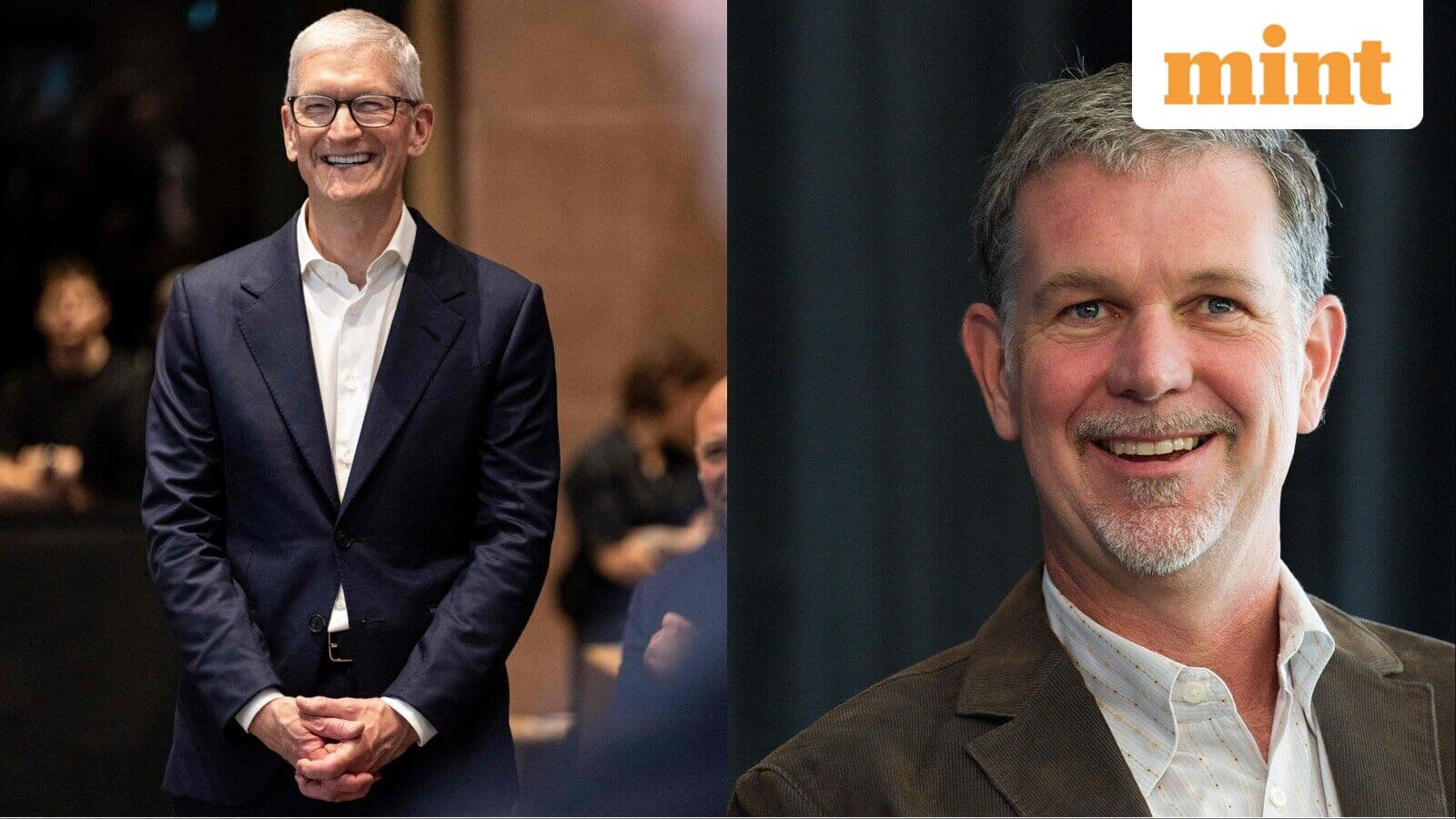
A September 2026 study by trading firm Atmos ranked Tim Cook as the highest-paid departing CEO, with approximately $950 million in reported compensation over his 15-year tenure at Apple. While Cook transitions to executive chairman, his successor, John Ternus, faces pressing challenges, including a memory chip shortage, national security concerns over Chinese-made components, and delays for Apple’s first foldable device, the iPhone Duo. Meanwhile, Apple’s new Siri now relies on Google’s Gemini technology, signaling a strategic shift in its AI approach.

Editor, Lazyfounder
30 SEC SUMMARY
- A September 2026 study by trading firm Atmos ranked the highest-paid departing CEOs based on cumulative compensation, including salary, bonuses, and stock awards.
- Tim Cook topped the list with $950 million in reported compensation over 15 years as Apple CEO, followed by Bob Iger ($580M) and Bobby Kotick ($550M).
- Apple’s new CEO, John Ternus, faces challenges including a memory chip shortage, delayed iPhone Duo shipments, and national security concerns over Chinese-made components.
- Apple’s AI strategy now includes Google’s Gemini technology for Siri, marking a shift in its traditionally closed ecosystem.
TABLE OF CONTENTS
KEY HIGHLIGHTS
- Tim Cook received approximately $950 million in reported compensation over 15 years as Apple CEO, the highest in the Atmos study.
- Bob Iger (Disney) and Bobby Kotick (Activision Blizzard) ranked second and third, with $580 million and $550 million in reported compensation, respectively.
- John Ternus, Apple’s current CEO, called the memory chip shortage a "crisis" and acknowledged testing Chinese-made chips, drawing bipartisan scrutiny.
- The iPhone Duo, starting at $1,999, has faced delivery delays slipping into 2027 due to supply chain issues.
- Apple’s new Siri now uses Google’s Gemini technology, a partnership Ternus defended as strategic rather than a retreat.
- Tim Cook remains involved in Apple’s international representation as executive chairman.
Highest-paid departing CEOs ranked by cumulative compensation
A September 2026 study by trading firm Atmos ranked the highest-paid departing CEOs based on cumulative reported compensation, including salary, bonuses, and stock awards. The analysis focused on executives who left their roles during or before 2026.
Tim Cook, Apple’s former CEO, topped the list with approximately $950 million in reported compensation over his 15-year tenure. His net worth is estimated at $2.2 billion, largely driven by Apple’s stock performance during his leadership. Cook stepped down as CEO in 2026, transitioning to the role of executive chairman but remaining involved in Apple’s global strategy.
Bob Iger, Disney’s former CEO, ranked second with $580 million in reported compensation over 15 years. His net worth is estimated at $600 million. Iger moved into an executive chairman role in 2020 but continues to influence Disney’s long-term vision.
Bobby Kotick, former CEO of Activision Blizzard, ranked third with $550 million in reported compensation over 32 years, the longest tenure in the top five. Kotick left the company in 2023 following Microsoft’s acquisition of Activision Blizzard and did not take on another role there.
Rounding out the top five were Randall Stephenson of AT&T ($340 million over 13 years) and Reed Hastings of Netflix ($335 million over 25 years). Hastings, whose net worth is estimated at $5 billion, transitioned to an executive chairman role at Netflix in 2026.
Apple’s leadership shifts and new challenges
John Ternus succeeded Tim Cook as Apple CEO on September 1, 2026. In a recent interview, Ternus described the ongoing memory chip shortage as a "crisis," emphasizing its impact on Apple’s supply chain and product timelines.
Ternus also addressed Apple’s decision to test Chinese-made memory chips, a move that has drawn scrutiny from U.S. lawmakers. A bipartisan group of senators sent a letter to Apple warning that the use of such components could pose national security risks. The U.S. government has echoed these concerns, urging Apple to reconsider its sourcing strategy.
The iPhone Duo, Apple’s first foldable device starting at $1,999, has faced production delays, with deliveries now projected to slip into 2027. The device features a hinge with over 100 precision parts, contributing to its complexity and manufacturing challenges.
Apple’s AI strategy embraces external partnerships
Apple’s new Siri, launched in September 2026, incorporates Google’s Gemini technology, marking a departure from Apple’s traditional reliance on in-house solutions. Ternus defended the partnership, stating that Apple focuses on areas where it can differentiate itself rather than building every component internally.
Ternus rejected the notion that this shift represents a retreat from Apple’s vertically integrated model. Instead, he framed it as a strategic decision to leverage external expertise in areas like AI while maintaining control over core hardware and software experiences.
In addition to AI, Ternus has engaged with the Trump administration to align Apple’s priorities with U.S. policy goals, signaling a focus on navigating regulatory and geopolitical challenges.
Foldable devices in Apple’s pipeline
Patent filings reveal that John Ternus and five other Apple engineers applied for a foldable device patent in 2011, long before the iPhone Duo’s public debut. The patent highlights Apple’s early interest in foldable technology, though the company has yet to release a consumer product in this category until now.
The iPhone Duo’s design includes a custom polymer surface and a complex hinge mechanism, reflecting Apple’s emphasis on premium build quality. However, manufacturing delays have pushed deliveries into 2027, underscoring the challenges of scaling new form factors.
Study methodology and context
The Atmos study analyzed cumulative reported compensation for CEOs who left their roles, including salary, bonuses, and stock awards. The figures represent total earnings over their tenures, not payouts made solely upon departure.
The study also compared executives’ estimated personal net worth, tenure length, and circumstances of their departures. For example, Reed Hastings’ net worth is largely tied to his founding stake in Netflix, while Bobby Kotick’s compensation reflects his 32-year leadership at Activision Blizzard.
What this means
Lazyfounder analysis — our interpretation, not reported fact.
This story highlights two critical shifts for Apple and its peers: the financial legacy of long-serving CEOs and the operational realities facing their successors. The eye-popping compensation figures for departing CEOs like Cook and Iger reflect the outsized influence these leaders had on their companies’ growth, but they also underscore the pressure on new executives to deliver results amid evolving challenges.
For Ternus, the memory chip shortage and geopolitical risks around Chinese components are not just supply chain issues—they’re strategic dilemmas that could shape Apple’s product roadmap and market positioning for years. His willingness to partner with Google on AI, meanwhile, signals a pragmatic departure from Apple’s historical insularity, one that founders and operators should watch closely. If Apple—long a paragon of vertical integration—is now comfortable outsourcing core technologies, it may encourage other companies to rethink their own build-vs-buy calculations.
The delays for the iPhone Duo also serve as a reminder that innovation, especially in hardware, is as much about execution as it is about vision. For startups and scale-ups, Apple’s struggles with foldables and supply chain constraints offer a cautionary tale: even the most resource-rich companies can stumble when pushing into uncharted territory.
Key takeaways
- High cumulative compensation for departing CEOs reflects both their tenure and the stock market’s role in amplifying executive pay, particularly in tech.
- New CEOs inherit complex challenges, from supply chain crises to geopolitical risks, that demand strategic trade-offs rather than incremental fixes.
- Apple’s partnership with Google on AI suggests a broader industry shift toward collaboration, even among rivals, to accelerate innovation.
- Hardware startups should heed Apple’s foldable device delays as a lesson in the risks of scaling cutting-edge technology without proven supply chains.
- Regulatory and national security concerns are increasingly shaping sourcing decisions for global tech companies, adding another layer of complexity for operators.
FAQ
Why did Tim Cook rank highest in cumulative CEO compensation?
Cook’s $950 million in reported compensation over 15 years reflects Apple’s stock performance during his tenure, which significantly boosted his earnings through stock awards and bonuses. The Atmos study focused on cumulative pay, not just salary.
What are the U.S. government’s concerns about Apple’s Chinese-made memory chips?
U.S. senators and the government have warned Apple that testing or using Chinese-made memory chips could pose national security risks, citing potential vulnerabilities in critical supply chains.
Why is Apple partnering with Google for Siri’s AI technology?
John Ternus framed the partnership as a strategic decision to focus Apple’s resources on areas where it can differentiate itself, rather than building every technology in-house. Google’s Gemini technology provides a scalable solution for Siri’s AI capabilities.
What is causing delays for the iPhone Duo?
The iPhone Duo’s delays stem from manufacturing challenges, including its complex hinge mechanism with over 100 precision parts. Supply chain constraints, particularly the memory chip shortage, have also contributed to the setback.
Related on Lazyfounder
Sources
- Mint (Technology) · 2026-10-17
From Apple’s Tim Cook to Netflix’s Reed Hastings: 5 CEOs' with the biggest pay packages - The Next Web · 2026-10-17
Apple CEO John Ternus calls the memory chip shortage a crisis, TIME reports
This story is an original summary drafted with AI by Lazyfounder from the reporting listed above and checked by automated validation. Facts are attributed to their original publishers; sections marked as analysis are Lazyfounder's. Where a source is in another language, facts were machine-translated and quotations are reported, not reproduced. Read the original coverage via the links, and see our AI policy and corrections policy.

About the author
Editor, Lazyfounder
Tarun Mottlia edits LazyFounders, covering Indian startups, funding rounds, AI and product launches. Every story on the site is AI-assisted and checked against its cited sources before publication.
More stories by Tarun MottliaGet the LazyFounder Brief
Startup, funding and AI news in a five-minute read. Join the early-access list.
