
TikTok CEO predicts AI-driven scientific breakthrough within two years
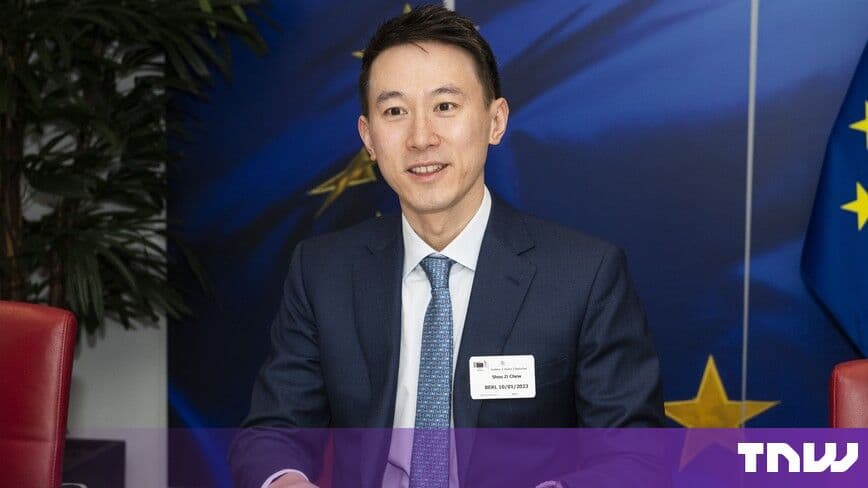
TikTok CEO Shou Zi Chew expects artificial intelligence to deliver a major scientific breakthrough in fields like physics, biotech, or chemistry within the next two to three years. Speaking at a conference in Singapore, Chew also highlighted AI’s current limitations and significant cybersecurity risks, while detailing ByteDance’s push into AI-driven drug discovery and materials science.

Editor, Lazyfounder
30 SEC SUMMARY
- TikTok CEO Shou Zi Chew predicts a major AI-driven scientific breakthrough in fields like physics, biotech, chemistry, and materials science within two to three years.
- Chew cautions that AI’s short-term capabilities are overestimated, while its long-term potential is underestimated.
- He highlights cybersecurity risks tied to AI, including vulnerabilities from user permissions and cheaper attacks for bad actors.
- ByteDance, TikTok’s parent company, is actively developing AI models, including Protenix-v2 for biomolecular research and Anew Labs for drug discovery.
TABLE OF CONTENTS
KEY HIGHLIGHTS
- TikTok CEO Shou Zi Chew expects AI to drive a scientific breakthrough in physics, biotech, chemistry, or materials science within the next two to three years.
- Chew stated that current AI struggles with tasks like visual recognition and long-term memory retrieval compared to the human brain.
- He warned about significant cybersecurity risks, including users granting excessive permissions and cheaper attack vectors for malicious actors.
- ByteDance develops its own AI models, including Protenix-v2 for biomolecular structure prediction, and operates Anew Labs, an AI drug discovery unit.
- The predictions were shared during a conference in Singapore, where Chew discussed AI’s limitations and risks.
AI’s role in upcoming scientific breakthroughs
According to The Next Web, TikTok CEO Shou Zi Chew predicts that AI will enable a major scientific breakthrough in fields such as physics, biotech, chemistry, or materials science within the next two to three years. During a panel discussion at a conference in Singapore, Chew stated that advances in AI could accelerate discoveries in these areas, though he did not specify what form the breakthrough might take.
Chew’s remarks align with ByteDance’s investments in AI-driven scientific research. The company, TikTok’s parent, develops its own AI models and operates Anew Labs, a unit focused on AI-powered drug discovery. ByteDance also works on tools like Protenix-v2, which is designed for biomolecular structure prediction and design.
While discussing AI’s potential, Chew emphasized that the technology is often overestimated in the short term but could exceed expectations in the long run.
AI’s current limitations
Chew noted that AI still faces significant limitations, particularly in tasks requiring nuanced visual recognition and long-term memory retrieval. He compared AI’s capabilities to the human brain, highlighting gaps in adaptability and contextual understanding that persist despite recent advancements.
These limitations, he suggested, contribute to the disconnect between public expectations and AI’s actual performance today. While AI has made progress in specific applications, it continues to fall short in areas demanding complex reasoning or real-world contextualization.
Cybersecurity risks of AI
Chew warned about the cybersecurity risks associated with AI, describing them as "big and quite real." He pointed to the tendency of users to grant broad permissions to AI systems without fully understanding the potential consequences, which could create vulnerabilities for platforms like TikTok.
He also noted that stronger AI models reduce the cost for malicious actors to launch attacks, increasing the frequency and sophistication of threats. These risks, he argued, require urgent attention from companies and regulators alike.
ByteDance’s AI initiatives
ByteDance has been expanding its AI capabilities beyond its core social media platforms. The company develops proprietary AI models, including Protenix-v2, which focuses on biomolecular structure prediction—a critical tool for drug discovery and materials science.
Anew Labs, ByteDance’s AI drug discovery unit, reflects the company’s broader push into scientific research. The unit aims to leverage AI to accelerate the identification and development of new pharmaceutical compounds, positioning ByteDance alongside tech giants investing in AI-driven biotech.
What this means
Lazyfounder analysis — our interpretation, not reported fact.
Chew’s comments reflect a pragmatic view of AI’s trajectory: while he envisions transformative breakthroughs on the horizon, he tempers that optimism with acknowledgment of the technology’s current shortcomings and risks. For founders and operators, this underscores the importance of balancing enthusiasm for AI’s potential with realistic expectations about its near-term capabilities.
The cybersecurity risks he highlighted are particularly relevant for startups building AI-driven products. As AI models become more powerful, they also become more attractive targets for attackers, making security a non-negotiable priority. Companies must design systems with user permissions and data privacy in mind, especially if they operate in regulated industries or handle sensitive information.
ByteDance’s move into AI-driven drug discovery and materials science also signals a broader trend: tech companies are increasingly competing with traditional research institutions and pharmaceutical firms. For startups in these fields, partnerships with larger tech players could accelerate R&D, but they may also face steeper competition for talent and funding.
Key takeaways
- Founders should temper short-term expectations for AI while preparing for long-term disruption in scientific and technical fields.
- Cybersecurity risks tied to AI—such as user permissions and cheaper attack vectors—demand proactive security measures, especially for startups handling sensitive data.
- AI’s current limitations in visual recognition and memory retrieval highlight the need for human oversight in critical applications.
- ByteDance’s investments in AI-driven drug discovery and materials science reflect a growing trend of tech companies entering scientific research, creating both opportunities and competition for startups.
FAQ
What scientific fields does Shou Zi Chew expect AI to impact?
Chew named physics, biotech, chemistry, and materials science as fields where AI could drive breakthroughs within the next two to three years.
What are the cybersecurity risks Chew mentioned?
He highlighted risks such as users granting excessive permissions to AI systems and the reduced cost for malicious actors to launch attacks using stronger AI models.
What is Protenix-v2?
Protenix-v2 is an AI model developed by ByteDance for biomolecular structure prediction and design, used in applications like drug discovery.
Related on Lazyfounder
Sources
- The Next Web · 2026-10-12
TikTok’s Shou Chew expects an AI science breakthrough within three years
This story is an original summary drafted with AI by Lazyfounder from the reporting listed above and checked by automated validation. Facts are attributed to their original publishers; sections marked as analysis are Lazyfounder's. Where a source is in another language, facts were machine-translated and quotations are reported, not reproduced. Read the original coverage via the links, and see our AI policy and corrections policy.

About the author
Editor, Lazyfounder
Tarun Mottlia edits LazyFounders, covering Indian startups, funding rounds, AI and product launches. Every story on the site is AI-assisted and checked against its cited sources before publication.
More stories by Tarun MottliaGet the LazyFounder Brief
Startup, funding and AI news in a five-minute read. Join the early-access list.
