

Ex-Google and Apple execs raise $85M to build AI weapons for Ukraine
Brandon Steelberg and Andy Baynes left Google and Apple to start Tiberius Aerospace, a defense startup using AI to design artillery for Ukraine. Their $85 million Series A round, led by Lakestar and Rochefort Asset Management, will fund production of the Sceptre munition—a long-range shell built to outfly Russian defenses and break the war’s stalemate.

Editor, Lazyfounder
30 SEC SUMMARY
- Tiberius Aerospace, founded by ex-Google and Apple executives, has raised $85 million to develop AI-designed weapons for Ukraine’s war effort.
- The company’s Sceptre system—a long-range artillery munition—can be fired from standard NATO howitzers and is already being tested by the US Army.
- Tiberius uses an AI platform called GRAIL to simulate and refine weapon designs, then outsources manufacturing to cut costs and speed up production.
- The startup’s approach mirrors Silicon Valley’s rapid iteration model, aiming to break the stalemate in Ukraine by extending artillery range and precision.
- Investors include Lakestar, Rochefort Asset Management and Ukrainian VC firm UA1.
TABLE OF CONTENTS
$85 million to build AI weapons for Ukraine’s front lines
Brandon Steelberg and Andy Baynes, who built careers at Google and Apple, have secured $85 million in Series A funding for their defense startup, Tiberius Aerospace. The round was led by Lakestar and Rochefort Asset Management, with Ukrainian venture firm UA1 also participating.
Rochefort Asset Management, a US Defense Department-licensed investor, joined Lakestar and UA1 in backing Tiberius’s push to deploy AI-designed weapons in Ukraine. The funding will help scale production of the Sceptre munition and refine the company’s GRAIL AI platform.
Sceptre: A long-range artillery shell built by AI
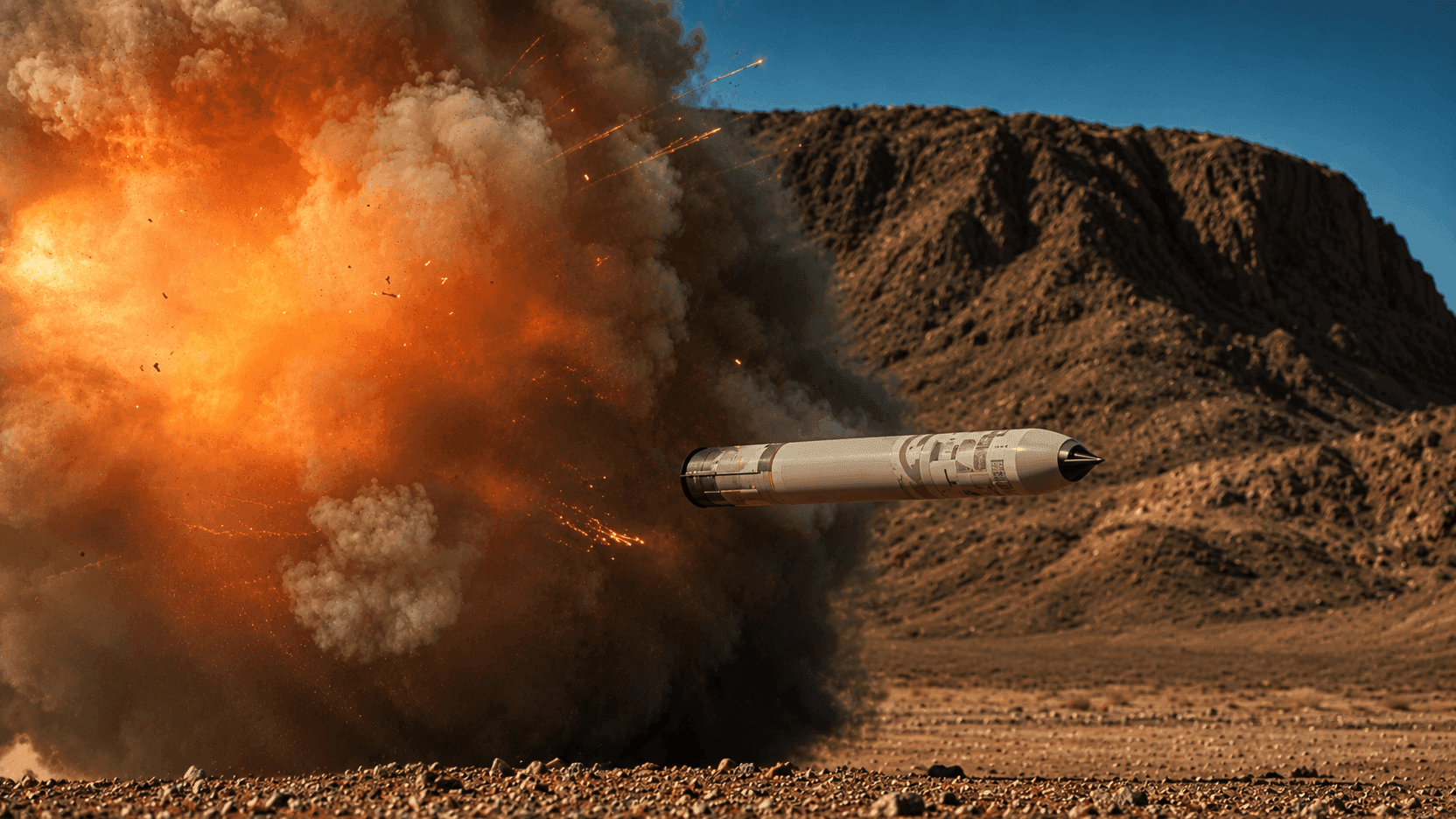
Tiberius’s first product, the Sceptre munition, is designed to fly farther and faster than existing artillery rounds. Compatible with any NATO-standard 155-mm howitzer, it can reach supersonic speeds and altitudes high enough to evade Russian jamming. The company first test-fired Sceptre in April, and the US Army is already evaluating the system.
A $500 million contract with UK partners will cover manufacturing and distribution. Tiberius says the round will extend Ukraine’s artillery range, allowing troops to strike Russian vehicles and infantry while staying out of drone range. Sam Cranny-Evans, an analyst at the Royal United Services Institute, told WIRED that any technology extending Ukraine’s reach would be “valuable.”
GRAIL: AI that designs, simulates, and builds weapons
At the heart of Tiberius’s operation is GRAIL—Generative Real-Time Artificial Intelligence for Lethality. The platform simulates weapons against targets in environments from Kyiv to the Arctic, using open-source intelligence and real-world combat data. GRAIL then generates design tweaks, manages supply chains, and automates compliance checks.
This approach lets Tiberius outsource manufacturing to partners in France and the UK while keeping design control. Baynes, who spent four years reporting to Steve Jobs at Apple, told WIRED that AI helps the company “iterate designs in days” and tap into global factories. The model keeps production costs off Tiberius’s books during peacetime but allows rapid scaling when needed.
Silicon Valley’s war: Speed, data, and outsourced factories
Steelberg and Baynes are applying Silicon Valley’s playbook—rapid iteration, data-driven decisions, and global supply chains—to the battlefield. Steelberg, who housed Ukrainian refugees at his French estate after the 2022 invasion, said the goal was to “change the outcome of this and every war,” not just turn a profit.
Baynes, who also worked with Ukrainian tech teams, called the West’s response to the war “inadequate.” GRAIL’s simulations ruled out defensive tech like better body armor, concluding that only long-range offensive weapons could break the stalemate.
Tiberius’s model could reshape how startups enter the defense sector. By outsourcing manufacturing while controlling AI-driven design, the company avoids the slow, capital-intensive processes of traditional contractors. If successful, it may push legacy firms to adopt faster, software-first approaches.
What this means
Lazyfounder analysis — our interpretation, not reported fact.
Tiberius’s model could force traditional defense contractors to adopt faster, software-driven design cycles—or risk losing contracts to agile startups with Big Tech DNA. If Sceptre delivers on its range and accuracy promises, Ukraine’s armed forces may gain a critical edge in pushing back Russian forces without relying on slow, centralized supply chains. The $500 million UK contract also suggests Western governments are ready to bet on private AI-driven weapons over legacy systems.
Key takeaways
- The $85 million round shows investors are willing to fund high-risk, high-reward AI weapons that could shift the balance in Ukraine.
- GRAIL’s ability to iterate designs in real time and outsource manufacturing may let Tiberius scale faster than defense giants like Lockheed or BAE.
- Silicon Valley’s playbook—rapid prototyping, data-driven decisions, and global supply chains—is now being tested in artillery, not just apps.
- Tiberius’s $500 million UK deal proves governments are open to buying from startups, not just incumbents, when speed matters.
Related on Lazyfounder
Sources
This story is an original summary drafted with AI by Lazyfounder from the reporting listed above and checked by automated validation. Facts are attributed to their original publishers; sections marked as analysis are Lazyfounder's. Where a source is in another language, facts were machine-translated and quotations are reported, not reproduced. Read the original coverage via the links, and see our AI policy and corrections policy.

About the author
Editor, Lazyfounder
Tarun Mottlia edits LazyFounders, covering Indian startups, funding rounds, AI and product launches. Every story on the site is AI-assisted and checked against its cited sources before publication.
More stories by Tarun MottliaGet the LazyFounder Brief
Startup, funding and AI news in a five-minute read. Join the early-access list.
