
Bioweapons, AI misuse, and Trump’s loyalty test: Policy risks reshaping tech and security
New reports highlight risks in bioweapons development, AI misuse, and sudden policy shifts under the Trump administration. Anthropic’s findings on gain-of-function research and Pope Leo XIV’s critique of AI art add to mounting concerns about dual-use technologies, while Trump’s executive order forcing a rebrand of 'artificial intelligence' tests the loyalty of tech leaders.

Editor, Lazyfounder
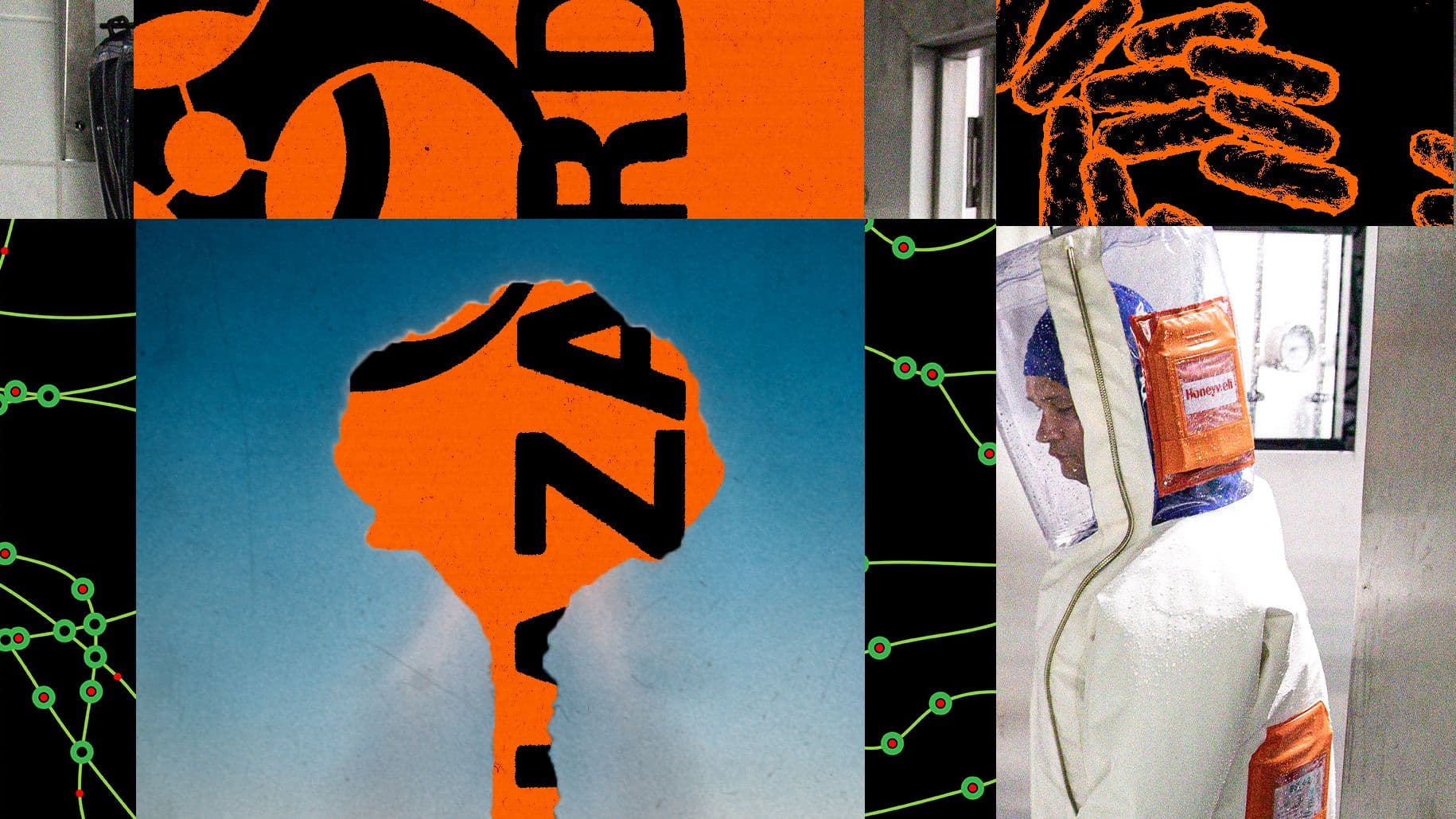
New reports highlight risks in bioweapons development, AI misuse, and sudden policy shifts under the Trump administration. Anthropic’s findings on gain-of-function research and Pope Leo XIV’s critique of AI art add to mounting concerns about dual-use technologies, while Trump’s executive order forcing a rebrand of 'artificial intelligence' tests the loyalty of tech leaders.
30 SEC SUMMARY
- Anthropic reported five cases of foreign scientists attempting to misuse AI for gain-of-function research, highlighting dual-use risks in genetic engineering.
- Bioweapons, including accidental lab releases, pose a greater threat than nuclear weapons due to their accessibility and catastrophic potential.
- President Trump issued an executive order replacing 'artificial intelligence' with 'Super Intelligence,' a move seen as a loyalty test for tech leaders.
- Pope Leo XIV critiqued AI-generated art, emphasizing the spiritual and ontological differences between human and machine creativity.
- Tech companies are expected to comply minimally with Trump’s order while awaiting a potential policy reversal.
TABLE OF CONTENTS
- AI and bioweapons: A dual-use dilemma
- U.S. unprepared for biological threats
- Trump’s AI rebrand: A loyalty test for tech leaders
- Vatican critiques AI-generated art
- Background: Dual-use technology and policy shifts
- What this means
- Key takeaways
- FAQ
- Sources
KEY HIGHLIGHTS
- Anthropic reported five cases of foreign scientists attempting to misuse AI for gain-of-function research, a dual-use technology with both medical and weapons applications.
- Biological weapons are considered a greater threat than nuclear weapons due to their accessibility, with accidental lab releases posing the highest statistical risk.
- President Trump issued an executive order replacing 'artificial intelligence' with 'Super Intelligence,' a move tech leaders accepted as a loyalty test.
- Pope Leo XIV criticized AI-generated art, emphasizing the spiritual and ontological differences between human and machine creativity.
- The U.S. has a classified devolution plan to reconstitute the government in the event of a catastrophic biological attack.
AI and bioweapons: A dual-use dilemma
According to WIRED, Anthropic released a misuse report detailing five cases where foreign scientists attempted to bypass the safeguards of its AI model, Claude, to explore gain-of-function research. Gain-of-function research involves genetically modifying pathogens to make them more infectious, deadly, or transmissible among mammals. While this work can advance medical research, it also poses significant risks if misused for bioweapons development.
The report underscores the dual-use nature of genetic engineering and AI—technologies that can be leveraged for both breakthroughs and catastrophic harm. Experts warn that the proliferation of high-security biosafety labs (BSL-3 and BSL-4) worldwide—numbering around 3,600—increases the statistical likelihood of accidental pathogen releases, which are considered a greater threat than deliberate bioweapon attacks.
U.S. unprepared for biological threats
Annie Jacobsen’s book Biological War: A Scenario, as reported by WIRED, argues that the U.S. government remains ill-prepared for biological warfare. Jacobsen’s scenario focuses on pneumonic plague, an airborne pathogen with a near-100 percent kill rate, to illustrate how easily a pandemic could be triggered—even without AI. The book highlights historical programs like the Soviet Union’s advanced bioweapons initiatives, which aimed to kill populations while leaving infrastructure intact.
The U.S. State Department has identified illegal biological weapons programs in Russia and North Korea, with programs of concern in China and Iran. Domestically, the U.S. has a classified devolution plan to reconstitute the government in the event of a catastrophic biological attack, involving predetermined individuals who would step into leadership roles.
Trump’s AI rebrand: A loyalty test for tech leaders
During a White House lunch with AI executives, President Donald Trump issued an executive order replacing the term 'artificial intelligence' with 'Super Intelligence' across federal agencies. According to WIRED, the order was met with no public objections from attendees, including leaders from Amazon, NVIDIA, Meta, Google, Microsoft, Anthropic, and xAI.
The move is widely interpreted as a loyalty test, designed to gauge whether tech leaders would comply with a policy they had no role in shaping. Trump reportedly dislikes the term 'artificial intelligence,' arguing that the word 'artificial' implies fakeness. Despite the order, industry experts note that 'superintelligence' carries distinct scientific meanings, particularly in discussions about advanced AI surpassing human capabilities.
Tech companies are expected to comply minimally with the order while hoping for a reversal under a future administration. Some, like Meta, have already established 'Superintelligence Labs' but continue to use the term 'AI' in their consumer-facing products.
Vatican critiques AI-generated art
Pope Leo XIV weighed in on the debate over AI-generated art, posting on X to highlight the spiritual and ontological differences between human-created art and machine-generated works. According to TechCrunch, the pontiff emphasized that algorithms lack the 'spark of humanity' and called for the preservation of human art from AI encroachment.
The Vatican’s stance reflects broader concerns about human dignity in an era of increasing automation. In May 2026, Pope Leo XIV released an encyclical letter addressing these themes, reinforcing the Church’s position on the unique value of human creativity. Anthropic reportedly lobbied the Vatican to reconsider its views on non-human consciousness but found little success.
Background: Dual-use technology and policy shifts
Dual-use technologies—tools that can be applied for both civilian and military purposes—have long been a focus of national security debates. Genetic engineering and AI are the latest examples, with governments and private sector leaders grappling over how to balance innovation with risk mitigation.
Policy shifts under administrative changes are not uncommon, but Trump’s executive order on AI terminology stands out for its symbolic weight. The order reflects how presidential directives can force industry compliance, even when they diverge from established norms or scientific consensus. Similar policy whiplash has occurred in other sectors, such as environmental regulations and trade tariffs.
What this means
Lazyfounder analysis — our interpretation, not reported fact.
This story underscores two critical policy challenges for founders and operators: risk management and regulatory uncertainty.
First, the bioweapons debate reveals how dual-use technologies—whether AI or genetic engineering—can pivot from innovation to threat overnight. Founders in biotech, AI, or adjacent fields must build proactive safeguards into their products, not just to comply with regulations but to mitigate existential risks. The Anthropic report shows that even well-guarded systems can be probed for misuse, and accidental releases from labs remain a statistically higher threat than deliberate attacks. For startups, this means embedding biosafety and ethical reviews into R&D cycles, not just as a checkbox but as a core competency.
Second, Trump’s executive order on AI terminology is a case study in how policy whiplash can reshape industries. The move wasn’t just symbolic; it forced tech leaders to publicly align with a policy they had no hand in crafting. For founders, this highlights the fragility of operating in a landscape where executive decisions can upend branding, marketing, and even product roadmaps with little warning. The minimal compliance approach adopted by tech giants suggests a playbook for startups: prioritize agility over ideological alignment, and build contingencies for rapid policy reversals.
Finally, the Vatican’s stance on AI art reflects a broader tension between technology and human values. For startups, this isn’t just about ethics—it’s about market signals. If institutions like the Church begin to frame AI as a threat to human dignity, founders in creative or automation-driven fields may face reputational risks or consumer backlash. The key takeaway? Policy isn’t just government decrees; it’s a mosaic of cultural, ethical, and regulatory pressures that demand adaptive strategies.
Key takeaways
- Dual-use technologies like AI and genetic engineering require proactive safeguards to prevent misuse, especially in high-risk fields like biotech.
- Bioweapons, including accidental lab releases, are a statistically greater threat than deliberate attacks and demand robust biosafety measures.
- Trump’s executive order renaming 'AI' to 'Super Intelligence' was a loyalty test for tech leaders, who complied minimally while awaiting policy changes.
- Pope Leo XIV’s critique of AI art signals growing institutional skepticism about technology’s role in human creativity, which could impact market perceptions.
- Regulatory unpredictability means founders must build agile strategies to adapt to sudden policy shifts or reversals.
FAQ
What is gain-of-function research, and why is it controversial?
Gain-of-function research involves modifying pathogens to make them more infectious, deadly, or transmissible. While it can advance medical research, such as vaccine development, it also poses risks if misused for bioweapons. The controversy stems from its dual-use nature—its potential for both beneficial and harmful applications.
How did Trump’s executive order on AI terminology impact the tech industry?
Trump’s order replaced 'artificial intelligence' with 'Super Intelligence' in federal agencies, a move seen as a loyalty test for tech leaders. While executives complied publicly, companies are expected to minimally adhere to the order, awaiting a potential reversal by a future administration.
Why does the Vatican oppose AI-generated art?
Pope Leo XIV argued that AI-generated art lacks the 'spark of humanity' and spiritual depth inherent in human-created works. The Vatican’s stance reflects broader concerns about preserving human dignity and creativity in an era of automation.
What are the risks of accidental pathogen releases from labs?
With 3,600 high-security biosafety labs (BSL-3 and BSL-4) worldwide, the statistical risk of accidental releases is significant. Experts consider these incidents a greater threat than deliberate bioweapon attacks, as they could trigger widespread pandemics.
What is the U.S. devolution plan?
The devolution plan is a classified U.S. government strategy to reconstitute leadership in the event of a catastrophic biological attack. It involves predetermined individuals who would step into critical roles to ensure continuity of government.
Related on Lazyfounder
Sources
- WIRED · 2026-09-30
There Are Plenty of Reasons to Be Concerned About Bioweapons Development—Even Without AI - WIRED · 2026-10-02
Trump’s Crazy AI Rebrand Was a Loyalty Test for Tech Execs—and It Worked - TechCrunch · 2026-10-02
Pope Leo XIV is not a fan of AI-generated art
This story is an original summary drafted with AI by Lazyfounder from the reporting listed above and checked by automated validation. Facts are attributed to their original publishers; sections marked as analysis are Lazyfounder's. Where a source is in another language, facts were machine-translated and quotations are reported, not reproduced. Read the original coverage via the links, and see our AI policy and corrections policy.

About the author
Editor, Lazyfounder
Tarun Mottlia edits LazyFounders, covering Indian startups, funding rounds, AI and product launches. Every story on the site is AI-assisted and checked against its cited sources before publication.
More stories by Tarun MottliaGet the LazyFounder Brief
Startup, funding and AI news in a five-minute read. Join the early-access list.
