

Jonathan Haidt’s The Anxious Generation explores impact of smartphones on childhood development
Social psychologist Jonathan Haidt’s The Anxious Generation examines how smartphones and social media have fundamentally changed childhood, with implications for mental health and development. The book argues that these technological shifts have contributed to rising anxiety, depression, and loneliness among young people, prompting discussions among parents, educators, and policymakers.

Editor, Lazyfounder
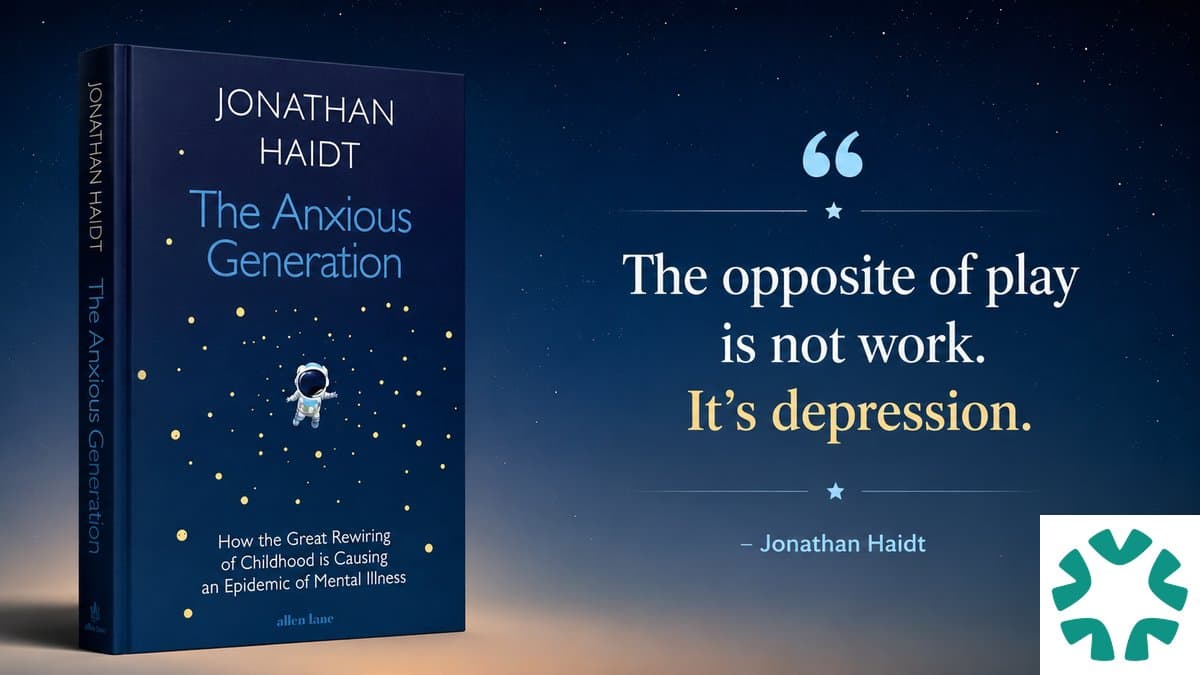
The Great Rewiring of Childhood
According to YourStory’s summary of The Anxious Generation, social psychologist Jonathan Haidt argues that smartphones and social media have led to what he calls the "Great Rewiring of Childhood." This shift, he contends, has moved childhood increasingly online, reducing opportunities for real-world experiences that foster resilience, confidence, and social skills. Haidt suggests that this transformation has had serious consequences for mental health and development across an entire generation.
The book highlights a paradox: while children are now more protected in physical spaces, they face unprecedented risks in digital environments. This contrast, Haidt argues, has disrupted the traditional pathways through which young people develop emotional and social capabilities.
Key Lessons for Parents, Educators, and Policymakers
YourStory outlines five core lessons from Haidt’s book that have resonated globally:
-
Real-world experiences are essential for development: Haidt emphasizes that unstructured, independent activities—such as outdoor play, conflict resolution, and exploration—help children build confidence, resilience, and social skills. The book argues that these opportunities have declined as childhood has become more supervised and structured.
-
Smartphones have redefined childhood: The widespread adoption of smartphones in the early 2010s, according to the book, marked a turning point. Haidt describes the emergence of a "phone-based childhood," where digital interactions replaced face-to-face experiences, altering how young people develop emotionally and socially.
-
Mental health is shaped by social environments: Haidt argues that rising rates of anxiety, depression, and loneliness among adolescents cannot be attributed solely to individual choices. Instead, he points to broader technological and cultural shifts that have impacted entire generations simultaneously.
-
Meaningful connection outweighs constant connectivity: While digital communication is pervasive, the book suggests it cannot replace in-person relationships. Haidt highlights the importance of physical presence, shared experiences, and genuine community for emotional wellbeing.
-
Collective action is needed to address these challenges: Haidt asserts that individual families cannot solve these issues alone. He calls for coordinated efforts from parents, schools, communities, technology companies, and governments to create healthier norms around technology use and childhood development.
Why the Book Has Sparked Global Conversations
The Anxious Generation has gained traction by addressing a question many have asked: why are young people struggling despite having unprecedented access to technology and information? Haidt’s explanation centers on the idea that modern childhood—shaped by smartphones and social media—lacks the experiences necessary for healthy development.
The book does not claim to offer definitive answers but instead encourages readers to reconsider the role of technology in shaping mental health. Whether or not readers fully agree with Haidt’s conclusions, the discussion it has sparked underscores the need to evaluate how society can better support the next generation.
What this means
Lazyfounder analysis — our interpretation, not reported fact.
The Anxious Generation is more than a critique of technology—it’s a call to rethink how childhood is structured in the digital age. For founders and operators, particularly those building products for young users or families, Haidt’s arguments highlight the risks of assuming that digital-first experiences can fully replace real-world development. The book’s emphasis on collective action also signals an opportunity for startups to develop tools or platforms that empower communities—schools, parents, and policymakers—to create healthier technology norms. At the same time, it serves as a reminder that mental health trends are not just individual struggles but systemic challenges that may require systemic solutions.
Sources
This story is an original summary drafted with AI by Lazyfounder from the reporting listed above and checked by automated validation. Facts are attributed to their original publishers; sections marked as analysis are Lazyfounder's. Where a source is in another language, facts were machine-translated and quotations are reported, not reproduced. Read the original coverage via the links, and see our AI policy and corrections policy.

About the author
Editor, Lazyfounder
Tarun Mottlia edits LazyFounders, covering Indian startups, funding rounds, AI and product launches. Every story on the site is AI-assisted and checked against its cited sources before publication.
More stories by Tarun MottliaGet the LazyFounder Brief
Startup, funding and AI news in a five-minute read. Join the early-access list.
