

SunCharge Motors builds solar-roofed electric three-wheelers for commercial fleets
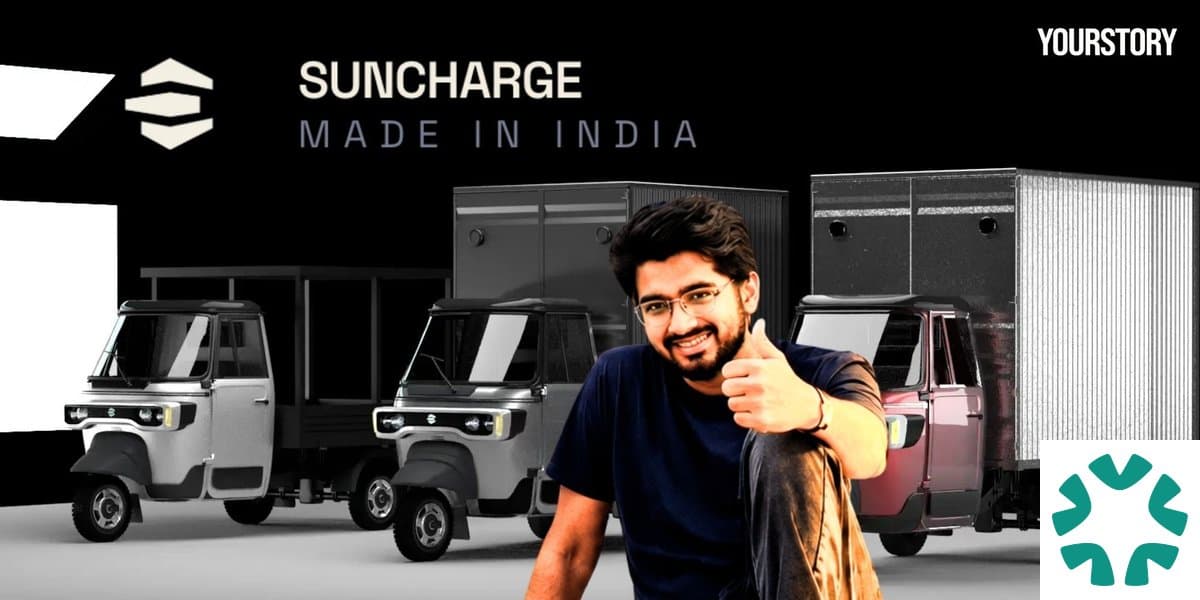
SunCharge Motors, a Pune-based startup founded in 2024, has begun delivering electric three-wheelers with solar panels integrated into the roof. The company targets commercial fleet operators, aiming to reduce downtime and reliance on external charging infrastructure. A seed round led by the JITO Incubation and Innovation Foundation was announced in May 2026.

Editor, Lazyfounder
KEY HIGHLIGHTS
- SunCharge Motors builds electric three-wheelers with solar roofs for commercial fleets.
- Founded in 2024 in Pune by Sanskar Modi, focusing on energy-integrated mobility.
- First prototype demonstrated 180 km of real-world range in 2025, with deliveries beginning in 2026.
- Seed round led by JITO Incubation and Innovation Foundation announced in May 2026; amount undisclosed.
- Company positions its product around uptime and running cost for fleet operators, not just range.
Product and approach
SunCharge Motors, founded in Pune in 2024 by Sanskar Modi, builds electric three-wheelers with solar panels integrated into the roof. The company targets commercial fleet operators, addressing a key pain point: lost earnings during charging downtime. Instead of relying on expanding charging infrastructure, SunCharge’s vehicles generate part of their energy while in use, reducing dependence on external power sources.
The product includes a solar roof, a battery management system, and real-time energy controls. These components work together to balance solar input, battery usage, and power demand throughout the day. According to YourStory, the company’s first prototype, tested in 2025, demonstrated 180 km of real-world range with a solar panel reported as 25% efficient. Deliveries to fleet operators began in 2026.
SunCharge positions its vehicles around uptime and running cost rather than range or purchase price. For commercial operators, the ability to maximize hours on the road directly impacts earnings. The company also provides a connected driver app alongside the vehicles.
Why three-wheelers work for solar
Solar panels on vehicles have historically faced commercial challenges because cars require more energy than their roof space can generate. Three-wheelers, however, are lighter, slower, and consume far less energy per kilometre, making solar panels a viable supplement. This reduces the need for frequent charging and addresses the inconsistent power supply that many operators face.
The company’s focus on commercial fleets aligns with this advantage. Fleet operators prioritize vehicle uptime and operational cost over specifications like range or top speed, which resonates with SunCharge’s value proposition.
Funding and market positioning
SunCharge closed a seed round in May 2026, led by the JITO Incubation and Innovation Foundation, with participation from angel investors. The amount raised was not disclosed. The funds are earmarked for technology development, infrastructure research, and expanding its solar-assisted systems.
The company’s stated customers are fleet operators, not individual buyers. This focus reflects the product’s economics, which hinge on hours worked per day rather than upfront purchase price. Sanskar Modi has publicly stated that India’s electric vehicle future cannot rely solely on expanding charging infrastructure, emphasizing the need for energy-integrated systems tailored to existing conditions.
Modi has also claimed on social media that SunCharge is now India’s first solar-powered commercial electric vehicle company, a statement that remains unverified in publicly available sources.
What this means
Lazyfounder analysis — our interpretation, not reported fact.
SunCharge Motors’ approach shifts the conversation in India’s electric vehicle market from building more chargers to integrating energy generation into the vehicle itself. For founders and operators in the mobility space, this signals an alternative path to adoption—one that prioritizes solving operational inefficiencies over competing on traditional metrics like price or range. The focus on commercial fleets, where uptime directly translates to revenue, could make this model particularly attractive in markets with unreliable power supply or limited charging infrastructure. However, the long-term viability of solar-integrated vehicles will depend on sustained efficiency gains, cost reductions, and scalability beyond niche segments like three-wheelers.
Key takeaways
- Commercial fleet operators may reduce dependency on charging infrastructure with solar-integrated vehicles, improving uptime and earnings.
- Energy-integrated systems could offer a viable alternative in markets with inconsistent power supply or limited charging infrastructure.
- For founders in mobility, SunCharge’s model highlights an opportunity to address operational pain points rather than competing solely on price or range.
- The focus on fleet operators rather than individual buyers underscores a business model built around utilization and cost efficiency.
Sources
This story is an original summary drafted with AI by Lazyfounder from the reporting listed above and checked by automated validation. Facts are attributed to their original publishers; sections marked as analysis are Lazyfounder's. Where a source is in another language, facts were machine-translated and quotations are reported, not reproduced. Read the original coverage via the links, and see our AI policy and corrections policy.

About the author
Editor, Lazyfounder
Tarun Mottlia edits LazyFounders, covering Indian startups, funding rounds, AI and product launches. Every story on the site is AI-assisted and checked against its cited sources before publication.
More stories by Tarun MottliaGet the LazyFounder Brief
Startup, funding and AI news in a five-minute read. Join the early-access list.
