
Study pins Van Gogh’s The Starry Night to July 22, 1889 dawn sky
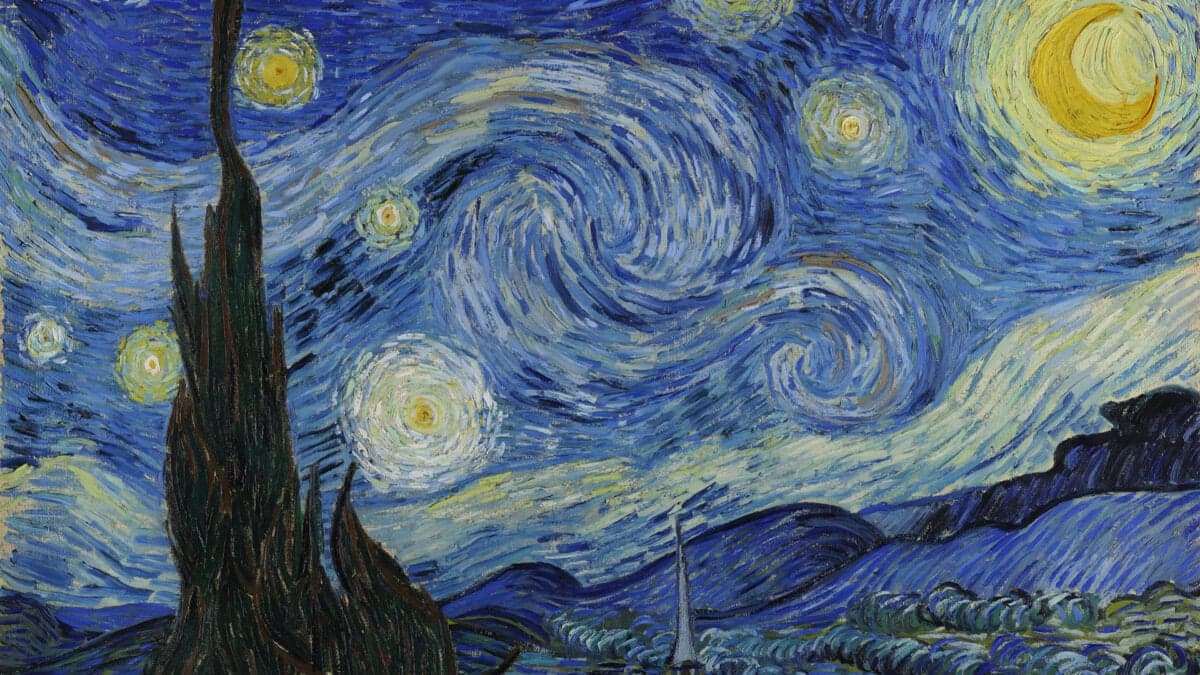
A study published in Scientific Reports challenges the widely accepted timeline of Vincent van Gogh’s The Starry Night, proposing the painting reflects the celestial arrangement of the sky before dawn on July 22, 1889. The research, led by Elijah Jeong-hyun Kim of SLLAB, combines astronomical simulations, historical weather records, and van Gogh’s correspondence to support its findings.

Editor, Lazyfounder
How the study redefines the painting’s timeline
Researchers argue that The Starry Night does not depict the night sky of June 1889, as long assumed by art historians like Albert Boime and astrophysicists such as Charles A. Whitney. Instead, the study pins the painting to the pre-dawn sky of July 22, 1889, using astronomical simulations and historical weather records to align the positions of the Moon, Venus, and the Hyades star cluster in Taurus with van Gogh’s depiction.
Methodology and evidence
The study employed astrometric reconstructions and Procrustes fitting to quantify the reliability of star patterns in the painting. Researchers estimated van Gogh’s field of view from his studio by analyzing earlier sketches of the terrain, narrowing the celestial region he could have observed. They also cross-referenced van Gogh’s letters, which suggest he ideated the work in June but completed it after July 22.
Historical records of celestial bodies and weather conditions on July 22, 1889, provided mutually reinforcing evidence. The study notes that while 19th-century meteorological records are incomplete, the available data supports the proposed timeline. The painting’s distinct differences from van Gogh’s June works, previously cited as evidence against an astronomical interpretation, are reframed as consistent with a July completion date.
Limitations and broader implications
The study acknowledges limitations, including gaps in 19th-century meteorological records and the lack of clinical proof of van Gogh’s seizures, which could influence interpretations of his work. However, it demonstrates how forensic astronomy can convert art-historical theories into physically testable propositions, offering a new tool for analyzing historical artworks.
Elijah Jeong-hyun Kim, founder of SLLAB and lead researcher, emphasized that van Gogh likely compiled observations over several days, a practice not uncommon in his work. The study’s approach underscores the potential for interdisciplinary research to challenge and refine long-standing art-historical narratives.
What this means
Lazyfounder analysis — our interpretation, not reported fact.
This study is a proof-of-concept for how founders and operators in research-driven fields—whether art history, archaeology, or even AI-assisted creative analysis—can leverage cross-disciplinary tools to revisit and test established narratives. For South Korean startups like SLLAB, it highlights how combining computational techniques with niche expertise can yield globally relevant insights. While the direct commercial applications may be limited, the methodology could inspire startups in edtech, digital heritage, or AI-powered analytics to explore untapped intersections between technology and the humanities.
Related on Lazyfounder
Sources
- Gizmodo · 2026-10-22
Astronomers Matched van Gogh’s Starry Night to a Real Sky—and a Weirdly Specific Date
This story is an original summary drafted with AI by Lazyfounder from the reporting listed above and checked by automated validation. Facts are attributed to their original publishers; sections marked as analysis are Lazyfounder's. Where a source is in another language, facts were machine-translated and quotations are reported, not reproduced. Read the original coverage via the links, and see our AI policy and corrections policy.

About the author
Editor, Lazyfounder
Tarun Mottlia edits LazyFounders, covering Indian startups, funding rounds, AI and product launches. Every story on the site is AI-assisted and checked against its cited sources before publication.
More stories by Tarun MottliaGet the LazyFounder Brief
Startup, funding and AI news in a five-minute read. Join the early-access list.
