
SpaceX and Qualcomm team up to build U.S. 5G network for Starlink Mobile
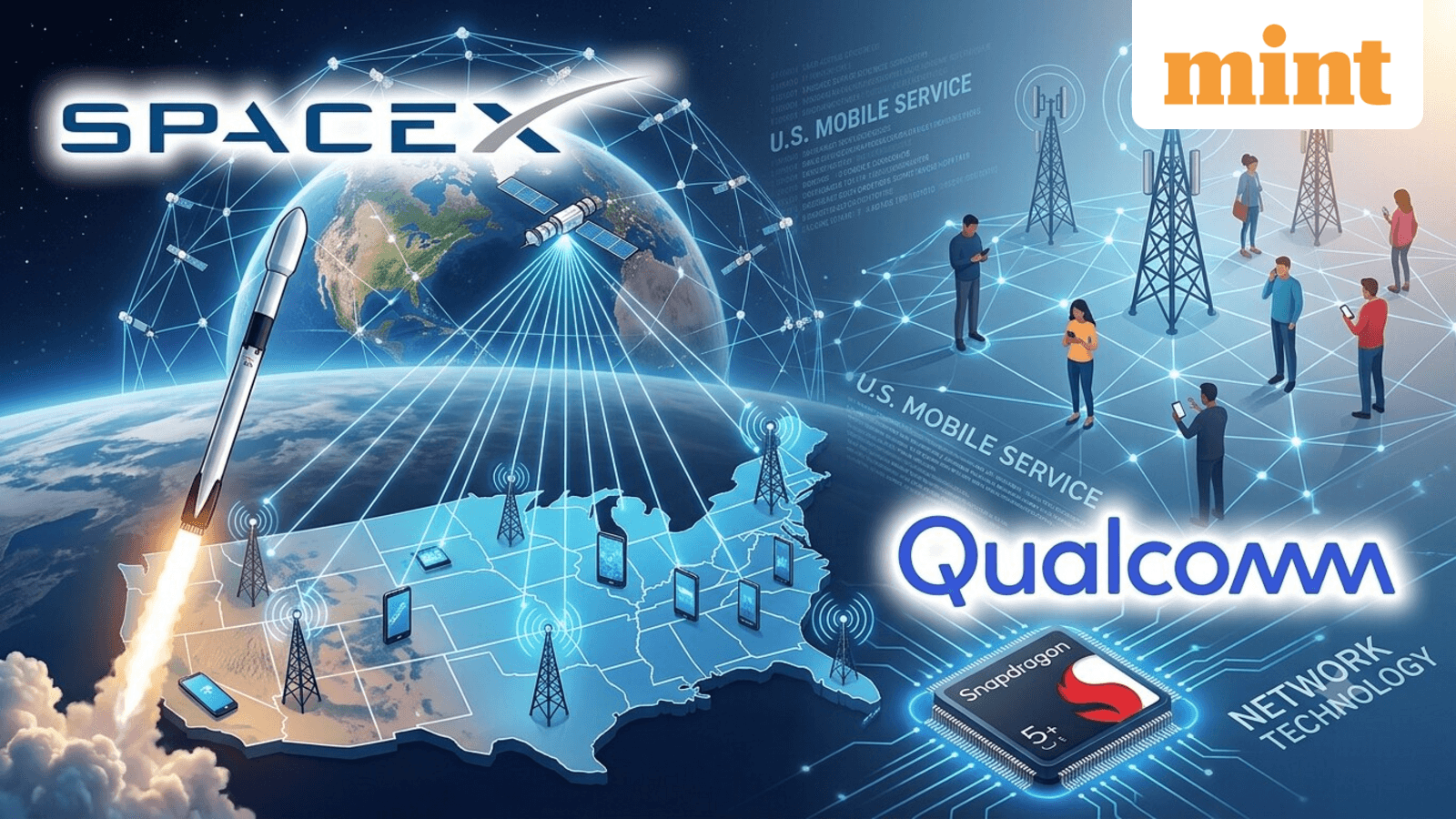
SpaceX has partnered with Qualcomm to build a U.S. 5G network for Starlink Mobile, with service set to begin in 2027. The deal will equip tens of thousands of new cell sites with Qualcomm’s Dragonwing hardware, merging satellite and ground coverage into one system. That could let SpaceX challenge Verizon, AT&T, and T-Mobile without leasing their towers.

Editor, Lazyfounder
30 SEC SUMMARY
- SpaceX and Qualcomm are teaming up to build a 5G network across the U.S. for Starlink Mobile, with service set to begin in 2027.
- Qualcomm will equip tens of thousands of new cell sites with its Dragonwing hardware and QRU100/QDU100 chips, improving coverage while using less power.
- Starlink already drives 36% of SpaceX’s revenue and 85% of its operating profit, making this expansion a financial priority.
- SpaceX has secured nationwide 800 MHz spectrum and is in talks to buy EchoStar’s Boost Mobile to accelerate its rollout.
- The partnership also lays the groundwork for future AI-native 6G networks.
TABLE OF CONTENTS
SpaceX and Qualcomm plan U.S. 5G network for 2027
SpaceX and Qualcomm have signed a multiyear deal to build a ground-based 5G network for Starlink Mobile. Service is expected to start in 2027, covering the U.S. with tens of thousands of new cell sites. Qualcomm will provide its Dragonwing hardware and software, including the QRU100 radio chip and QDU100 processor, to power the base stations.
The network aims to merge Starlink’s satellites with terrestrial towers into a single system. That would let SpaceX offer voice, video, and data service comparable to Verizon, AT&T, and T-Mobile—without leasing their infrastructure. The radios will use Massive MIMO technology, which can direct signals to multiple phones at once, boosting coverage and capacity.
Spectrum deals and Boost Mobile talks speed up expansion
Starlink already powers SpaceX’s financial growth. In the third quarter, it generated 36% of the company’s revenue and 85% of its operating profit. But satellites alone can’t match the full coverage of terrestrial carriers, especially indoors.
To close that gap, SpaceX spent 2025 acquiring spectrum. Its recent purchase of a nationwide 800 MHz portfolio sent shares of U.S. carriers tumbling. SpaceX is also in talks to buy EchoStar’s Boost Mobile, which would add millions of subscribers overnight.
Qualcomm’s hardware meets tower challenges
Qualcomm brings decades of chipmaking experience to the project. Though best known for phone modems, it has quietly built a 5G infrastructure business, supplying hardware to carriers like Verizon and Vodafone. The Dragonwing platforms headed for SpaceX’s towers are optimized for time-sensitive operations and deliver better performance at lower power.
SpaceX has not yet named its tower partners or disclosed how many new sites it will need. Analysts expect leases with American Tower or Crown Castle, but securing those contracts could push back the 2027 timeline.
6G ambitions ride on $2 trillion war chest
While the initial rollout focuses on 5G, both companies are looking ahead to AI-native 6G networks. Qualcomm’s Durga Malladi called the partnership "groundwork for tomorrow’s wireless world."
That vision is backed by SpaceX’s $2 trillion market cap, the result of its record-setting June IPO. The cash gives Elon Musk’s team the resources to build the infrastructure, though regulators will still need to approve spectrum licenses and tower permits.
What this means
Lazyfounder analysis — our interpretation, not reported fact.
SpaceX is betting that its own ground network, combined with Starlink’s satellites, will let it compete head-to-head with Verizon, AT&T, and T-Mobile—without paying those carriers for tower access. If the 2027 rollout succeeds, it could lower subscriber costs and diversify SpaceX’s revenue beyond Starlink’s dominance.
Key takeaways
- By 2027, SpaceX plans to deploy tens of thousands of cell sites powered by Qualcomm, creating its own U.S. terrestrial network.
- The system is designed to merge satellite and ground coverage, eliminating the need for roaming deals with existing carriers.
- SpaceX’s $2 trillion valuation funds the buildout, but spectrum licenses and tower permits could still delay the project.
Related on Lazyfounder
Sources
- Mint (Technology) · 2026-11-04
SpaceX taps Qualcomm to power Starlink Mobile in challenge to Verizon, AT&T in US wireless market - The Next Web · 2026-11-04
SpaceX signs multi-year Qualcomm deal for tens of thousands of 5G sites - CNBC Technology · 2026-11-04
SpaceX signs deal with Qualcomm to provide network technology for U.S. mobile service
This story is an original summary drafted with AI by Lazyfounder from the reporting listed above and checked by automated validation. Facts are attributed to their original publishers; sections marked as analysis are Lazyfounder's. Where a source is in another language, facts were machine-translated and quotations are reported, not reproduced. Read the original coverage via the links, and see our AI policy and corrections policy.

About the author
Editor, Lazyfounder
Tarun Mottlia edits LazyFounders, covering Indian startups, funding rounds, AI and product launches. Every story on the site is AI-assisted and checked against its cited sources before publication.
More stories by Tarun MottliaGet the LazyFounder Brief
Startup, funding and AI news in a five-minute read. Join the early-access list.
