
SLAC National Accelerator Laboratory films molecules using world’s most powerful X-ray laser
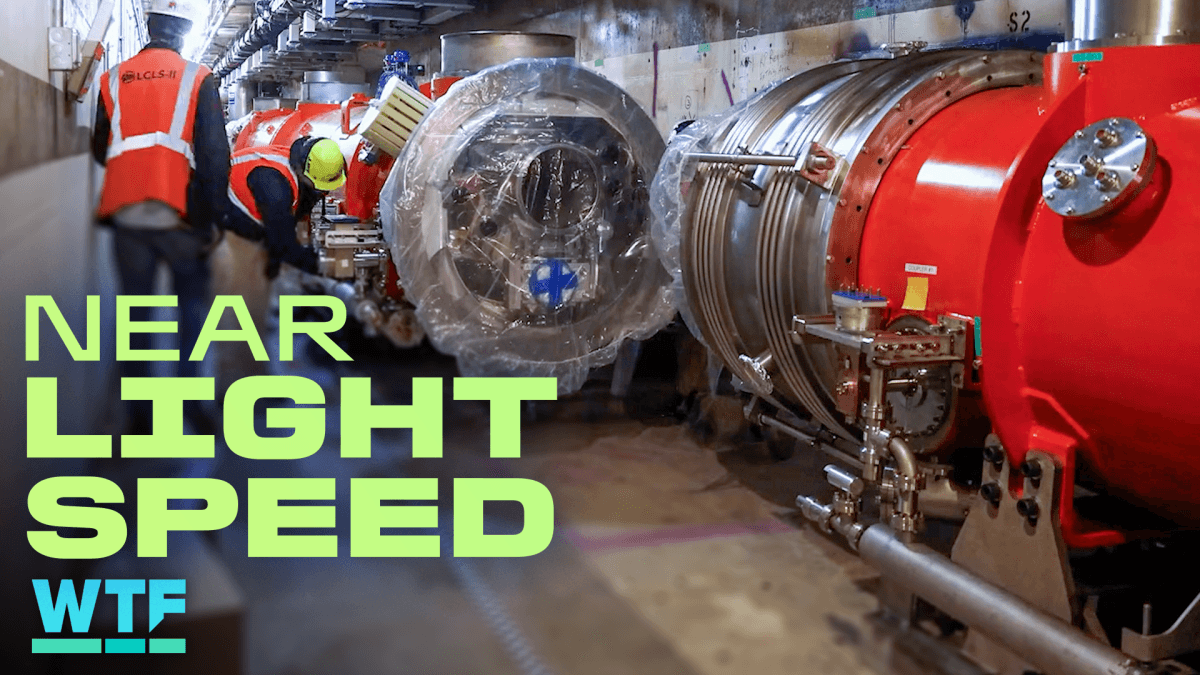
SLAC National Accelerator Laboratory in Stanford has demonstrated how its X-ray laser—the world’s most powerful—enables scientists to film molecular movies. The technology, which cools its particle accelerator to temperatures lower than outer space, is being used to observe atomic and molecular interactions in real time.

Editor, Lazyfounder
30 SEC SUMMARY
- SLAC National Accelerator Laboratory in Stanford operates the world’s most powerful X-ray laser.
- The laser is used to film molecular movies of atoms and molecules, enabling detailed scientific research.
- The facility’s particle accelerator cools to temperatures lower than those in outer space.
- Upgrades to the accelerator and cryomodules are featured in a recent video.
KEY HIGHLIGHTS
- SLAC National Accelerator Laboratory operates the world’s most powerful X-ray laser.
- The laser generates hard X-rays to film movies of molecules in real time.
- The facility’s particle accelerator is cooled to temperatures below those in outer space.
- A video details upgrades to the accelerator and explains how cryomodules function.
- The technology supports experiments with potential real-world applications.
The technology behind molecular movies
According to Mashable, SLAC National Accelerator Laboratory operates the world’s most powerful X-ray laser, capable of generating hard X-rays. This technology allows scientists to capture real-time footage of molecules, creating what researchers call "molecular movies."
The laser is part of a broader facility that includes a particle accelerator cooled to temperatures lower than those found in outer space. This extreme cooling is essential for the accelerator’s performance and precision.
Upgrades and cryomodules
A recent video from the lab highlights upgrades to the particle accelerator and explains the role of cryomodules. These components are critical for maintaining the accelerator’s functionality and enabling high-energy experiments.
The cryomodules, which operate at ultra-low temperatures, are a key part of the infrastructure supporting the X-ray laser. Their design and efficiency are central to the lab’s ability to conduct cutting-edge research.
Applications and future experiments
The video also discusses potential real-world applications of the technology, as well as future experiments planned at the facility. Researchers are exploring how the laser’s capabilities can be applied to fields such as energy, materials science, and pharmaceuticals.
By filming molecular interactions at such a detailed level, scientists aim to uncover insights that could lead to breakthroughs in these industries.
What this means
Lazyfounder analysis — our interpretation, not reported fact.
SLAC’s ability to film molecular interactions in real time is more than a scientific milestone—it’s a tool with practical implications for startups and researchers. For founders in energy, pharmaceuticals, or materials science, this technology could reduce the time and cost of R&D by providing unprecedented visibility into molecular behavior. The infrastructure innovations, like cryomodules operating at near-absolute zero, may also inspire hardware startups to explore new cooling or accelerator technologies for niche applications.
Key takeaways
- Founders in energy, materials science, and pharmaceuticals should monitor SLAC’s advancements, as molecular imaging could accelerate R&D in these sectors.
- The ability to film molecular interactions in real time may inspire new startups focused on computational chemistry or advanced imaging technologies.
- The infrastructure and cooling techniques used at SLAC could inform hardware startups working on extreme-environment technologies.
Related on Lazyfounder
Sources
- Mashable · 2026-11-01
How SLAC's X-ray laser films molecular movies
This story is an original summary drafted with AI by Lazyfounder from the reporting listed above and checked by automated validation. Facts are attributed to their original publishers; sections marked as analysis are Lazyfounder's. Where a source is in another language, facts were machine-translated and quotations are reported, not reproduced. Read the original coverage via the links, and see our AI policy and corrections policy.

About the author
Editor, Lazyfounder
Tarun Mottlia edits LazyFounders, covering Indian startups, funding rounds, AI and product launches. Every story on the site is AI-assisted and checked against its cited sources before publication.
More stories by Tarun MottliaGet the LazyFounder Brief
Startup, funding and AI news in a five-minute read. Join the early-access list.
