
Robotic Dogs Are Helping Farmers Monitor Crops and Detect Diseases
Agricultural technology firms are deploying robotic dogs equipped with AI and advanced imaging to help farmers monitor crops, detect diseases, and manage pests. These robots aim to overcome limitations in traditional methods like satellites, drones, and manual inspections, offering high-resolution data collection in diverse environments.

Editor, Lazyfounder
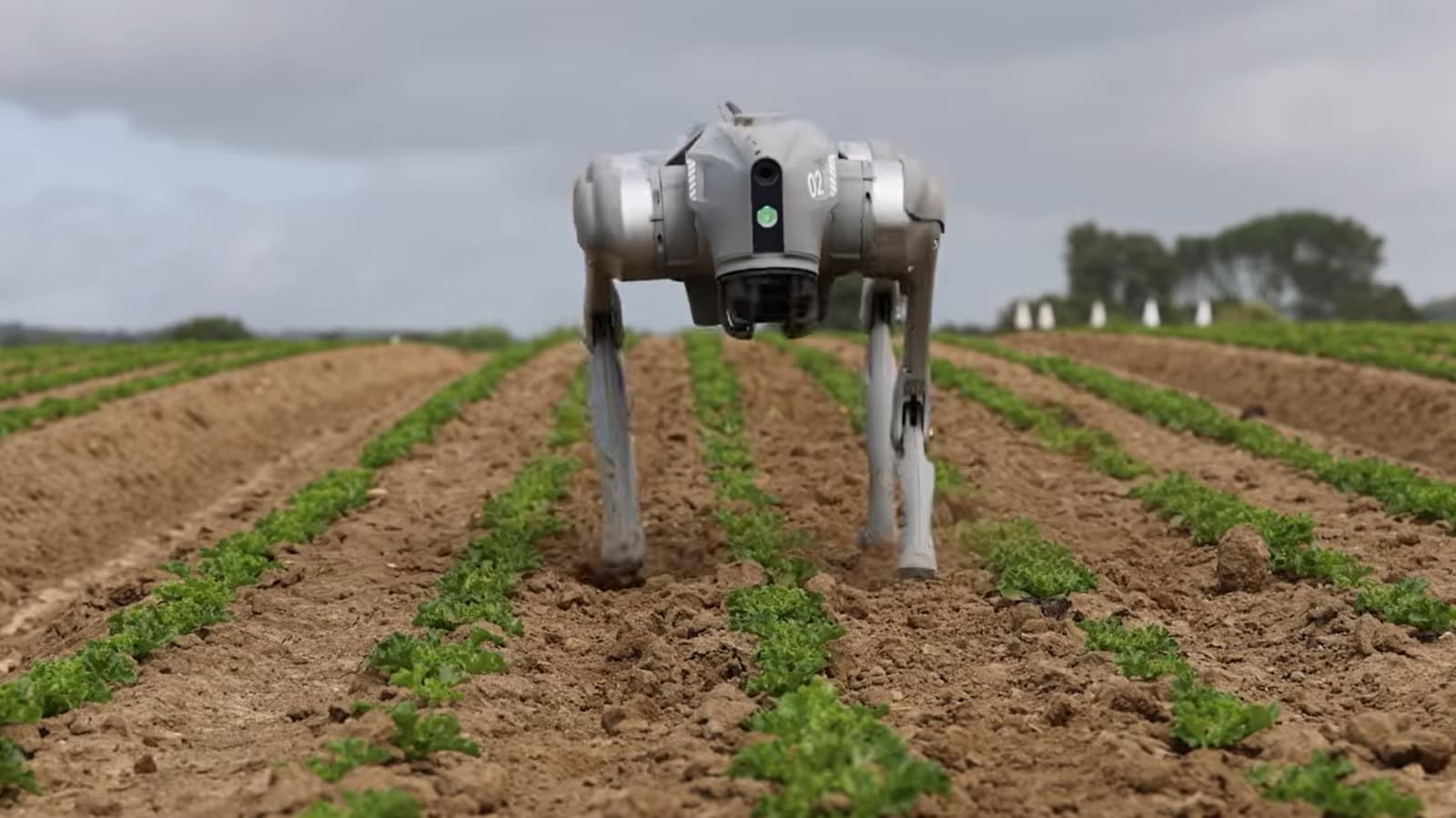
Agricultural technology firms are deploying robotic dogs equipped with AI and advanced imaging to help farmers monitor crops, detect diseases, and manage pests. These robots aim to overcome limitations in traditional methods like satellites, drones, and manual inspections, offering high-resolution data collection in diverse environments.
30 SEC SUMMARY
- Agricultural technology firms are deploying robotic dogs equipped with AI and advanced imaging to monitor crops, detect diseases, and manage pests.
- These robots use thermal sensing, LIDAR, and high-resolution cameras to collect high-resolution data in challenging environments.
- Traditional methods like satellites, drones, and manual inspections are limited in resolution and resource-intensive.
- Companies like DEEP Robotics claim robotic dogs can reduce manual workloads for farmers by up to 70%.
- Robotic dogs raise questions about labor displacement and operational efficiency in agriculture.
TABLE OF CONTENTS
- Robotic Dogs Enter Agriculture
- How Robotic Dogs Are Being Deployed
- Broader Implications for Agriculture
- The Role of AI and Robotics in Modern Farming
- What this means
- Key takeaways
- FAQ
- Sources
KEY HIGHLIGHTS
- Robotic dogs are being used in agriculture to monitor crops, detect diseases, and manage pests using AI and advanced imaging.
- These robots can operate in wet, muddy, and uneven terrain without damaging crops, addressing gaps in traditional methods.
- Synergenta and the University of Nottingham developed a robodog equipped with LIDAR and high-resolution cameras for precision agriculture.
- DEEP Robotics claims its robotic dog reduces manual workloads for grape farmers in China by 70%.
- The use of robotic dogs raises concerns about potential labor displacement in farming.
Robotic Dogs Enter Agriculture
Agricultural technology companies are introducing robotic dogs equipped with artificial intelligence (AI) and advanced imaging technologies to assist farmers in crop surveillance, disease detection, and pest management. According to Engadget, these robots are designed to address limitations in existing methods like satellites, drones, and manual inspections, which often lack the resolution or flexibility needed for precise data collection.
The robotic dogs use thermal sensing, electro-optical cameras, and AI vision models to gather high-resolution data in challenging environments, including greenhouses and uneven terrain. Unlike traditional methods, they can navigate wet, muddy, and uneven fields without damaging crops.
How Robotic Dogs Are Being Deployed
Synergenta, in collaboration with the University of Nottingham, has developed a robotic dog specifically for agricultural use. The robot is equipped with spinning LIDAR scanners and high-resolution cameras, enabling it to detect weeds, identify potential diseases, and assist in pest detection. Engadget reports that this technology aims to solve time-intensive and resource-intensive problems faced by farmers.
DEEP Robotics, a Chinese company, claims its robotic dog can reduce the manual workload of grape farmers in China’s Turpan region by 70%. The company highlights the robot’s ability to operate around the clock, potentially reducing the need for human workers to conduct physical inspections.
Broader Implications for Agriculture
While robotic dogs offer promising solutions for precision agriculture, their adoption raises questions about labor displacement. According to Engadget, automating crop inspections could reduce the need for physical workers, a concern for industries reliant on manual labor.
These robots are part of a broader matrix of imaging platforms, including satellites, drones, and mobile phones, which together aim to enhance data collection and decision-making in farming. Their ability to operate in diverse conditions—such as wet or uneven terrain—sets them apart from traditional methods.
The Role of AI and Robotics in Modern Farming
The integration of AI and robotics in agriculture reflects a broader trend toward precision farming. Technologies like robotic dogs complement existing tools such as drones and satellites, which have been used for decades to monitor crop health, track yields, and detect diseases. However, these methods often fall short in resolution, adaptability, or cost-effectiveness, particularly in smaller or irregularly shaped fields.
Advancements in computer vision and machine learning have enabled robots to perform tasks like weed detection and disease identification with greater accuracy. This shift is driven by partnerships between agritech firms, universities, and research institutions, which collaborate to develop and refine these technologies for real-world applications.
What this means
Lazyfounder analysis — our interpretation, not reported fact.
Robotic dogs represent a meaningful step forward in precision agriculture, offering farmers a tool to gather high-resolution data in environments where traditional methods fall short. Their ability to navigate challenging terrain and operate in adverse conditions could fill critical gaps in crop monitoring, particularly for high-value or labor-intensive crops. However, the adoption of such technology isn’t without trade-offs. While these robots may reduce manual labor needs, they also raise questions about the future of agricultural workforces and the equitable distribution of automation’s benefits.
For founders and operators in agritech, robotic dogs highlight the potential of integrating AI with robotics to solve longstanding inefficiencies. The success of these systems will depend on their ability to deliver actionable insights—such as early disease detection or precise pest control—without introducing new complexities for farmers. Additionally, the collaboration between companies like Synergenta and academic institutions underscores the importance of cross-sector partnerships in driving innovation. As this technology evolves, it will be worth watching how it complements—or competes with—existing tools like drones and satellites in the broader agricultural tech ecosystem.
Key takeaways
- Robotic dogs are emerging as a tool for precision agriculture, offering high-resolution data collection in diverse environments.
- They address limitations of traditional methods like satellites, drones, and manual inspections, particularly in uneven or muddy terrain.
- AI-powered robotic dogs can detect weeds, diseases, and pests, potentially reducing manual labor needs.
- Partnerships between agritech firms and universities are driving innovation in this space.
- Concerns about labor displacement persist as automation advances in agriculture.
FAQ
What advantages do robotic dogs offer over drones or satellites in agriculture?
Robotic dogs can navigate uneven, wet, or muddy terrain without damaging crops, offering higher-resolution data collection in environments where drones or satellites may struggle. They also provide more dexterity and flexibility for tasks like weed detection and disease identification.
How do robotic dogs impact agricultural labor?
Robotic dogs have the potential to reduce manual workloads by automating tasks like crop inspections. However, this raises concerns about labor displacement, particularly in regions where farming relies heavily on physical workers.
Are robotic dogs currently being used in large-scale farming?
While robotic dogs are being tested and deployed in specific regions—such as grape farms in China—they are not yet widely adopted in large-scale farming. Their use is currently more common in research settings and pilot projects.
Related on Lazyfounder
Sources
- Engadget · 2026-09-28
Robot Dogs On Farms Do A Lot More Than Just Guarding
This story is an original summary drafted with AI by Lazyfounder from the reporting listed above and checked by automated validation. Facts are attributed to their original publishers; sections marked as analysis are Lazyfounder's. Where a source is in another language, facts were machine-translated and quotations are reported, not reproduced. Read the original coverage via the links, and see our AI policy and corrections policy.

About the author
Editor, Lazyfounder
Tarun Mottlia edits LazyFounders, covering Indian startups, funding rounds, AI and product launches. Every story on the site is AI-assisted and checked against its cited sources before publication.
More stories by Tarun MottliaGet the LazyFounder Brief
Startup, funding and AI news in a five-minute read. Join the early-access list.
