

NuGenomics uses genetics and biomarkers to personalize health assessments
YourStory reports on Bengaluru-based startup NuGenomics, which was founded after its CEO observed firsthand how the same medication produced different outcomes in his parents. The company combines genetic, blood biomarker, microbiome, and lifestyle data to offer personalized health assessments for metabolic conditions and women’s wellness.

Editor, Lazyfounder
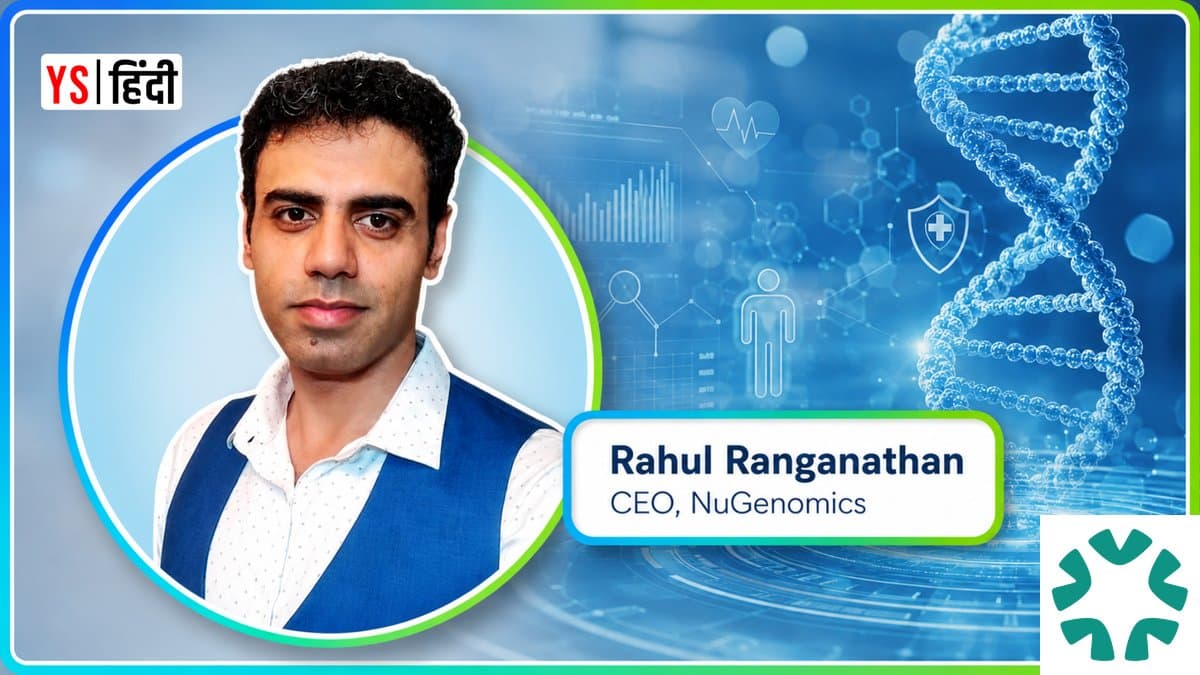
TABLE OF CONTENTS
Founder’s observation sparks startup focus
NuGenomics was founded after CEO Rahul Ranganathan noticed his parents—diagnosed with diabetes at the same time and prescribed the same medication—responded differently. His mother developed hypoglycemia while his father’s blood sugar stabilized, according to YourStory.
The experience led Ranganathan, who has a background in molecular biology and corporate roles at PepsiCo and Flipkart, to question the one-size-fits-all approach in healthcare. He combined research training and industry experience to start NuGenomics in 2021, headquartered in Bengaluru.
How the platform personalizes health assessments
NuGenomics integrates genetic data, blood biomarkers, microbiome analysis, and lifestyle factors to create personalized health recommendations. The approach targets conditions such as diabetes, metabolic health, weight management, and women’s wellness, including PMOS (formerly PCOS), according to the report.
The startup follows a modular product design, allowing users to start with basic assessments and expand based on specific health questions. This flexibility aims to make precision health more accessible without overwhelming users with complex reports.
Business model and partnerships
The startup operates on both B2C and B2B models. It partners with corporates, healthcare providers, diagnostic labs, and other institutions to offer precision health assessments. This dual approach helps scale its reach beyond individual consumers, as reported by YourStory.
NuGenomics aims to embed its tools into existing healthcare systems rather than positioning itself as a standalone service. The goal is to integrate genetic and biomarker insights into routine diagnostics and corporate health programs.
Challenges in Indian genomic data
NuGenomics faced the limitation of India-specific genomic data, a common challenge for precision health startups in the country. Most global genetic research is based on European populations, making direct application difficult for India’s diverse genetic makeup, according to YourStory.
The Indian government’s GenomeIndia project, which sequenced genomes from 83 population groups across the country, is cited as a step toward addressing this gap. NuGenomics has emphasized the need for locally relevant data to ensure its models are accurate for Indian users.
Funding and growth metrics
NuGenomics began with founder capital and later raised support from India Accelerator and Lead Angels. In 2023, the startup secured $500,000 in pre-Series A funding led by Inflection Point Ventures, per YourStory. The funds were allocated toward technology development, hiring, sales, and marketing.
Dr. A. Velumani, founder of Thyrocare, also backed the company through the Bharat Ke Super Founders initiative.
The startup reported over 15,000 genomic and health profiles processed, up from around 500 at the time of an earlier YourStory report. Revenue for the first four months of fiscal 2026-27 doubled compared to the same period the prior year, driven by consumer genomics, direct-to-consumer products, corporate programs, and diagnostics partnerships.
Future plans for scale and integration
NuGenomics plans to make its genetic insights more modular and affordable, aiming to move beyond niche, high-cost services. The startup is also exploring ways to combine genetics with blood tests, wearables, and longitudinal health data, according to the report.
Expanding partnerships with hospitals, doctors, diagnostic labs, and corporate health programs is a key focus. Ranganathan envisions precision health as a seamless part of existing healthcare workflows, rather than a separate offering.
The long-term goal is to evolve from a genetic testing company into a dynamic precision health platform that adapts to users’ evolving health data over time.
What this means
Lazyfounder analysis — our interpretation, not reported fact.
NuGenomics exemplifies how founders can turn personal insight into a scalable business—especially in markets where healthcare defaults to one-size-fits-all. For operators in India’s health-tech space, the story underscores three non-obvious lessons:
First, the gap between clinical guidelines and real-world outcomes is a feature, not a bug. Startups that build tools to capture and act on that variability (genetic, metabolic, lifestyle) are effectively selling to providers and insurers who increasingly bear the cost of trial-and-error medicine.
Second, bridging the ‘last mile’ of precision health means solving for literacy, trust, and affordability in parallel. NuGenomics’ shift toward modular, bite-sized insights is a signal that consumer-facing health-tech must look less like a lab report and more like a SaaS dashboard—actionable, iterative, and integrated into daily routines.
Finally, India’s genomic data scarcity is both a challenge and an opportunity. Founders who invest in creating or curating local datasets—not just repackaging Western models—can position themselves as the default layer for any future precision-health play in the country. The race isn’t just to sequence more genomes; it’s to make the ones already sequenced clinically useful.
Key takeaways
- Genetic and biomarker variability among patients isn’t noise—it’s a market signal for startups building tools that help providers and insurers reduce trial-and-error prescribing.
- Precision health in India requires solving for literacy and trust alongside affordability; modular, lightweight insights may work better than dense reports.
- India’s lack of locally relevant genomic datasets creates an opening for startups that curate or generate such data—positioning them as the infrastructure layer for future health-tech ventures.
Sources
This story is an original summary drafted with AI by Lazyfounder from the reporting listed above and checked by automated validation. Facts are attributed to their original publishers; sections marked as analysis are Lazyfounder's. Where a source is in another language, facts were machine-translated and quotations are reported, not reproduced. Read the original coverage via the links, and see our AI policy and corrections policy.

About the author
Editor, Lazyfounder
Tarun Mottlia edits LazyFounders, covering Indian startups, funding rounds, AI and product launches. Every story on the site is AI-assisted and checked against its cited sources before publication.
More stories by Tarun MottliaGet the LazyFounder Brief
Startup, funding and AI news in a five-minute read. Join the early-access list.
