
Researchers reconstruct Denisovan facial features using Xujiayao fossils
Researchers from the Chinese Academy of Sciences and international collaborators have reconstructed the physical appearance of Denisovans, an extinct human relative, using fossil remains from Xujiayao in eastern China. The findings, published in Nature, provide new insights into Denisovan morphology and introduce a molecular marker to identify their remains.

Editor, Lazyfounder
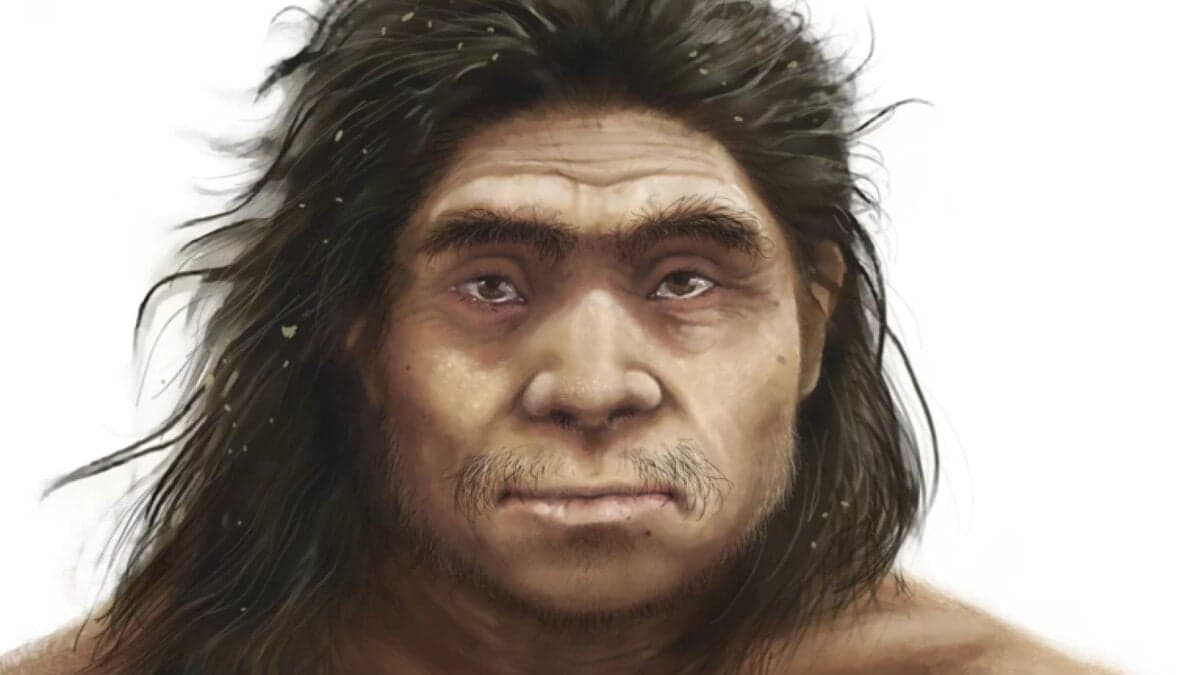
Fossil analysis reveals Denisovan traits
The study focused on 20 fossils excavated from Xujiayao, dated between 138,000 and 199,000 years old. Using proteomic analysis, the team confirmed the remains belonged to Denisovans, an extinct human relative distinct from Neanderthals. The research identifies key cranial and facial features, including a low cranial profile, rectangular eye sockets, a prominent brow ridge, flat cheekbones, and a slightly protruded jaw.
According to the researchers, these traits differentiate Denisovans from other hominins, though some similarities with Neanderthals exist. The findings are based on the first Denisovan remains recognized outside Denisova Cave in Russia, expanding the known geographic range of this group.
A molecular marker for Denisovan identification
The team identified a unique amino acid change in Denisovan fossils, a protein variant not observed in modern humans or Neanderthals. This discovery provides a reliable molecular marker for identifying Denisovan remains, addressing a longstanding challenge in paleoanthropology due to the scarcity of well-preserved genetic material.
Qiaomei Fu, a geneticist involved in the study, emphasized that this marker could streamline future research into Denisovan morphology and distribution. The study also challenges the perception of East Asia as a genetically chaotic region during the Middle Pleistocene, suggesting instead a more structured evolutionary timeline.
Implications for human evolution
Sally Wasef, a paleogeneticist not directly involved in the study, said Denisovans likely exhibited morphological variations across their wide geographic and temporal range, similar to modern humans. The study underscores the genetic and physical diversity of ancient hominins, comparable to the diversity seen in contemporary human populations.
The research adds clarity to the identity of Denisovans, particularly those in Asia, and supports the idea of genetic mixing among early human species. This aligns with earlier evidence of Neanderthals interbreeding with other hominins, suggesting a complex web of interactions during human evolution.
What this means
Lazyfounder analysis — our interpretation, not reported fact.
For founders and operators in genetics, biotechnology, and paleoanthropology-adjacent fields, this study offers a template for how proteomics can unlock insights from degraded or limited biological samples. The identification of a Denisovan-specific molecular marker could inspire new tools or methodologies for species identification, ancient DNA analysis, or even evolutionary biology research. While not a direct market signal, the study highlights the value of interdisciplinary approaches—combining fossil analysis, genetics, and protein sequencing—to solve longstanding scientific questions. It also underscores the importance of Asia as a hub for human evolution research, which could shape future funding or collaboration priorities in the region.
Related on Lazyfounder
Sources
- Gizmodo · 2026-10-23
This Is What Our Mysterious Denisovan Cousins Probably Looked Like
This story is an original summary drafted with AI by Lazyfounder from the reporting listed above and checked by automated validation. Facts are attributed to their original publishers; sections marked as analysis are Lazyfounder's. Where a source is in another language, facts were machine-translated and quotations are reported, not reproduced. Read the original coverage via the links, and see our AI policy and corrections policy.

About the author
Editor, Lazyfounder
Tarun Mottlia edits LazyFounders, covering Indian startups, funding rounds, AI and product launches. Every story on the site is AI-assisted and checked against its cited sources before publication.
More stories by Tarun MottliaGet the LazyFounder Brief
Startup, funding and AI news in a five-minute read. Join the early-access list.
