

Quad AI builds tech school in Patna first, expands to Bengaluru and Mangaluru
Quad AI, a technology and management-focused school, began in Patna and has since opened campuses in Bengaluru and Mangaluru, with plans for Mumbai. The founders say their model aims to make industry-led education accessible and affordable for students outside metros.

Editor, Lazyfounder
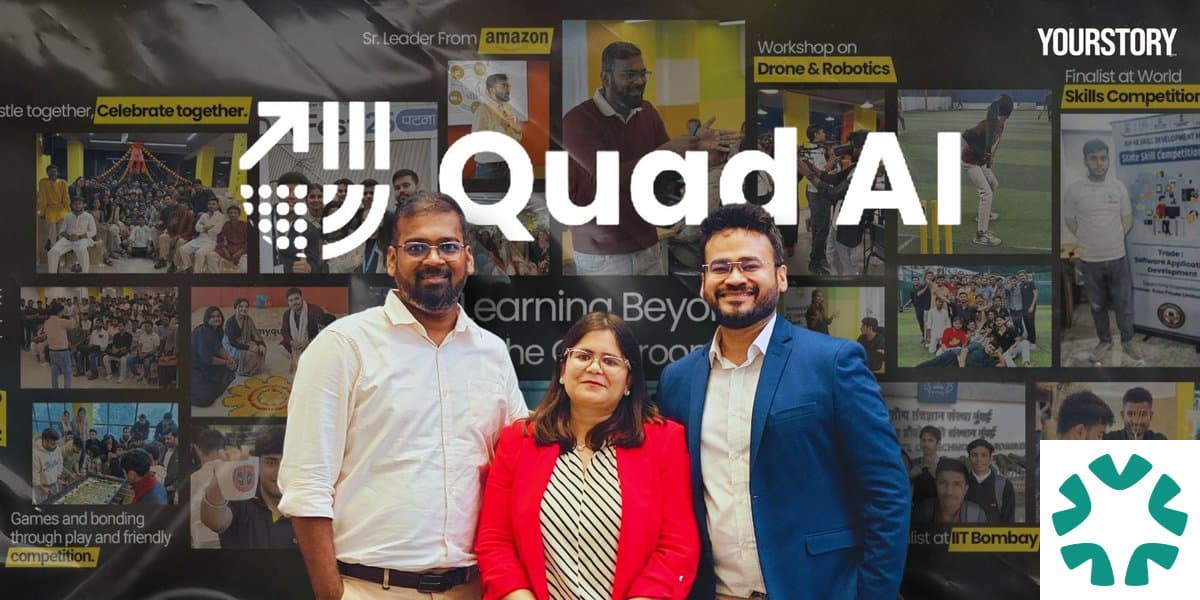
TABLE OF CONTENTS
KEY HIGHLIGHTS
- Quad AI, a technology and management school, launched its first campus in Patna before expanding to Bengaluru, Mangaluru, and soon Mumbai.
- The founders identified a gap in accessible, industry-relevant technology education for students in Bihar and adjacent regions.
- The school’s model combines visiting industry practitioners with a resident academic team to guide students over four years.
- Early student outcomes, such as paid internships and competition wins, are used to build trust before the first graduating batch in 2029.
- Programs are designed to be stackable, allowing students to exit with a qualification after two years and return later to complete their degree.
Why Patna first
According to YourStory, Quad AI’s founders, including Mohit Choudhary, chose Patna as their first location instead of a metro. Choudhary, who grew up in the city, identified a gap between the talent available in Bihar and the opportunities accessible to students, particularly in technology and higher education.
The founders say the decision was driven by two goals: making education affordable enough for students who cannot migrate to larger cities, and ensuring it directly improves their employment prospects. They argue that access to education is meaningless without a pathway to a career.
How the school operates
Quad AI’s model relies on a mix of visiting industry practitioners and a small resident academic team. The founders say this structure ensures students learn from professionals currently working in the field, rather than those whose experience may be outdated.
The resident team, according to the founders, tracks each student’s progress over four years to ensure their learning remains coherent and aligned with industry needs. The school’s mentors include professionals from companies such as Microsoft, Google, Amazon, Salesforce, Cisco, Apple, CRED, Samsung, and Zepto, as well as startups.
Building trust before the first graduates
Quad AI’s first four-year computer science cohort will graduate in 2029, leaving the founders to address skepticism from students and parents in the interim. According to the report, the school highlights early student outcomes—such as paid internships, competition wins at institutions like IIT Bombay and BITS Pilani, and industry workshops—to demonstrate its value.
The founders say these outcomes serve as visible indicators of the program’s effectiveness. Examples shared include students securing front-end developer internships within a year, clearing academic hurdles, and winning hackathons, including FOSS Hack 2026.
The school also partners with industry groups like Google Developer Groups and hosts events such as BaseCamp, powered by Elevation Capital, to expose students to real-world trends and challenges.
Stackable programs and future plans
Quad AI’s programs are designed to be stackable, meaning students can exit after two years with a qualification and return later to complete their degree. The founders say this structure reduces the risk of students leaving empty-handed if they cannot complete the full course.
The school has expanded to Bengaluru and Mangaluru, with Mumbai next in line. According to the report, this expansion sets up an experiment: pathway programs that allow Patna students to spend time in a tech hub without losing the affordability that drew them to the school initially.
What this means
Lazyfounder analysis — our interpretation, not reported fact.
Quad AI’s decision to start in Patna reflects a bet on untapped potential in regions often overlooked by traditional education models. For founders in edtech or education services, the school’s approach—prioritizing affordability, employability, and industry integration—offers a case study in addressing structural gaps. The focus on early outcomes, rather than waiting for long-term validation, could also influence how other education startups design their own credibility-building strategies. The stackable program model may resonate with students facing financial or personal uncertainties, a consideration for any founder designing flexible education solutions.
Key takeaways
- Founders in education or edtech can observe how Quad AI’s model addresses affordability and employability, particularly in regions with lower access to quality higher education.
- The use of industry practitioners alongside a resident academic team may offer a template for balancing relevance with consistency in tech education.
- Early outcomes, rather than long-term metrics, are being used to validate the model—this approach could inform how other education startups build credibility.
- Stackable programs could reduce dropout risks for students facing financial or personal uncertainties, a consideration for founders designing flexible education models.
Sources
This story is an original summary drafted with AI by Lazyfounder from the reporting listed above and checked by automated validation. Facts are attributed to their original publishers; sections marked as analysis are Lazyfounder's. Where a source is in another language, facts were machine-translated and quotations are reported, not reproduced. Read the original coverage via the links, and see our AI policy and corrections policy.

About the author
Editor, Lazyfounder
Tarun Mottlia edits LazyFounders, covering Indian startups, funding rounds, AI and product launches. Every story on the site is AI-assisted and checked against its cited sources before publication.
More stories by Tarun MottliaGet the LazyFounder Brief
Startup, funding and AI news in a five-minute read. Join the early-access list.
