
Proton CEO Andy Yen wins 2026 Liberal Award amid Swiss surveillance debate
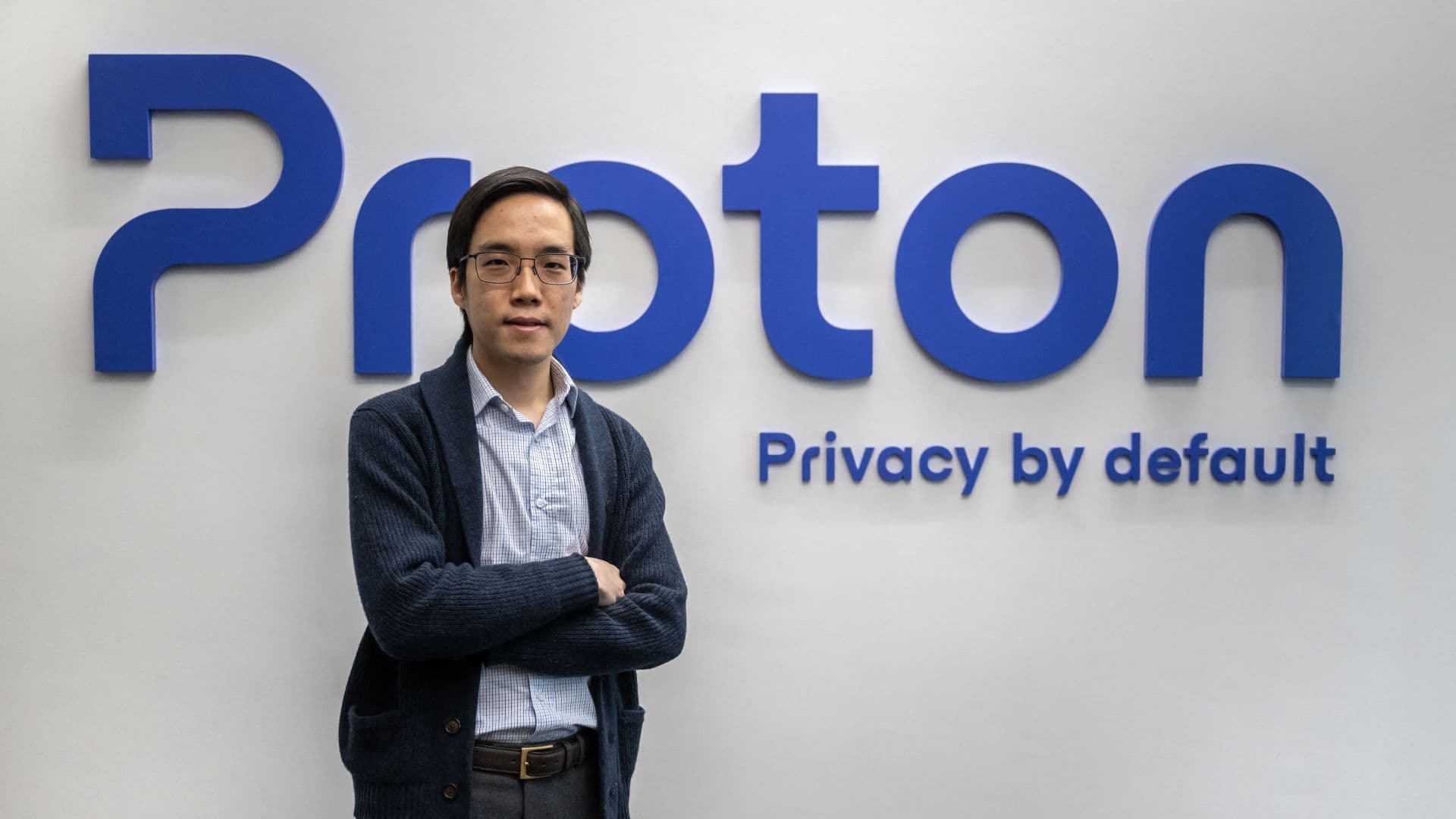
Andy Yen, founder and CEO of Proton, has been awarded the 2026 Liberal Award by the Jungfreisinnige Kanton Zürich (JFZH) for his contributions to privacy, tech sovereignty, and Switzerland’s start-up ecosystem. The award comes as Switzerland debates revisions to its surveillance laws, which critics argue could introduce mass surveillance.

Editor, Lazyfounder
30 SEC SUMMARY
- Proton CEO Andy Yen wins the 2026 Liberal Award from Jungfreisinnige Kanton Zürich (JFZH) for advancing privacy and tech sovereignty.
- The award highlights Proton’s role in Switzerland’s start-up ecosystem and its opposition to expanded surveillance laws.
- Proton, majority-owned by the non-profit Proton Foundation, serves over 100 million users with privacy-focused products like Proton Mail and Proton VPN.
- The ceremony is set for November 12, 2026, amid Switzerland’s debate on contested surveillance law revisions.
KEY HIGHLIGHTS
- Andy Yen, CEO of Proton, wins the 2026 Liberal Award from Jungfreisinnige Kanton Zürich (JFZH).
- Proton serves over 100 million users with privacy-focused products like Proton Mail, Proton VPN, Proton Drive, and Proton Pass.
- The company is majority-owned by the non-profit Proton Foundation and employs over 700 people.
- The award ceremony is scheduled for November 12, 2026, in Zurich, amid Switzerland’s debate on expanding surveillance laws.
Why the award matters for Swiss tech
The Liberal Award, presented annually by the Jungfreisinnige Kanton Zürich (JFZH), recognizes individuals who advance liberal values, including individual freedoms, free markets, and limited government interference. Andy Yen’s selection reflects Proton’s role in advocating for privacy as a cornerstone of digital sovereignty, particularly in Europe, where regulatory pressures on tech companies are intensifying.
Proton’s origins at CERN and its headquarters in Geneva position it as a Swiss success story. The company’s expansion—over 700 employees and 100 million users—demonstrates that privacy-focused business models can scale without relying on data exploitation. This contrasts with trends in the U.S. and parts of Asia, where surveillance-based advertising dominates the tech economy.
The award also coincides with Switzerland’s review of the Ordinance on Surveillance of Postal and Telecommunication Traffic (VÜPF). Critics argue the proposed revisions would introduce indiscriminate mass surveillance, requiring telecommunications providers to retain user data preemptively. Yen and Proton have publicly opposed these changes, aligning the award with broader resistance to expanded state surveillance.
What the surveillance debate means for founders
Switzerland’s debate over the VÜPF ordinance is not just a policy issue but a potential market signal. If the revisions pass, they could impose data retention obligations on tech companies, including startups in cloud services, messaging, and VPNs. This would increase compliance costs and may push privacy-conscious users toward providers based in jurisdictions with stronger protections, such as the EU’s General Data Protection Regulation (GDPR).
For founders, the outcome of this debate could influence where they choose to locate their companies. Switzerland has long been attractive for its political stability, favorable tax policies, and skilled workforce. However, stricter surveillance laws might erode its appeal for startups prioritizing privacy, particularly in sectors like fintech, healthtech, and secure communications.
The Federal Council’s decision to commission a regulatory impact assessment and a second public consultation in November 2026 suggests the debate is far from settled. Founders in affected industries should monitor these developments, as they could reshape Switzerland’s competitive advantage in the European tech ecosystem.
Proton’s model and its broader implications
Proton’s structure—majority-owned by the non-profit Proton Foundation—sets it apart from venture-backed startups. This model allows the company to prioritize user privacy over investor returns, a rare approach in the tech industry. For founders, Proton’s success raises questions about alternative ownership structures that align with mission-driven goals while still achieving scale.
The company’s product suite, including Proton Mail, Proton VPN, Proton Drive, and Proton Pass, addresses a growing demand for end-to-end encrypted alternatives to mainstream services. With over 100 million users, Proton proves there is a viable market for privacy-first products, even in competition with free, ad-supported platforms. This could encourage founders to explore similar niche markets where privacy is a key differentiator.
What this means
Lazyfounder analysis — our interpretation, not reported fact.
Andy Yen’s Liberal Award underscores how Switzerland’s political and business circles are increasingly recognizing privacy-focused technology as a pillar of national sovereignty. For founders and operators, this is more than symbolic. Proton’s growth—over 700 employees and 100 million users—proves there is scalable demand for privacy-first products, even in a market dominated by Big Tech. The award also amplifies Switzerland’s internal debate over surveillance laws, which could shape the regulatory environment for startups in fintech, healthtech, and cloud services. If Switzerland tightens surveillance, it may push privacy-conscious companies toward jurisdictions with stronger protections, altering where founders choose to incorporate or expand.
Key takeaways
- Proton’s award signals growing institutional support for privacy-focused startups in Switzerland, which could attract similar founders.
- The ongoing surveillance law debate may impact Switzerland’s appeal as a hub for tech companies prioritizing user privacy.
- Proton’s ownership structure (majority non-profit) offers a model for founders balancing profit and mission-driven growth.
Related on Lazyfounder
Sources
- TechRadar · 2026-10-21
Proton CEO Andy Yen wins 2026 Liberal Award amid Swiss surveillance debate
This story is an original summary drafted with AI by Lazyfounder from the reporting listed above and checked by automated validation. Facts are attributed to their original publishers; sections marked as analysis are Lazyfounder's. Where a source is in another language, facts were machine-translated and quotations are reported, not reproduced. Read the original coverage via the links, and see our AI policy and corrections policy.

About the author
Editor, Lazyfounder
Tarun Mottlia edits LazyFounders, covering Indian startups, funding rounds, AI and product launches. Every story on the site is AI-assisted and checked against its cited sources before publication.
More stories by Tarun MottliaGet the LazyFounder Brief
Startup, funding and AI news in a five-minute read. Join the early-access list.
