
Poundland’s former owner offers investment as government meets executives over insolvency risk
Poundland’s former owner, Steve Smith, has expressed willingness to invest in the retailer as it faces collapse within days. Business Minister Kate Dearden is set to meet Poundland executives this week to discuss the threatened insolvency, while current owner Gordon Brothers evaluates offers to avert a crisis that could put 12,000 jobs at risk.

Editor, Lazyfounder
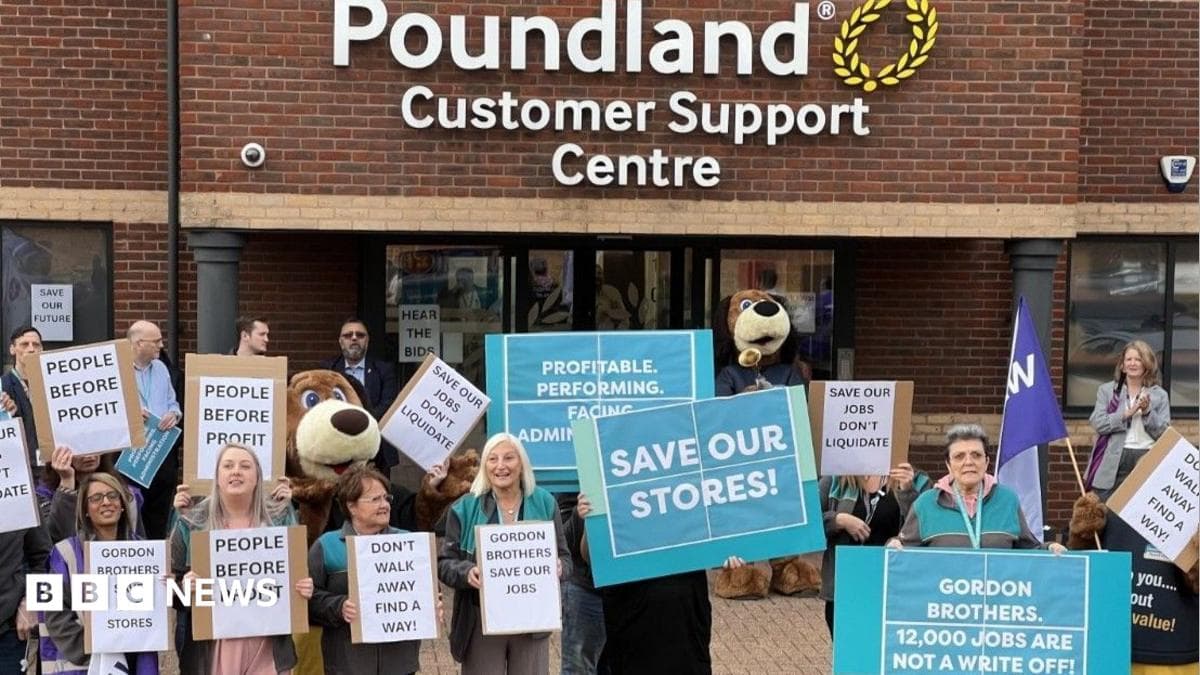
TABLE OF CONTENTS
KEY HIGHLIGHTS
- Poundland’s former owner, Steve Smith, is willing to invest in the struggling retailer as it faces potential insolvency.
- Business Minister Kate Dearden will meet Poundland executives this week to discuss the company’s financial crisis.
- Current owner Gordon Brothers halted funding for Poundland, putting 12,000 jobs at risk, despite the retailer expecting a profit this year.
- Gordon Brothers rejected a takeover offer from Irish firm Martin Property Group (MPG) and has until Thursday to secure a rescue deal.
- Poundland operates 600 stores and serves 4-5 million customers weekly, with up to 30,000 jobs at stake, including suppliers.
Why Poundland is at risk
Poundland, the UK’s largest single-price discount retailer, has until Thursday to secure a rescue deal or face potential insolvency. The company’s US-based owner, Gordon Brothers, bought Poundland for £1 last year from Polish retail group Pepco but inherited a £30 million loan. Gordon Brothers has since halted funding, putting 12,000 jobs at risk across its 600 stores in the UK and Ireland.
Stakeholders respond to the crisis
Steve Smith, who left Poundland in 2006, has signaled his willingness to invest in the struggling retailer. Smith’s offer adds to a tense standoff between Gordon Brothers and potential buyers, including Irish firm Martin Property Group (MPG), whose £5 million bid was rejected earlier.
Business Minister Kate Dearden will meet Poundland executives later this week for a "fact-finding" discussion. However, the UK government’s ability to intervene is limited, as the situation remains a commercial transaction. Prime Minister Andy Burnham and Labour MP Liam Byrne have yet to comment publicly on the matter.
Financial performance and job impact
Despite the financial turmoil, Poundland reported an 11.2% increase in sales last week compared to the same period last year and is expected to turn a profit this year. The retailer serves 4-5 million customers weekly, but its collapse could affect up to 30,000 jobs, including those in its supply chain.
What’s next for Poundland
Gordon Brothers is evaluating formal and indicative offers to minimize uncertainty for Poundland’s employees and stakeholders. The company’s board has acknowledged it has not received an acceptable offer for the business as a whole, raising concerns about the retailer’s future.
Context: recent developments at Poundland
This crisis follows Poundland’s recent filing of a notice of intention to appoint administrators, which granted it a 10-day window to secure a rescue deal. Gordon Brothers’ rejection of MPG’s £5 million bid escalated tensions, pushing the retailer closer to insolvency and prompting calls for alternative solutions.
What this means
Lazyfounder analysis — our interpretation, not reported fact.
Poundland’s situation is a stark example of how distressed retail businesses can become pawns in larger financial conflicts. For founders, the key lesson is the fragility of even well-established brands when ownership changes hands—particularly when private equity firms prioritize short-term financial engineering over long-term stability. The £1 purchase price and £30 million loan inherited by Gordon Brothers illustrate how quickly liabilities can overshadow a business’s actual performance, even when sales and profits are growing.
Key takeaways
- Founders and operators in retail should note how quickly financial distress can escalate when private equity owners withdraw support, even for profitable businesses.
- The limited scope for UK government intervention in this case highlights the risks of relying on regulatory or public-sector relief during financial crises.
- For investors, Poundland’s situation underscores the volatility of distressed asset acquisitions, where inherited liabilities (e.g., a £30M loan) can outweigh nominal purchase prices (£1).
- The rejection of MPG’s bid shows how differing valuations between buyers and sellers can derail rescue deals, a dynamic that may apply to other struggling retailers or suppliers.
- With 30,000 jobs at risk, including suppliers, this story is a case study in how corporate insolvency cascades through ecosystems, affecting startups and SMEs in related industries.
Related on Lazyfounder
Sources
- BBC News (Tech & Business) · 2026-11-02
Ex-Poundland owner says he'd invest in firm as minister says she will meet board
This story is an original summary drafted with AI by Lazyfounder from the reporting listed above and checked by automated validation. Facts are attributed to their original publishers; sections marked as analysis are Lazyfounder's. Where a source is in another language, facts were machine-translated and quotations are reported, not reproduced. Read the original coverage via the links, and see our AI policy and corrections policy.

About the author
Editor, Lazyfounder
Tarun Mottlia edits LazyFounders, covering Indian startups, funding rounds, AI and product launches. Every story on the site is AI-assisted and checked against its cited sources before publication.
More stories by Tarun MottliaGet the LazyFounder Brief
Startup, funding and AI news in a five-minute read. Join the early-access list.
