
Poseidon Aerospace raises $60 million to develop autonomous cargo drone Egret
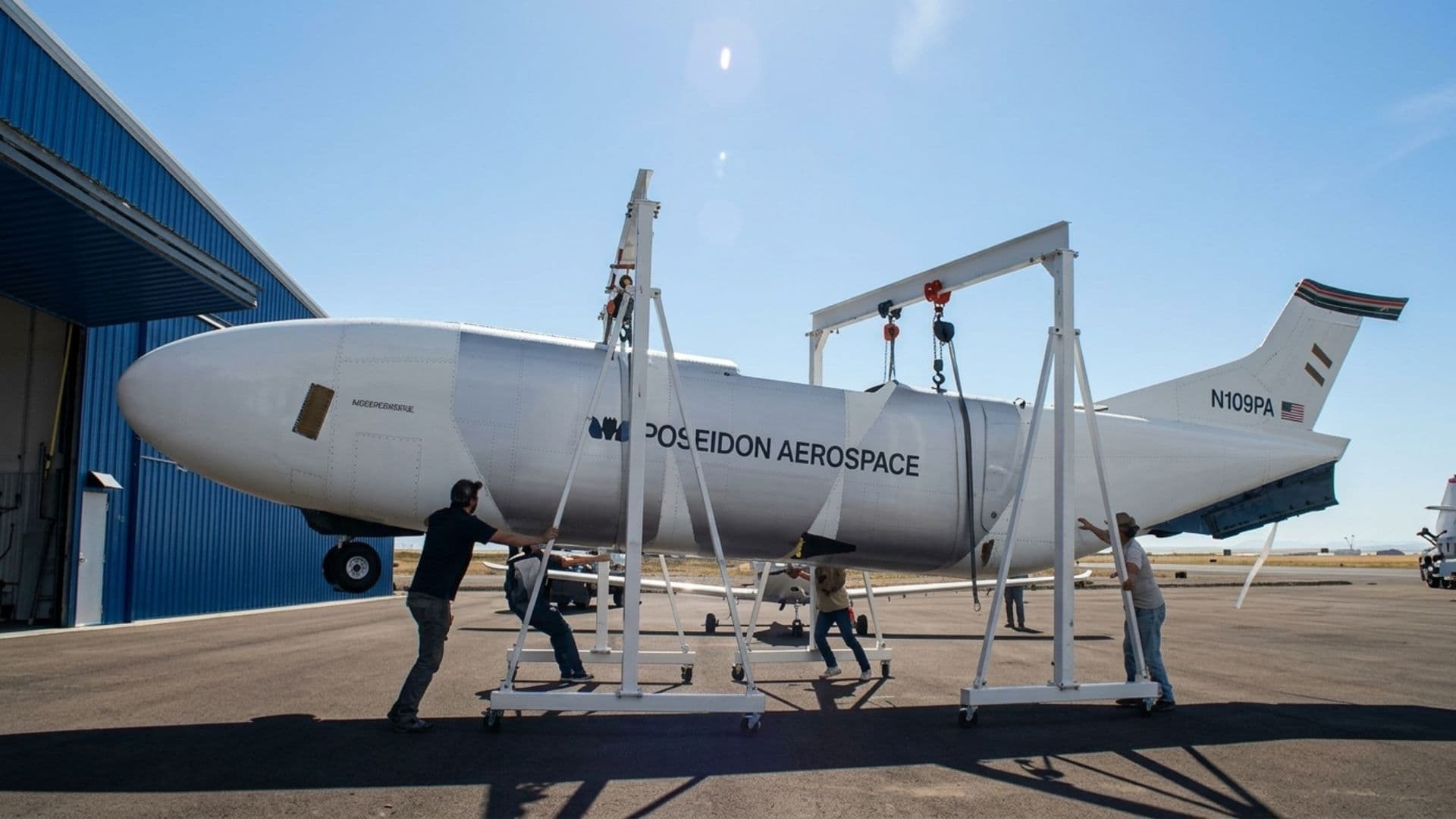
Poseidon Aerospace has raised $60 million in Series A funding to advance the development of Egret, an autonomous cargo drone designed to carry 4,000 pounds of freight without a human pilot. The drone, with a 50-foot wingspan, is set to become the largest cargo drone tested in the U.S., targeting applications in logistics and defense.

Editor, Lazyfounder
KEY HIGHLIGHTS
- Poseidon Aerospace raises $60 million in Series A funding led by TQ Ventures to develop Egret, an autonomous cargo drone with a 50-foot wingspan and 4,000lb payload capacity.
- Egret is designed to operate without a human pilot, optimizing internal space for cargo.
- The drone will be remotely operated during testing in Oregon, where it is set to become the largest cargo drone flown in the U.S.
- Poseidon Aerospace was founded by former Amazon and Lockheed Martin engineers David Zagaynov and Parker Tenney.
- The company previously developed prototypes V0 and Seagull, with Seagull used in demonstrations for defense organizations.
Egret’s design and capabilities
Poseidon Aerospace is developing Egret, an autonomous cargo drone with a 50-foot wingspan and a 4,000-pound payload capacity. The aircraft is designed to operate without a human pilot, dedicating its internal space entirely to cargo rather than flight controls or cockpit equipment.
By eliminating the cockpit, Egret reduces weight and maximizes cargo volume, aligning with the company’s goal of creating an airborne equivalent of trucking for economical freight transport. David Zagaynov, co-founder of Poseidon Aerospace, described the drone as a solution for moving shipments efficiently.
During testing, Egret will be remotely operated using live camera feeds and flight controls from a ground station, allowing operators to manage throttle, flaps, rudders, and other flight surfaces.
Funding and development timeline
Poseidon Aerospace has raised $60 million in a Series A funding round led by TQ Ventures. The capital will support the development and testing of Egret, which is expected to begin flights in Oregon.
The company previously developed two prototypes: V0, which required multiple redesigns before achieving a successful flight, and Seagull, a quarter-scale carbon-fiber aircraft designed for water operations. Seagull has been used in demonstrations for defense organizations, including the Department of War, the Navy, and Special Operations Command.
Founders and industry background
Poseidon Aerospace was founded by David Zagaynov and Parker Tenney, both former engineers at Amazon and Lockheed Martin. Their experience in aerospace and logistics informs the development of Egret, which targets applications in commercial freight and defense.
The company’s earlier work with prototypes like Seagull has positioned it to scale Egret for larger payloads and autonomous operations. The focus on iterative testing with defense organizations highlights a strategy of validating technology with early adopters before commercial deployment.
What this means
Lazyfounder analysis — our interpretation, not reported fact.
Poseidon Aerospace’s $60 million funding round and the development of Egret signal growing momentum in autonomous cargo drones, a category that could redefine logistics and defense supply chains. For founders in aerospace or logistics, the elimination of the cockpit in Egret’s design is a notable innovation—by removing the need for pilot accommodations, the drone maximizes cargo capacity and reduces structural weight, a model that could inspire similar optimizations in other autonomous systems.
The involvement of TQ Ventures, a lead investor, suggests confidence in the commercial and defense applications of autonomous aviation, particularly for remote or high-risk operations. The iterative approach Poseidon has taken—testing earlier prototypes like Seagull with defense organizations—demonstrates a pragmatic path to scaling technology: validate with niche, high-stakes users first, then expand to broader markets.
For competitors, Egret’s upcoming tests in Oregon could serve as a benchmark for regulatory and operational hurdles in the U.S. autonomous cargo drone market. If successful, the drone’s payload capacity and autonomous design may pressure other players to accelerate their own R&D or partnerships with defense and logistics customers.
Key takeaways
- For logistics startups, Egret’s design—eliminating the cockpit to maximize cargo space—signals a shift toward optimizing autonomous aerial freight for efficiency and scalability.
- The $60 million funding round, led by TQ Ventures, underscores investor confidence in autonomous cargo drones as a viable solution for defense, commercial logistics, and remote operations.
- Founders in aerospace and defense should note Poseidon’s iterative approach: its earlier prototypes (V0 and Seagull) were tested with defense organizations before scaling to Egret, a model for validating technology with early adopters.
- Regulatory and operational testing in Oregon could set precedents for how autonomous cargo drones are certified and deployed in the U.S., impacting competitors in this space.
Related on Lazyfounder
Sources
- TechRadar · 2026-10-27
World's largest cargo drone packs a 50-foot wingspan and 4,000lb payload — but you'll never find a human pilot inside
This story is an original summary drafted with AI by Lazyfounder from the reporting listed above and checked by automated validation. Facts are attributed to their original publishers; sections marked as analysis are Lazyfounder's. Where a source is in another language, facts were machine-translated and quotations are reported, not reproduced. Read the original coverage via the links, and see our AI policy and corrections policy.

About the author
Editor, Lazyfounder
Tarun Mottlia edits LazyFounders, covering Indian startups, funding rounds, AI and product launches. Every story on the site is AI-assisted and checked against its cited sources before publication.
More stories by Tarun MottliaGet the LazyFounder Brief
Startup, funding and AI news in a five-minute read. Join the early-access list.
