
Philips Hue launches Custom AI Behaviors for smart lighting automations
Philips Hue has rolled out Custom AI Behaviors, a feature in its app that lets users create smart lighting automations using natural language. The update targets users with the Hue Bridge Pro but has faced early criticism for functionality issues, including unreliable AI performance. The company has also introduced additional app improvements for all users.

Editor, Lazyfounder
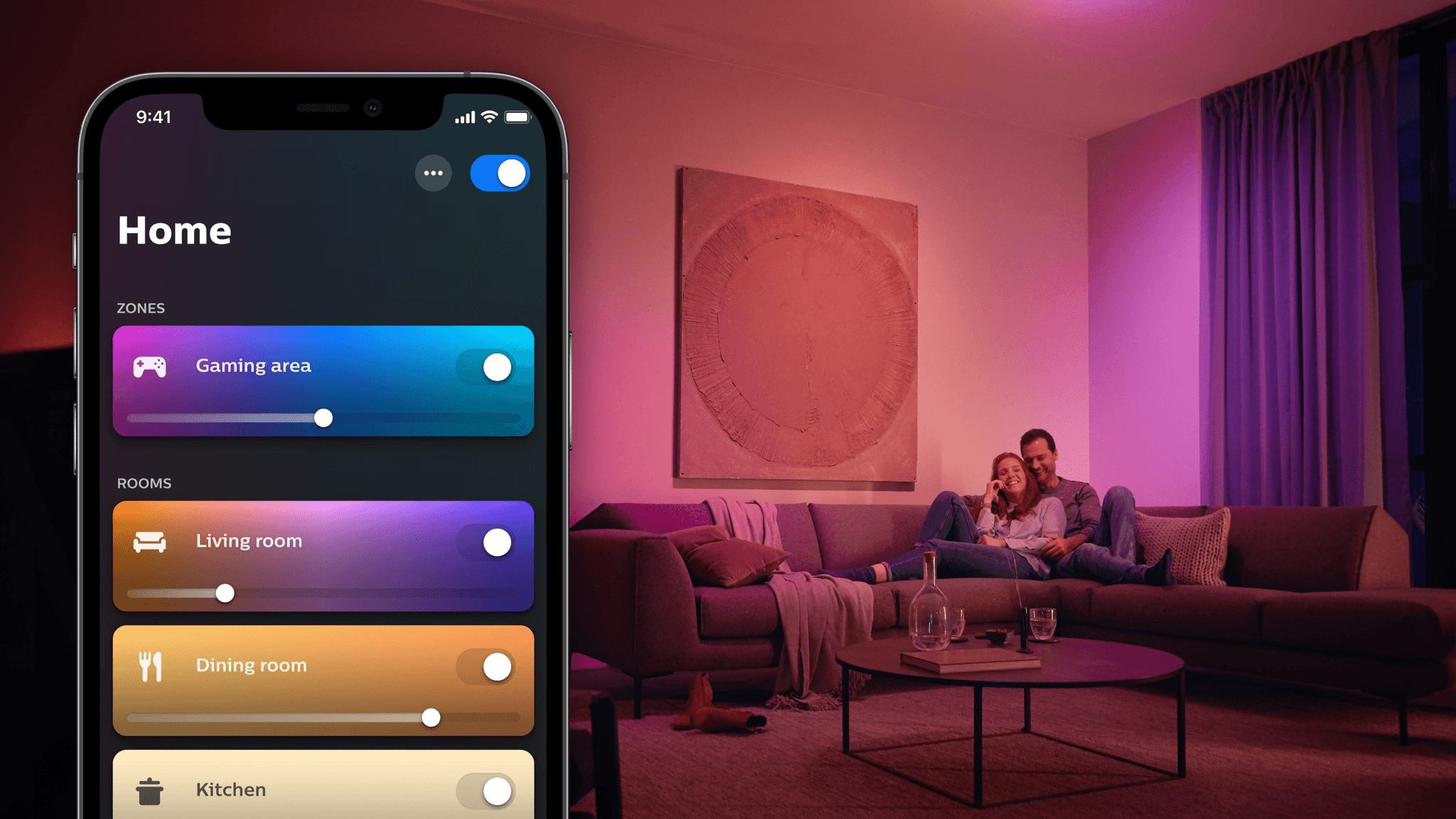
TABLE OF CONTENTS
What Custom AI Behaviors offers
Philips Hue has introduced Custom AI Behaviors, a feature in its app that allows users to create smart lighting automations using natural language commands. For example, users can instruct the system to "turn on the living room lights at sunset" or "dim the bedroom lights when I start a movie," and the AI is supposed to generate the corresponding automation.
The feature is currently limited to users who own the Hue Bridge Pro, a hardware component required to enable the functionality. Unlike Apple’s Shortcuts, which allows users to edit and refine AI-generated automations, Custom AI Behaviors does not yet support tweaking the AI’s output after creation.
Early reports highlight functionality issues
Early users and testers, including reports from HueBlog, have noted that Custom AI Behaviors is not performing as expected. Issues range from the AI misinterpreting commands—such as turning on all lights instead of those specified—to encountering errors when attempting to correct mistakes. In some cases, the system displayed error messages when users asked the AI to fix an issue.
TechRadar noted that these problems resemble typical "version 1.0" challenges, suggesting they may be addressed in future updates based on user feedback.
Additional app updates for all users
Alongside Custom AI Behaviors, Philips Hue has released updates for its app that are available to all users. These include easier setup for Screen Sync, which allows lighting to match on-screen content, and improved scene recommendations powered by SpatialAware technology. The latter aims to optimize lighting based on room layout and user preferences.
How this fits into smart home trends
The launch of Custom AI Behaviors reflects broader industry trends toward integrating AI into smart home ecosystems. For example, Apple’s HomeKit and Shortcuts have long allowed users to create and refine automations, while competitors like Samsung and Google offer similar capabilities through their respective platforms.
Earlier Lazyfounder reporting highlighted Apple’s moves to expand HomeView’s functionality, including potential indoor security camera features via HomeKit Secure Video. This positions Apple as both a competitor and a benchmark for user experience in the smart home space, particularly in areas like automation and customization.
What this means
Lazyfounder analysis — our interpretation, not reported fact.
Philips Hue’s Custom AI Behaviors is a step toward making smart home automation more accessible, but its early struggles underscore the challenges of relying on AI for precise, user-defined tasks. For founders and operators in the smart home space, this launch is a reminder that while natural language processing can simplify interactions, it also raises expectations for reliability and customization. The feature’s limitations—such as the inability to edit AI-generated behaviors—could frustrate power users who expect granular control, a gap competitors like Apple have already addressed.
The requirement of the Hue Bridge Pro also signals a strategic move to upsell hardware, which may limit the feature’s appeal to a niche segment of Philips Hue’s user base. For startups in the smart home sector, this launch offers lessons in balancing innovation with usability, particularly when introducing AI-driven tools that promise to "simplify" complex workflows.
Related on Lazyfounder
Sources
- TechRadar · 2026-11-02
Philips Hue just launched its ambitious Custom AI Behaviors, but early teething troubles show the smart assistant might not be quite ready for prime time
This story is an original summary drafted with AI by Lazyfounder from the reporting listed above and checked by automated validation. Facts are attributed to their original publishers; sections marked as analysis are Lazyfounder's. Where a source is in another language, facts were machine-translated and quotations are reported, not reproduced. Read the original coverage via the links, and see our AI policy and corrections policy.

About the author
Editor, Lazyfounder
Tarun Mottlia edits LazyFounders, covering Indian startups, funding rounds, AI and product launches. Every story on the site is AI-assisted and checked against its cited sources before publication.
More stories by Tarun MottliaGet the LazyFounder Brief
Startup, funding and AI news in a five-minute read. Join the early-access list.
