
Perfios Group CFO on why finance leaders now drive acquisitions and AI bets
Prashant Mahagaonkar, Group CFO at Perfios, shared how the role of finance leaders has expanded to include strategic decision-making in acquisitions, integration, and technology investments like AI. His insights highlight the growing expectation for CFOs to balance founder ambition with financial discipline, particularly in high-growth sectors.

Editor, Lazyfounder
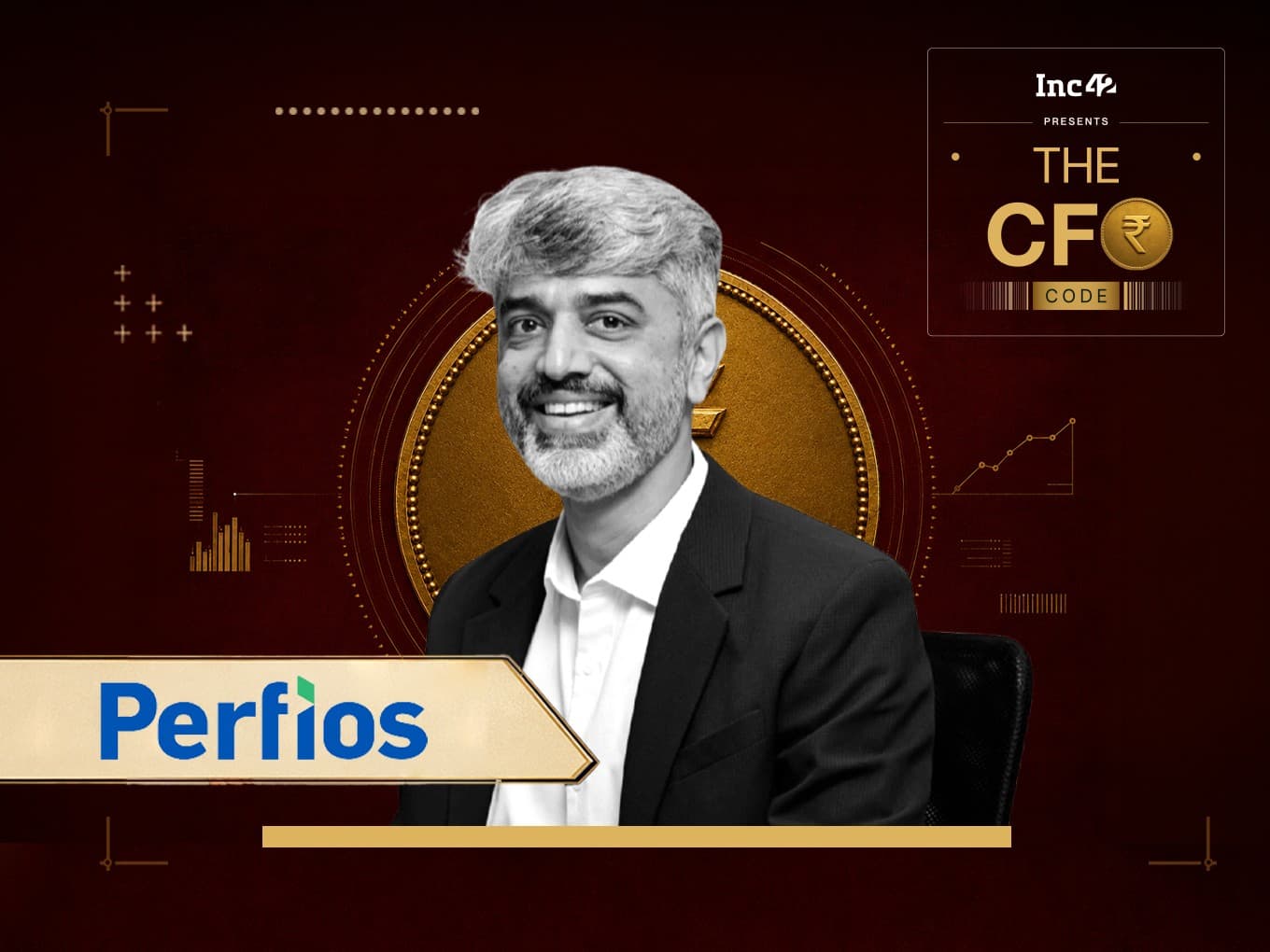
TABLE OF CONTENTS
The expanding remit of the CFO
Prashant Mahagaonkar, Group CFO at Perfios, outlined how the role of finance leaders has evolved beyond traditional financial stewardship. According to Inc42, CFOs are now expected to evaluate acquisition targets, structure deals, and ensure long-term value creation—tasks that require forward-looking judgement rather than reliance on historical data. Mahagaonkar noted that around 40% of a CFO’s decisions today demand this kind of strategic assessment.
This shift reflects broader trends in fintech and SaaS, where rapid scaling often hinges on acquisitions and technology investments like AI. At Perfios, a B2B SaaS fintech serving over 1,000 financial institutions globally, Mahagaonkar’s focus has been on integrating acquired businesses while optimizing capital allocation.
Acquisitions: Beyond the deal
Mahagaonkar joined Perfios after the company had completed three acquisitions, including an eFRM (Enterprise Fraud Risk Management) business in a new segment and a collections company adjacent to its core offerings. The real challenge, he said, lies in post-deal integration—unlocking synergies and delivering the value that justified the acquisition.
Integration strategies at Perfios are tailored to the nature of the acquired business. Some require full consolidation, while others benefit from retaining operational independence. Smaller targets, for example, often lack robust compliance infrastructure, which Perfios addresses as part of integration. This nuanced approach aims to preserve the agility that made the acquisition attractive in the first place.
People and culture as financial priorities
A critical but often overlooked aspect of acquisitions is people and culture integration. Mahagaonkar emphasized that finance teams play a key role here, particularly when acquisitions create redundant roles or overlapping functions. This responsibility goes beyond headcount management; it involves aligning organizational values, incentives, and workflows to retain talent and maintain productivity.
At Perfios, this process is treated as a finance-led initiative, reflecting the understanding that cultural misalignment can erode the financial benefits of a deal. The focus on people integration underscores how CFOs now operate at the intersection of numbers and organizational behavior.
AI investments and financial discipline
Perfios uses an ROI matrix to evaluate AI and technology investments, assessing productivity gains, hiring requirements, and whether a specific use case warrants AI at all. This framework ensures that technology bets align with business needs and deliver measurable returns—a discipline Mahagaonkar argues is essential for high-growth companies.
The approach reflects a broader trend where CFOs are increasingly involved in strategic technology decisions, not just cost control. For startups, this signals the importance of embedding financial scrutiny into AI roadmaps, especially as capital efficiency becomes a priority in funding-constrained environments.
Lessons from scaling and exits
Mahagaonkar drew parallels from his earlier roles, including scaling CitiusTech’s revenue from $60 million to $500 million and working through Moody’s acquisition of Amba Research. These experiences highlighted the importance of balancing founder ambition with financial guardrails, particularly in high-stakes environments like private equity-backed growth or strategic exits.
His tenure at Perfios, starting in July 2025, builds on this playbook, focusing on acquisitions, integration, and technology investments as levers for scale—while maintaining the discipline to ensure each decision contributes to long-term value.
What this means
Lazyfounder analysis — our interpretation, not reported fact.
Prashant Mahagaonkar’s insights highlight how the CFO role has expanded from financial stewardship to strategic leadership, particularly in high-growth environments like fintech and SaaS. For founders and operators, this signals a shift in expectations: CFOs are now critical partners in shaping acquisitions, integration, and technology investments, not just reporting outcomes.
The emphasis on tailored integration strategies—balancing full consolidation with preserving independence for acquired businesses—reflects a nuanced approach to M&A that prioritizes long-term value over immediate synergy capture. This matters for startups eyeing acquisitions, as rigid integration can erode the agility that made the target valuable in the first place.
Mahagaonkar’s focus on people and culture integration also underscores a blind spot in many M&A playbooks. For operators, this means treating post-deal workforce alignment as a finance-led priority, not just an HR exercise. The ROI matrix used for AI investments at Perfios offers a practical framework: founders should adopt similar scrutiny for technology bets, especially in capital-constrained environments.
Finally, the statistic that 40% of CFO decisions now require forward-looking judgement—rather than relying on historical data—challenges finance teams to move beyond spreadsheets. For startups, this evolution could mean hiring or upskilling CFOs who can bridge data literacy with strategic narrative-building, particularly when pitching growth plans to investors.
Key takeaways
- CFOs are now strategic partners in acquisitions, integration, and technology investments, requiring forward-looking judgement beyond traditional financial reporting.
- Tailored integration strategies—balancing full consolidation with preserving acquired businesses’ independence—can protect the value of M&A deals, especially in competitive sectors like fintech and SaaS.
- People and culture integration is a finance-led priority in acquisitions, not just an HR concern, and should be treated as a key driver of post-deal success.
- Founders and operators should adopt structured ROI frameworks, like Perfios’ matrix for AI investments, to evaluate technology bets and avoid costly misalignments with business needs.
Related on Lazyfounder
Sources
- Inc42 · 2026-10-23
The CFO Code: Perfios' Group CFO On Making Acquisitions Work
This story is an original summary drafted with AI by Lazyfounder from the reporting listed above and checked by automated validation. Facts are attributed to their original publishers; sections marked as analysis are Lazyfounder's. Where a source is in another language, facts were machine-translated and quotations are reported, not reproduced. Read the original coverage via the links, and see our AI policy and corrections policy.

About the author
Editor, Lazyfounder
Tarun Mottlia edits LazyFounders, covering Indian startups, funding rounds, AI and product launches. Every story on the site is AI-assisted and checked against its cited sources before publication.
More stories by Tarun MottliaGet the LazyFounder Brief
Startup, funding and AI news in a five-minute read. Join the early-access list.
