
Pentagon approves Australian armed drone Cerberus MI for government procurement
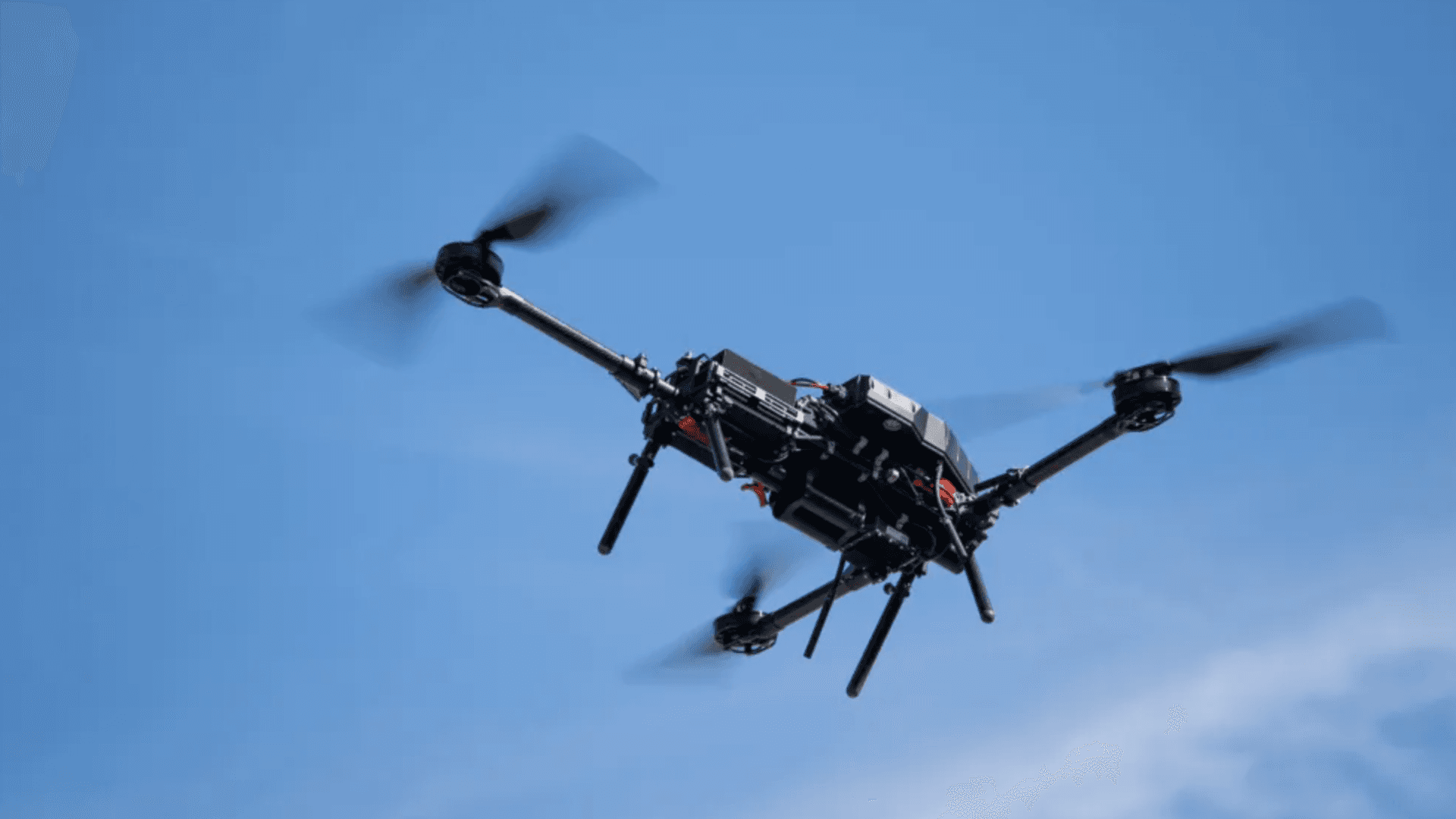
The U.S. Department of Defense has approved Cerberus MI, an armed drone developed by Australian company Skyborne Technologies, for inclusion on its Blue UAS Cleared List. The reusable drone is designed for counter-drone and direct-fire missions and can carry a shotgun or grenade launcher, but human operators retain control over engagement decisions.

Editor, Lazyfounder
30 SEC SUMMARY
- The U.S. Department of Defense added Cerberus MI, an Australian-made armed drone by Skyborne Technologies, to its Blue UAS Cleared List.
- The 40-pound reusable drone can carry a 12-gauge shotgun or 40mm grenade launcher and uses AI for sensor integration.
- Human operators retain control over engagement decisions, with the drone capable of 35 minutes of flight time.
- Inclusion on the list removes procurement restrictions for U.S. agencies, though no orders or funding have been announced.
KEY HIGHLIGHTS
- The U.S. Department of Defense approved Cerberus MI, a reusable armed drone developed by Australian company Skyborne Technologies, for inclusion on its Blue UAS Cleared List.
- The 40-pound drone can carry a 12-gauge shotgun or 40mm grenade launcher and is designed for counter-drone and direct-fire engagements.
- AI integrates sensor data, but human operators retain control over engagement decisions.
- The drone can fly for 35 minutes at speeds up to 34 mph and engage targets beyond 300 metres.
- Approval removes procurement restrictions for U.S. agencies, though no orders or funding have been announced.
Cerberus MI’s capabilities and design
Cerberus MI is a 40-pound (18-kilogram) reusable drone developed by Skyborne Technologies for counter-drone operations and direct-fire engagements. It can carry either a 12-gauge shotgun or a 40mm low-velocity grenade launcher, allowing operators to swap payloads based on mission requirements. The drone’s reinforced airframe is designed to handle weapon recoil, and it can return to its operator after engagement for reloading and reuse.
The aircraft uses artificial intelligence to fuse data from multiple sensors, though engagement decisions remain under human control. Skyborne states the targeting system supports engagements at distances exceeding 300 metres (984 feet). When armed, Cerberus MI can remain airborne for approximately 35 minutes at speeds up to 54 kilometres (34 miles) per hour.
Procurement pathway and regulatory approval
The U.S. Department of Defense added Cerberus MI to its Blue UAS Cleared List, a procurement list that removes restrictions for eligible government agencies. The Defense Contract Management Agency approved the drone after reviewing its cybersecurity protections, supply-chain arrangements, and potential exposure to foreign influence.
Inclusion on the list means U.S. agencies can procure Cerberus MI without obtaining individual policy exceptions. However, the Pentagon has not announced any orders, funding commitments, or delivery timelines for the drone.
What this means
Lazyfounder analysis — our interpretation, not reported fact.
For founders and operators in defense technology, Skyborne’s clearance signals growing U.S. appetite for allied-developed unmanned systems that balance autonomy with human oversight. The design choice to keep engagement decisions in human hands may set a template for future AI-enabled weapons, while the focus on reusability reduces cost-per-mission—a metric U.S. defense procurement increasingly prioritizes. The lack of immediate orders also underscores the lengthy timeline of defense sales cycles, a reality hardware startups in this sector must plan for.
Key takeaways
- Cerberus MI’s inclusion on the Blue UAS Cleared List removes procurement hurdles for U.S. agencies, creating a potential market for Skyborne without requiring individual policy exceptions.
- The drone’s reusable design and modular payload capacity (shotgun or grenade launcher) address cost and mission-flexibility demands in modern military operations.
- AI integration for sensor fusion, combined with human-controlled engagement, reflects a hybrid operational model that could influence future U.S. defense contracts for unmanned systems.
- The absence of announced orders highlights the gap between regulatory approval and actual procurement, a key consideration for startups targeting government contracts.
Related on Lazyfounder
Sources
- TechRadar · 2026-11-04
The Pentagon wants to buy an Australian-made 'kamikaze' suicide drone armed with a shotgun
This story is an original summary drafted with AI by Lazyfounder from the reporting listed above and checked by automated validation. Facts are attributed to their original publishers; sections marked as analysis are Lazyfounder's. Where a source is in another language, facts were machine-translated and quotations are reported, not reproduced. Read the original coverage via the links, and see our AI policy and corrections policy.

About the author
Editor, Lazyfounder
Tarun Mottlia edits LazyFounders, covering Indian startups, funding rounds, AI and product launches. Every story on the site is AI-assisted and checked against its cited sources before publication.
More stories by Tarun MottliaGet the LazyFounder Brief
Startup, funding and AI news in a five-minute read. Join the early-access list.
