
National University of Singapore develops world’s first washable touchscreen garment
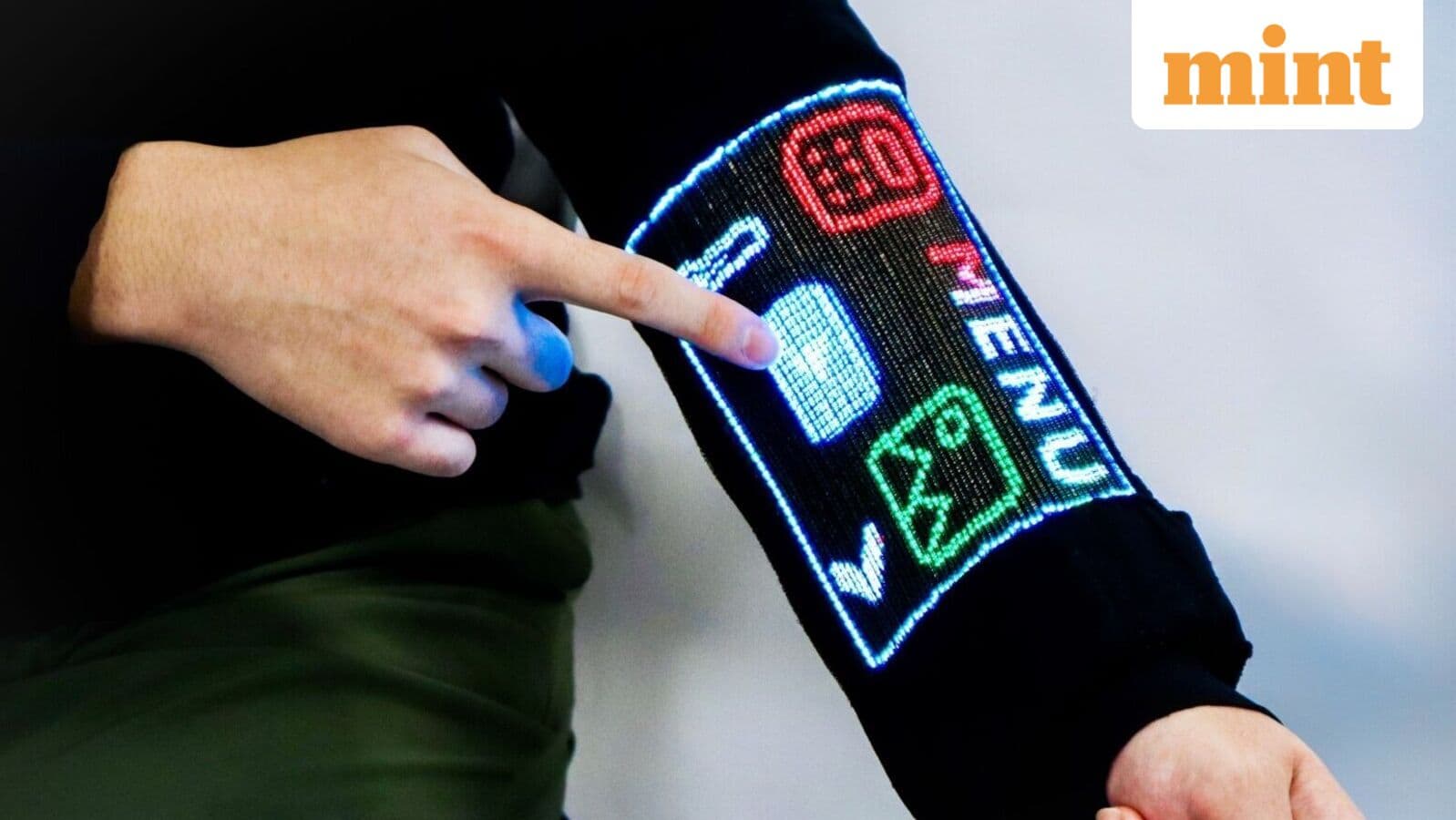
Researchers at the National University of Singapore (NUS) have created the world’s first touchscreen garment—a washable, breathable sleeve that can display images, detect touch, and connect wirelessly to other devices. The innovation, led by Assistant Professor Tural Khudiyev, opens new possibilities for wearable technology and smart textiles.

Editor, Lazyfounder
30 SEC SUMMARY
- NUS researchers developed a touchscreen sleeve woven with electronic fibres, the first of its kind in clothing.
- The sleeve displays images, runs apps like calculators, and detects touch, even after 50 machine washes.
- It connects wirelessly to devices, adjusts screen orientation, and remains breathable like standard fabrics.
- The team aims to improve resolution, add sensors, and integrate AI into the fabric.
KEY HIGHLIGHTS
- The touchscreen sleeve is the first to be fully integrated into clothing and remains functional after 50 washes.
- It measures 168 mm by 105 mm, detects multiple touches, and runs apps like a calculator or compass.
- The fabric is breathable, flexible, and meets safety standards for skin contact.
- Over 5,000 microchips were linked via 20,000 electrical connections in the fibres to enable functionality.
How the touchscreen garment works
The sleeve, developed by a team at NUS’s College of Design and Engineering, uses electronic fibres woven into the fabric like traditional yarn. Each fibre contains 96 tiny LED lights, and 54 of these fibres form the display on the forearm of the sleeve. The fibres are connected via over 20,000 electrical connections to more than 5,000 microchips, enabling independent operation even if some components fail.
Assistant Professor Tural Khudiyev stated that the breakthrough was made possible by constructing a graphical user interface (GUI) system entirely from electronic building blocks in fibre form. The fibres function like yarn but with embedded electronic capabilities, allowing the sleeve to display images, videos, and respond to touch.
Functionality and durability
The sleeve can perform tasks typically associated with early smartphones, such as running a calculator, displaying photos, playing videos, and responding to voice commands. It connects wirelessly to other devices via Bluetooth, automatically adjusting screen orientation and brightness. The team also demonstrated its potential for health monitoring by integrating a temperature sensor under the arm to display body temperature.
The display remained functional after 50 machine washes with detergent and 1,000 tight bends. Its breathability matches that of cotton, polyester, and denim, and it meets safety standards for skin contact.
Next steps for the technology
The NUS team plans to enhance the screen’s resolution, add more sensors, and integrate artificial intelligence (AI) directly into the fabric. These improvements could expand its applications in healthcare, fitness, and interactive fashion.
What this means
Lazyfounder analysis — our interpretation, not reported fact.
This development signals a shift in wearable technology from rigid, device-dependent forms to seamless, fabric-integrated solutions. For founders and operators in the smart textiles space, it demonstrates that electronic functionality can be embedded into everyday clothing without sacrificing comfort, durability, or washability. The technology’s reliance on scalable electronic fibres also suggests potential for mass production, though challenges remain in refining resolution and reducing costs. Early adopters in industries like healthcare or sports could leverage this for real-time monitoring or interactive apparel, while fashion and tech startups might explore collaborations to differentiate their product lines.
Key takeaways
- The sleeve’s durability—surviving 50 washes and 1,000 bends—addresses a key barrier to consumer adoption of smart textiles.
- Its ability to function wirelessly and independently positions it as a potential alternative to wrist-worn wearables, especially in markets where comfort and aesthetics matter.
- The integration of AI and sensors could create new use cases in sectors like remote patient monitoring or athletic training.
- Founders in wearable tech should consider how this technology could complement or disrupt existing products, particularly in areas where fabric-based solutions offer a competitive edge.
Related on Lazyfounder
Sources
- Mint (Technology) · 2026-10-24
Ever heard of a touchscreen garment? World's 1st is here - washable, breathable; it responds to finger presses, wireless
This story is an original summary drafted with AI by Lazyfounder from the reporting listed above and checked by automated validation. Facts are attributed to their original publishers; sections marked as analysis are Lazyfounder's. Where a source is in another language, facts were machine-translated and quotations are reported, not reproduced. Read the original coverage via the links, and see our AI policy and corrections policy.

About the author
Editor, Lazyfounder
Tarun Mottlia edits LazyFounders, covering Indian startups, funding rounds, AI and product launches. Every story on the site is AI-assisted and checked against its cited sources before publication.
More stories by Tarun MottliaGet the LazyFounder Brief
Startup, funding and AI news in a five-minute read. Join the early-access list.
