
Nomadic’s $6M Funding Powers Drones That Recharge Mid-Flight on Power Lines
Nomadic, a Munich-based startup, has built drones that attach to live power lines, draw energy from the cables, and inspect transmission networks without ever landing. The company just secured $6 million to deploy its technology across grids in Europe and the U.S. These drones work in temperatures as low as -25°C and require no battery swaps—two limitations that have long held back large-scale adoption.

Editor, Lazyfounder
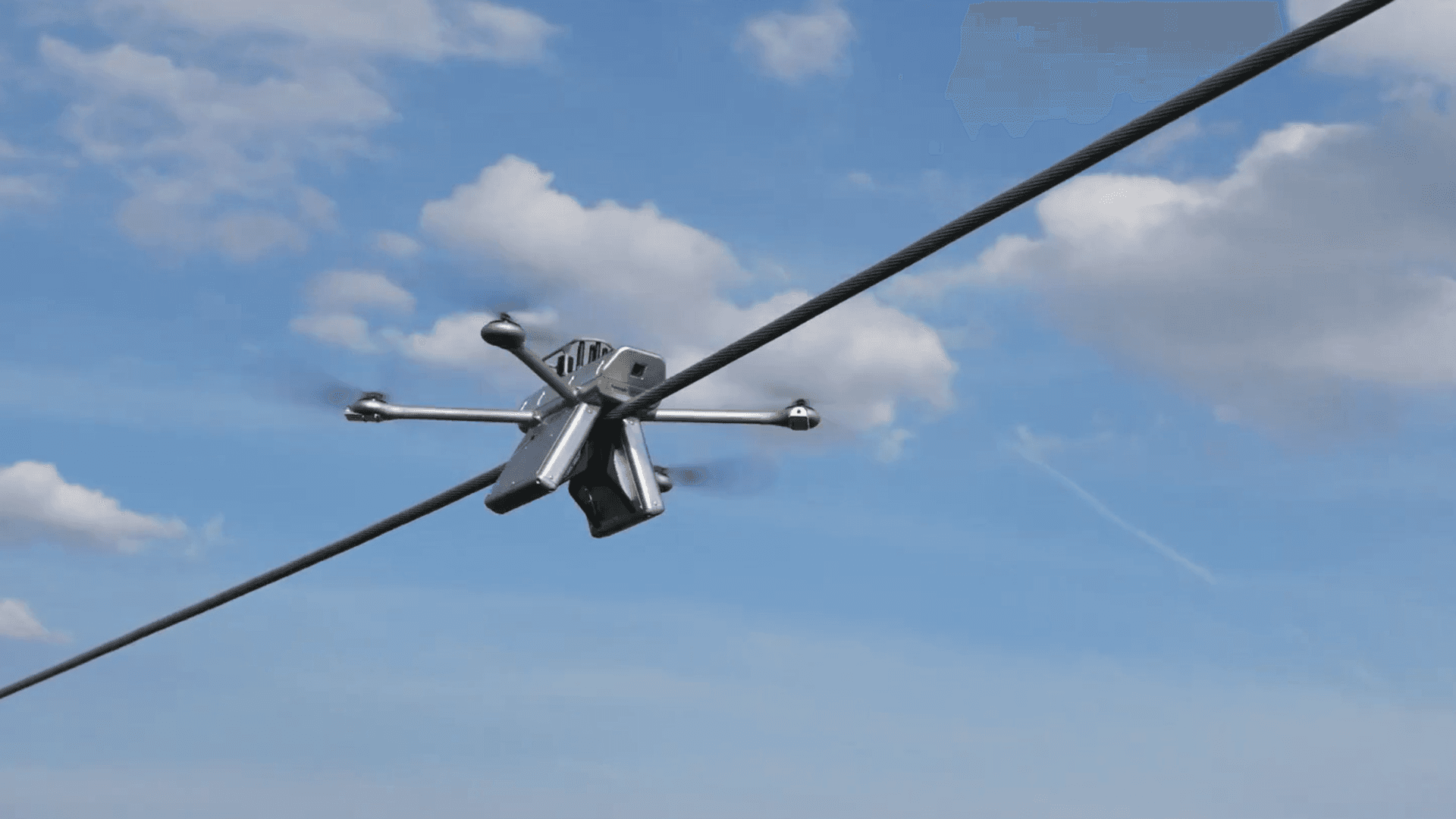
TABLE OF CONTENTS
KEY HIGHLIGHTS
- Nomadic raises $6 million in a seed round led by Foundamental, with participation from Verve Ventures, Cyan Ventures, Outlander VC, and Asia2G Capital.
- Each 4 kg drone monitors up to 25 km of power lines and recharges from magnetic fields around live conductors.
- Drones have logged over 20,000 operating hours in Germany, Norway, and the U.S., handling voltages up to 420 kV and temperatures down to -25°C.
- Funding will expand operations in Europe and the U.S. and introduce remote relocation, allowing drones to move between power line sections without retrieval.
Designed for the Harshest Grid Conditions
Nomadic’s drones cling to live transmission cables carrying up to 420 kV, the standard voltage for Europe’s high-voltage networks. They keep flying at -25°C, powered entirely by the magnetic field around the conductor. Each drone weighs about 4 kg and can patrol 25 km of infrastructure without landing for a battery change or recharge.
How the Drones Stay Airborne Without Landing
The drones land directly on energized power lines and draw power through electromagnetic induction. That eliminates the need for charging stops or battery swaps, allowing them to patrol indefinitely. On the ground, Nomadic OS software combines drone measurements with grid models, weather data, and historical line records to identify faults and transmission bottlenecks.
$6M Seed Round Fuels Expansion
Foundamental led the $6 million seed round, with participation from Verve Ventures, Cyan Ventures, Outlander VC, and Asia2G Capital. The funding will help Nomadic grow its team and expand its work with utilities in Europe and the U.S. The next upgrade will let operators move drones between power line sections remotely, without physically retrieving them.
So far, Nomadic’s drones have logged more than 20,000 operational hours in pilot projects across Germany, Norway, and the United States.
Why Utilities Are Turning to Drones
New data centers, renewable energy projects, and industrial loads are pushing aging grids to their limits. Traditional inspections often require shutting down lines or installing fixed sensors every few kilometers—both costly and limited in scope. Nomadic’s drones provide real-time visibility across long distances without interrupting service.
Andreas Moldskred, Nomadic’s CEO and co-founder, explains that most utilities only see detailed data at substations. Everything in between is guesswork. The drones fill that gap, collecting measurements every meter along thousands of kilometers of high-voltage lines.
Key takeaways
- Drones that recharge from the power lines they inspect remove the need for manual battery maintenance, a major hurdle for scaling up.
- Operating at 420 kV and -25°C means Nomadic’s drones can serve grids in harsh climates where ground crews or robots struggle.
- Remote relocation will cut downtime and costs by letting drones move between power line sections without being retrieved—a first for mobile grid inspections.
Related on Lazyfounder
Sources
- TechRadar · 2026-11-23
These 4kg drones land on live 420 kV power lines to recharge from the magnetic field — logging 20,000 hours hunting hidden bottlenecks across European and US grids
This story is an original summary drafted with AI by Lazyfounder from the reporting listed above and checked by automated validation. Facts are attributed to their original publishers; sections marked as analysis are Lazyfounder's. Where a source is in another language, facts were machine-translated and quotations are reported, not reproduced. Read the original coverage via the links, and see our AI policy and corrections policy.

About the author
Editor, Lazyfounder
Tarun Mottlia edits LazyFounders, covering Indian startups, funding rounds, AI and product launches. Every story on the site is AI-assisted and checked against its cited sources before publication.
More stories by Tarun MottliaGet the LazyFounder Brief
Startup, funding and AI news in a five-minute read. Join the early-access list.