
Nikon disqualifies AI-generated contest winner, sparking debate on scientific integrity
Nikon has disqualified the winner of its Small World In Motion scientific photography contest after discovering the winning entry used generative AI, violating the competition’s rules. The decision followed complaints from scientists about the video’s authenticity, sparking debates about AI’s role in scientific imaging and research integrity.

Editor, Lazyfounder
30 SEC SUMMARY
- Nikon disqualified the winner of its Small World In Motion scientific photography contest after discovering the winning entry used generative AI, violating contest rules.
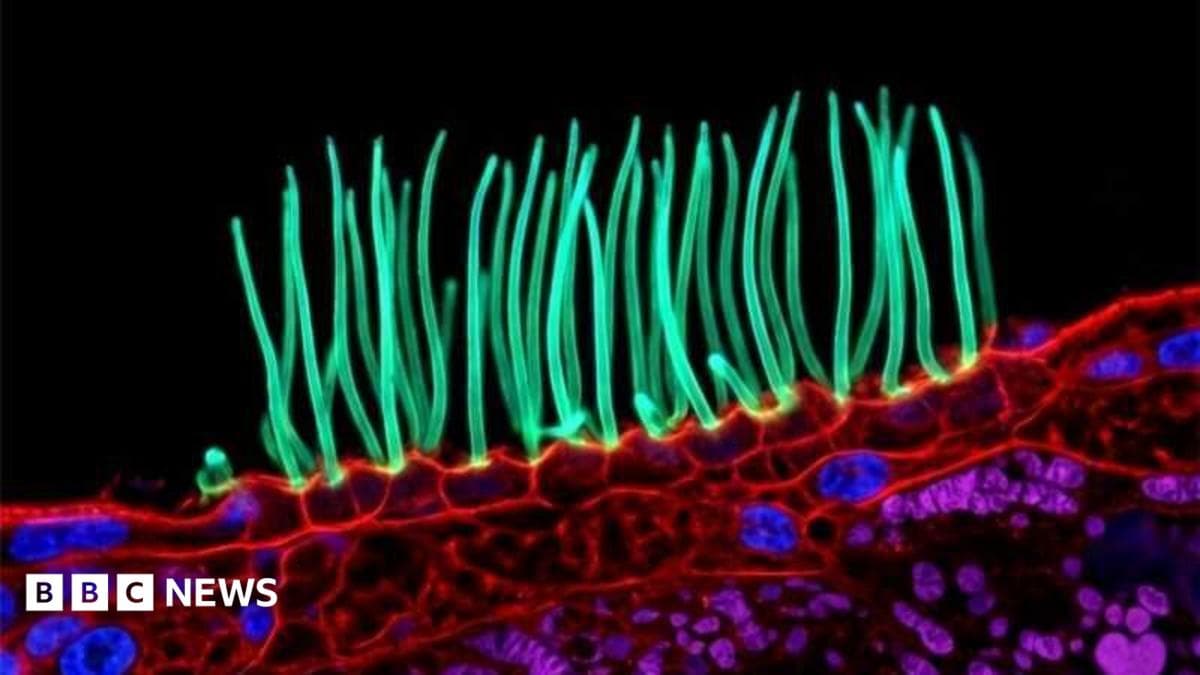
- The winning video, submitted by Dr. Ning Xu of Tsinghua University, depicted cilia in the airway of a child with a respiratory condition but was found to contain AI-generated alterations.
- Scientists, including former judges, raised concerns about the video’s authenticity, leading to its disqualification and a review of contest rules.
- Nikon named Nguyen Nam Nhat of Vietnam as the new winner for a video of a roundworm and a single-celled organism.
- The incident highlights ongoing debates about AI’s role in scientific imaging and research integrity.
TABLE OF CONTENTS
KEY HIGHLIGHTS
- Nikon disqualified the winner of its Small World In Motion contest after determining the winning entry used generative AI, violating contest rules.
- The winning video, submitted by Dr. Ning Xu of Tsinghua University, showed cilia in the airway of a child with primary ciliary dyskinesia (PCD) but was later found to contain AI-generated alterations.
- Scientists, including PCD expert Dr. Robert Hirst of the University of Leicester, raised concerns about the video’s authenticity, calling it "fabricated."
- Nikon consulted its judging panel and confirmed the video had an AI-identifying SynthID watermark, leading to its disqualification.
- Nguyen Nam Nhat of Vietnam was named the new winner for a video of a roundworm and a single-celled organism called Dileptus.
- Nikon will review the rules and evaluation procedures for future contests to prevent similar incidents.
Nikon disqualifies AI-generated winning entry
Nikon has disqualified the winner of its Small World In Motion scientific photography competition after determining that the winning video used generative AI, a violation of contest rules. The decision followed complaints from scientists, including former judges, about the authenticity of the entry.
The contest, which has run for 15 years, is dedicated to microscopic images captured using powerful microscopes. According to BBC News, Nikon’s spokesperson, Remi Yuter, confirmed that the disqualification was not a reflection of the entrant’s professional reputation or scientific contributions.
Winning video depicted respiratory condition but was altered
The winning entry, submitted by Dr. Ning Xu of Tsinghua University, depicted cilia—tiny, hair-like structures—in the airway of a child with primary ciliary dyskinesia (PCD), a respiratory condition. However, experts later identified biologically unrealistic structures in the video, raising doubts about its authenticity.
Dr. Robert Hirst, a PCD expert at the University of Leicester, was among the first to voice concerns. According to Gizmodo, Hirst described the video as "fabricated," stating it did not accurately represent the condition in PCD patients. The video was later found to contain a SynthID watermark, a tool used to identify AI-generated content.
Contest rules and AI use under scrutiny
Dr. Ning Xu acknowledged using generative AI for postprocessing but claimed he acted within the contest’s rules. However, according to Gizmodo, the use of AI to fabricate or alter biological structures fundamentally misrepresented scientific reality, leading to Nikon’s decision.
The incident sparked broader discussions about the role of AI in scientific imaging. Melanie White, a developmental biologist at the University of Queensland, emphasized that generative AI fabricates pixels rather than enhancing them, making it incompatible with the contest’s goal of authentic scientific representation.
Nikon will revisit the rules and evaluation procedures for future contests to ensure clarity and prevent similar disputes. The company also adjusted the competition rankings, naming Nguyen Nam Nhat of Vietnam as the new winner for a submission featuring a roundworm and a single-celled organism.
Nikon and Fujifilm’s quiet year in camera releases
While Nikon faced controversy in its photography contest, the company has had a quiet year in camera releases. According to TechRadar, Nikon’s only 2026 release was a viewfinder-less version of the Z5 II, with its last truly new mirrorless camera launched 18 months prior.
Fujifilm, too, has released no new cameras in 2026, despite rumors of an upcoming X-T6. The Fujifilm X-T5, released in 2022, is still considered the best APS-C mirrorless camera in 2026, thanks to its stabilized 40MP sensor and long shelf life.
In contrast, competitors Sony and Canon have introduced multiple new models in 2026, including the Sony A7 V, A7R VI, and Canon EOS R6 Mark III. However, experts argue that the lack of new releases from Nikon and Fujifilm is not a significant issue, given the longevity and quality of their existing models.
Nikon’s Small World In Motion contest
The Small World In Motion contest, organized by Nikon, has been a prominent platform for scientific photography for 15 years. It focuses on showcasing microscopic images and videos captured using advanced microscopy techniques, emphasizing authenticity and scientific accuracy.
Past winners have included researchers and photographers from diverse fields, often highlighting biological processes, medical conditions, or microscopic organisms. The contest’s rules have traditionally prohibited the use of AI or digital alterations that misrepresent the subject matter.
What this means
Lazyfounder analysis — our interpretation, not reported fact.
This incident underscores a growing tension between technological innovation and ethical boundaries in scientific imaging. For founders and operators in tech, research, and creative fields, it serves as a reminder that AI’s capabilities—while powerful—must be wielded responsibly, especially in contexts where authenticity is paramount.
The disqualification also reflects broader industry challenges, such as the need for clear guidelines around AI use in competitions and research. For startups working with AI-driven tools, this case highlights the importance of transparency and stakeholder trust. If customers, users, or peers perceive AI as a shortcut that compromises integrity, it can damage credibility and reputations.
On the hardware side, the lack of new camera releases from Nikon and Fujifilm in 2026 suggests a shift in the consumer electronics market. Rather than prioritizing frequent updates, companies may be focusing on refining existing models or exploring new revenue streams. For founders in hardware or product development, this could signal an opportunity to differentiate by emphasizing longevity, reliability, and user trust—rather than just chasing the next big release.
Key takeaways
- Scientific contests must clearly define and enforce rules around AI-generated content to maintain credibility and integrity.
- AI’s role in scientific imaging is contentious, particularly when it alters or fabricates biological structures, risking misinformation in research.
- Founders and operators in imaging, research, and technology should proactively address ethical concerns about AI use in their fields.
- Transparent evaluation processes and stakeholder consultations are critical when addressing disputes in competitive settings.
- Existing camera technology remains highly capable even without frequent updates, as demonstrated by models like the Fujifilm X-T5 and Nikon Z5 II.
FAQ
Why did Nikon disqualify the winning entry?
Nikon disqualified the winning entry because it used generative AI to alter the video, which violated the contest’s rules. The video was found to contain an AI-identifying watermark, and experts confirmed it included fabricated or unrealistic biological structures.
Who was named the new winner after the disqualification?
Nikon named Nguyen Nam Nhat of Vietnam as the new winner for his video of a roundworm and a single-celled organism called Dileptus.
How did scientists react to the winning video?
Scientists, including former judges and PCD experts like Dr. Robert Hirst, raised concerns about the video’s authenticity. They deemed it fabricated and biologically unrealistic, which led to complaints and ultimately Nikon’s decision to disqualify the entry.
Will Nikon change its contest rules after this incident?
Yes, Nikon stated it will review the rules and evaluation procedures for future editions of the Small World In Motion contest to prevent similar issues.
Related on Lazyfounder
Sources
- BBC News (Tech & Business) · 2026-10-09
Prize-winning image which sparked backlash was AI-generated, Nikon rules - Gizmodo · 2026-10-09
Contest-Winning Microscope Video Thrown Out for Using Generative AI - TechRadar · 2026-10-11
Nikon and Fujifilm's quiet year isn't the disaster you think it is — I believe these two aging cameras are still class-leading in 2026
This story is an original summary drafted with AI by Lazyfounder from the reporting listed above and checked by automated validation. Facts are attributed to their original publishers; sections marked as analysis are Lazyfounder's. Where a source is in another language, facts were machine-translated and quotations are reported, not reproduced. Read the original coverage via the links, and see our AI policy and corrections policy.

About the author
Editor, Lazyfounder
Tarun Mottlia edits LazyFounders, covering Indian startups, funding rounds, AI and product launches. Every story on the site is AI-assisted and checked against its cited sources before publication.
More stories by Tarun MottliaGet the LazyFounder Brief
Startup, funding and AI news in a five-minute read. Join the early-access list.
