
Nigeria’s $19B stablecoin market grapples with liquidity fragmentation
Nigeria’s stablecoin market has become a cornerstone of sub-Saharan Africa’s crypto economy, with $19 billion in inflows in 2025 alone. Yet liquidity challenges stemming from scattered supply persist, driving inefficiencies for large trades. Obiex, a Nigerian crypto exchange, has carved out a 10% share of the market by addressing these gaps—though new regulatory hurdles could reshape the landscape.

Editor, Lazyfounder
30 SEC SUMMARY
- Nigeria’s stablecoin market saw $19 billion in inflows in 2025, accounting for 60% of sub-Saharan Africa’s stablecoin volume since 2019.
- Liquidity challenges persist due to scattered supply, making large trades expensive and inefficient.
- Obiex, a Nigerian crypto exchange, processes 10% of Nigeria’s stablecoin volume and serves 105,000 merchants across Nigeria, Ghana, and Cameroon.
- Nigeria’s SEC raised minimum capital requirements for crypto exchanges to ₦2 billion in January 2026, impacting market operations.
KEY HIGHLIGHTS
- Nigeria accounted for 60% of sub-Saharan Africa’s stablecoin inflows since 2019, with $19 billion entering the country in 2025 alone.
- Obiex, a Nigerian crypto exchange, handles 10% of Nigeria’s stablecoin volume and serves 105,000 merchants across Nigeria, Ghana, and Cameroon.
- Liquidity challenges persist as large orders fragment across peer-to-peer traders, making stablecoin movements expensive and inefficient.
- Nigeria’s SEC raised the minimum capital requirement for crypto exchanges to ₦2 billion in January 2026, up from ₦500 million.
Nigeria’s stablecoin demand and liquidity gaps
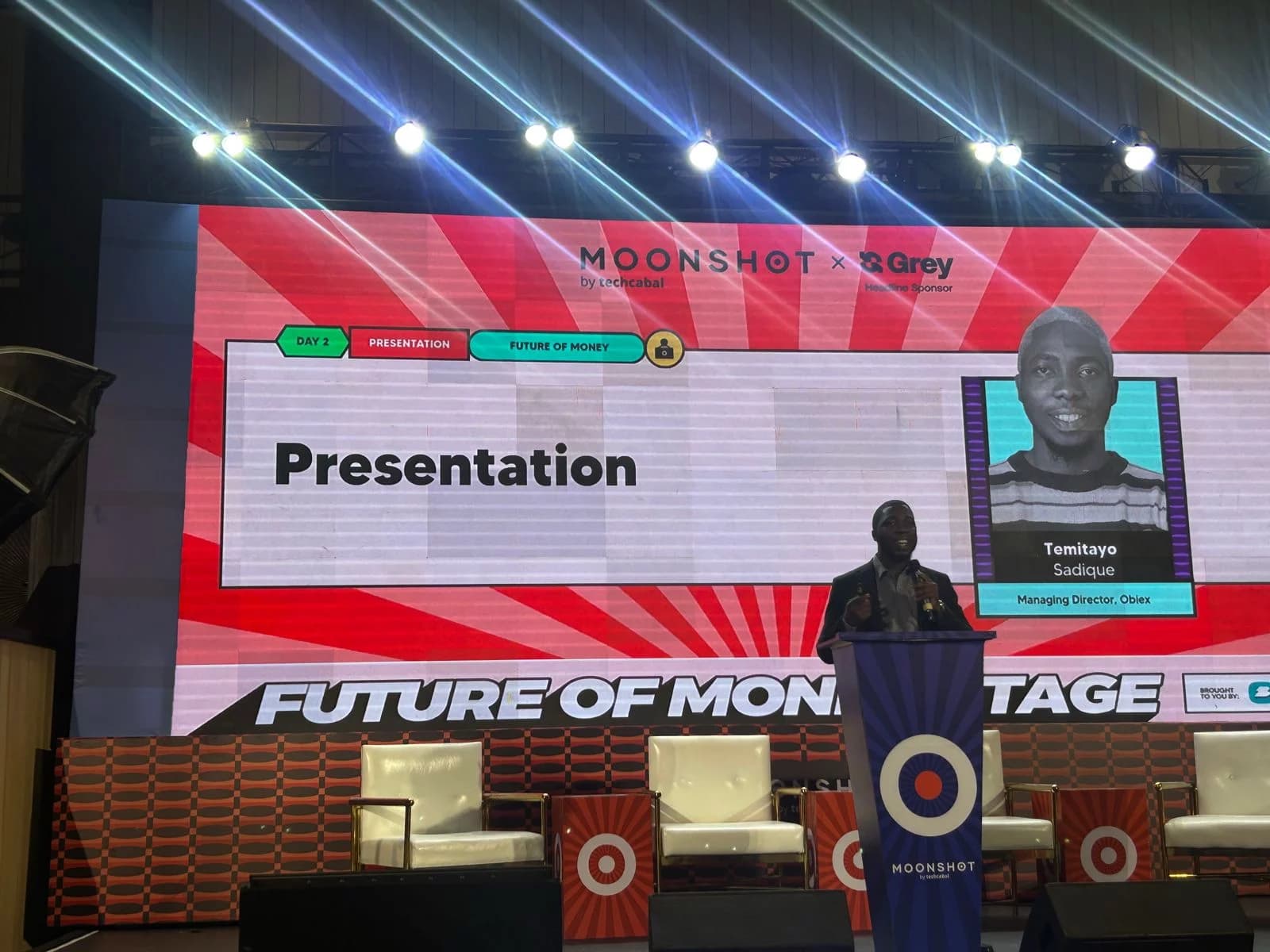
Nigeria’s stablecoin market has grown significantly, with $19 billion in inflows recorded in 2025, according to Temitayo Sadique, Managing Director of Obiex Business. The country now accounts for 60% of sub-Saharan Africa’s stablecoin volume since 2019, reflecting its role as a hub for crypto-driven remittances and cross-border trade. However, Sadique notes that liquidity challenges persist due to scattered supply, where large orders fragment across multiple peer-to-peer traders, leading to price discrepancies and higher costs.
Obiex’s market role and operational model
Obiex, originally launched as Paylot in 2016, has evolved from a crypto payment gateway into a platform specializing in converting crypto to naira. The exchange now serves 105,000 merchants across Nigeria, Ghana, and Cameroon and processes 10% of Nigeria’s stablecoin volume. Unlike many peers, Obiex has never raised venture funding, relying instead on transaction-based revenue and operational efficiencies.
To address liquidity fragmentation, Obiex offers tools like credit facilities for clients to access liquidity upfront, price locks during crypto deposit confirmations, and a quote system for large trades between $1 million and $10 million. These features aim to provide stability and predictability in a market where supply is often dispersed across smaller traders.
Regulatory shifts and their implications
In January 2026, Nigeria’s Securities and Exchange Commission (SEC) increased the minimum capital requirement for crypto exchanges and custodians to ₦2 billion, up from ₦500 million. The rule targets financial stability but also raises the barrier to entry for new players and smaller incumbents. For platforms like Obiex, the requirement may reinforce their competitive position, given their established scale and compliance infrastructure.
What this means
Lazyfounder analysis — our interpretation, not reported fact.
Nigeria’s stablecoin market is a bellwether for crypto adoption in Africa, but its liquidity challenges reveal structural gaps that founders and operators should watch closely. The $19 billion in 2025 inflows and Obiex’s 10% market share signal real demand for dollar-denominated stablecoins, particularly for cross-border trade and remittances. However, the inefficiencies caused by scattered supply—where large orders fragment across multiple counterparties—create friction that limits scalability.
For founders, this underscores the opportunity to build infrastructure that consolidates liquidity, whether through order-book models, credit facilities, or pricing tools like Obiex’s quote system. The SEC’s ₦2 billion capital requirement also raises the barrier to entry, favoring incumbents like Obiex (which has bootstrapped without venture funding) and pushing smaller players toward partnerships or niche strategies. Operators outside Nigeria may find parallels in their own markets, where regulatory shifts and liquidity fragmentation similarly shape competitiveness.
Key takeaways
- Nigeria’s $19 billion stablecoin inflows in 2025 highlight its dominance in sub-Saharan Africa, but scattered liquidity remains a bottleneck for large trades.
- Obiex’s 10% market share and merchant base of 105,000 signal the viability of bootstrapped, high-volume crypto platforms in emerging markets.
- SEC’s ₦2 billion capital requirement for crypto exchanges imposes a higher compliance cost, potentially reshaping the competitive landscape in favor of well-capitalized players.
- Founders in adjacent markets should assess whether liquidity fragmentation is a systemic issue in their regions, as solving it could unlock scale for remittances and cross-border trade.
Related on Lazyfounder
Sources
- TechCabal · 2026-11-02
Nigeria’s stablecoin demand has scaled. Its liquidity hasn’t, says Obiex
This story is an original summary drafted with AI by Lazyfounder from the reporting listed above and checked by automated validation. Facts are attributed to their original publishers; sections marked as analysis are Lazyfounder's. Where a source is in another language, facts were machine-translated and quotations are reported, not reproduced. Read the original coverage via the links, and see our AI policy and corrections policy.

About the author
Editor, Lazyfounder
Tarun Mottlia edits LazyFounders, covering Indian startups, funding rounds, AI and product launches. Every story on the site is AI-assisted and checked against its cited sources before publication.
More stories by Tarun MottliaGet the LazyFounder Brief
Startup, funding and AI news in a five-minute read. Join the early-access list.
