
NiCE Ltd. Bets on AI and Data to Transform Customer Experience Platforms
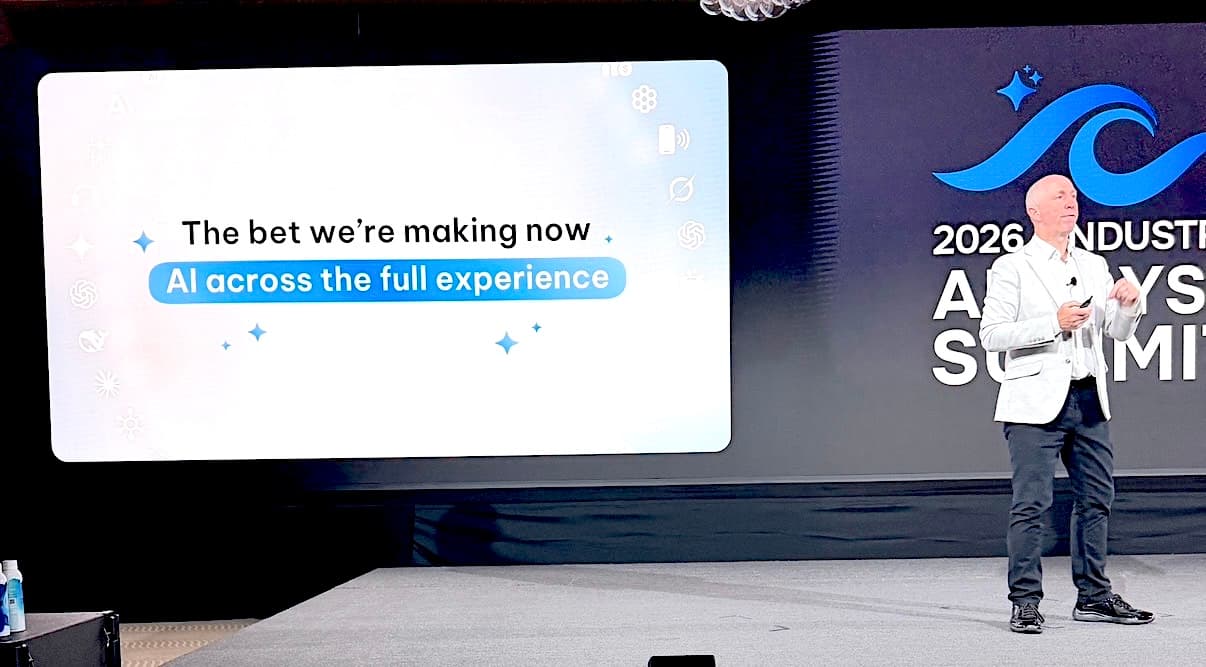
NiCE Ltd. has reinvented itself as an AI-first platform company, using its acquisition of Cognigy to power conversational and agentic AI solutions. The shift is underpinned by decades of customer interaction data, which the company now leverages to compete in the crowded CX technology space. While AI-driven demand surges, NiCE’s legacy contact center business provides a financial cushion as it transitions to an AI-centric model.

Editor, Lazyfounder
30 SEC SUMMARY
- NiCE Ltd. has shifted from a contact center-as-a-service (CCaaS) provider to an AI-driven platform after acquiring Cognigy, which now powers its conversational and agentic AI solutions.
- The company leverages decades of customer interaction data to strengthen its AI offerings, selling Cognigy as a standalone product on rival platforms like Genesys and Amazon Connect.
- NiCE’s AI annual recurring revenue (ARR) grew 52% year-over-year, driven by multiyear commitments from enterprises.
- AI-driven automation is reshaping customer interactions, with examples like Hyatt and Valvoline demonstrating significant efficiency gains.
- NiCE monetizes AI workloads per interaction and plans to expand its data intelligence offerings for sales, marketing, and C-suite applications.
TABLE OF CONTENTS
KEY HIGHLIGHTS
- NiCE Ltd. acquired Cognigy a year ago, transforming it into the foundation for its conversational and agentic AI platforms.
- NiCE sells Cognigy as a standalone product on competitive CCaaS platforms, including Genesys, Five9, and Amazon Connect.
- The company’s AI annual recurring revenue (ARR) grew 52% year-over-year, supported by multiyear enterprise commitments.
- NiCE’s competitive edge stems from its decades of customer interaction data, including analytics and screen recordings for compliance.
- Enterprises like Hyatt and Valvoline report significant efficiency gains, including a 30% staff reduction through attrition in one Valvoline group.
From CCaaS to AI-First Platform
NiCE Ltd. has transitioned from a contact center-as-a-service (CCaaS) provider to an AI platform company, according to SiliconANGLE. The shift follows its acquisition of Cognigy a year ago, which now serves as the foundation for its conversational and agentic AI offerings. The company’s CXone platform, combined with Cognigy’s capabilities, positions it as a provider with what SiliconANGLE describes as the industry’s "deepest CCaaS and workforce engagement stack."
Cognigy is not only integrated into NiCE’s ecosystem but is also sold as a standalone product on rival platforms, including Genesys, Five9, and Amazon Connect. This approach allows NiCE to compete in markets dominated by established players while leveraging its AI-driven solutions.
Data as a Competitive Moat
NiCE’s decades-long history of capturing customer interactions, analytics, and screen recordings—originally for compliance—now serves as a key differentiator. According to SiliconANGLE, the company’s strength lies in its ability to capture not just what happened in customer interactions but how it unfolded. This data is increasingly valuable as enterprises seek to train AI models and automate customer journey management.
The company’s AI annual recurring revenue (ARR) grew 52% year-over-year, driven by multiyear commitments from enterprise customers. Despite this growth, SiliconANGLE reports that NiCE’s AI segment’s full revenue impact is not yet reflected in its overall financials due to varying growth profiles across its business units.
AI-Driven Demand and Enterprise Adoption
AI-driven automation is reshaping customer interactions, with SiliconANGLE reporting a surge in demand as consumer AI agents bypass traditional interactive voice response (IVR) systems. Enterprises like Hyatt and Valvoline are already seeing transformative results. For example, Valvoline more than doubled its containment rate—the percentage of customer issues resolved without human intervention—and reduced staff in one group by about 30% through attrition alone.
Hyatt, however, faces challenges in planning due to the lack of historical baselines for AI-driven interactions. SiliconANGLE notes that the shift to AI requires accountability frameworks that hold both human agents and AI to the same standards, a gap NiCE aims to address with its platform.
Monetization and Future Plans
NiCE monetizes its AI workloads by charging per interaction, a model that aligns with its per-seat or per-minute legacy business. The company’s long-term strategy includes packaging its data intelligence for sales, marketing, and C-suite applications, though these plans are still in development.
SiliconANGLE highlights that AI agents, unlike human agents, cannot work around inaccurate or outdated knowledge articles. This limitation underscores the importance of accurate data and continuous training for AI systems, an area where NiCE’s historical data could provide an advantage.
How NiCE’s AI Learns from Human Agents
NiCE demonstrated a system capable of observing human agents processing refunds and autonomously building an AI agent from those observations. According to SiliconANGLE, the system even inferred a $250 supervisor-approval guardrail without explicit programming. This capability highlights the potential for AI to replicate complex decision-making processes based on human behavior.
Developing: what is not yet confirmed
The following is reported but has not been independently confirmed.
SiliconANGLE reports that application programming interface (API) volume off the NiCE platform has increased 7.5 times in two years. However, this claim remains unverified and should be treated as preliminary.
What this means
Lazyfounder analysis — our interpretation, not reported fact.
NiCE Ltd.’s pivot to AI reflects a broader trend in the CX technology space: enterprises are no longer satisfied with bolted-on AI features. They want platforms that prioritize AI from the ground up, with data as the foundation. NiCE’s acquisition of Cognigy and its decades of interaction data give it a unique advantage, but the transition isn’t without risks. Legacy businesses often struggle to balance innovation with financial stability, and NiCE’s ability to monetize AI workloads will determine whether it can outpace competitors like Genesys and Amazon Connect.
For founders and operators, NiCE’s story is a case study in leveraging existing assets—like historical data—to fuel innovation. It also underscores the importance of designing AI systems that can adapt to real-world customer interactions, not just theoretical use cases. The shift from design-time to runtime accountability is another critical takeaway: as AI agents take on more responsibility, enterprises will demand systems that can be held to the same standards as human workers.
Key takeaways
- AI-first transformation requires more than technology—it demands a shift in business models, from per-seat pricing to workload-based monetization.
- Historical data is a competitive advantage in AI-driven CX, but only if it’s structured, accurate, and actionable.
- Enterprises adopting AI must prepare for operational shifts, including staffing changes and new accountability frameworks.
- Standalone AI products can expand market reach, even when sold on rival platforms.
- AI’s limitations—such as reliance on accurate data—highlight the need for continuous training and quality control.
FAQ
What is NiCE Ltd.’s AI strategy?
NiCE Ltd. has shifted from a contact center-as-a-service (CCaaS) provider to an AI-first platform company. Its strategy centers on leveraging Cognigy, which it acquired a year ago, to power conversational and agentic AI solutions. The company also uses its decades of customer interaction data to strengthen its competitive position.
How does NiCE monetize its AI workloads?
NiCE monetizes AI workloads by charging per interaction, a model that aligns with its legacy per-seat or per-minute pricing structure. This approach allows the company to generate revenue from every customer interaction processed by its AI systems.
What challenges do enterprises face when adopting AI-driven CX solutions?
Enterprises like Hyatt and Valvoline report challenges such as the lack of historical baselines for AI-driven interactions and the need for accurate, up-to-date knowledge articles. AI agents also require accountability frameworks similar to those for human agents, which many organizations are still developing.
Related on Lazyfounder
Sources
- SiliconANGLE · 2026-10-19
NiCE bets the company on AI, data and accountability, and the legacy business buys it time
This story is an original summary drafted with AI by Lazyfounder from the reporting listed above and checked by automated validation. Facts are attributed to their original publishers; sections marked as analysis are Lazyfounder's. Where a source is in another language, facts were machine-translated and quotations are reported, not reproduced. Read the original coverage via the links, and see our AI policy and corrections policy.

About the author
Editor, Lazyfounder
Tarun Mottlia edits LazyFounders, covering Indian startups, funding rounds, AI and product launches. Every story on the site is AI-assisted and checked against its cited sources before publication.
More stories by Tarun MottliaGet the LazyFounder Brief
Startup, funding and AI news in a five-minute read. Join the early-access list.
