
Microsoft restores Microsoft 365 after three-day global outage
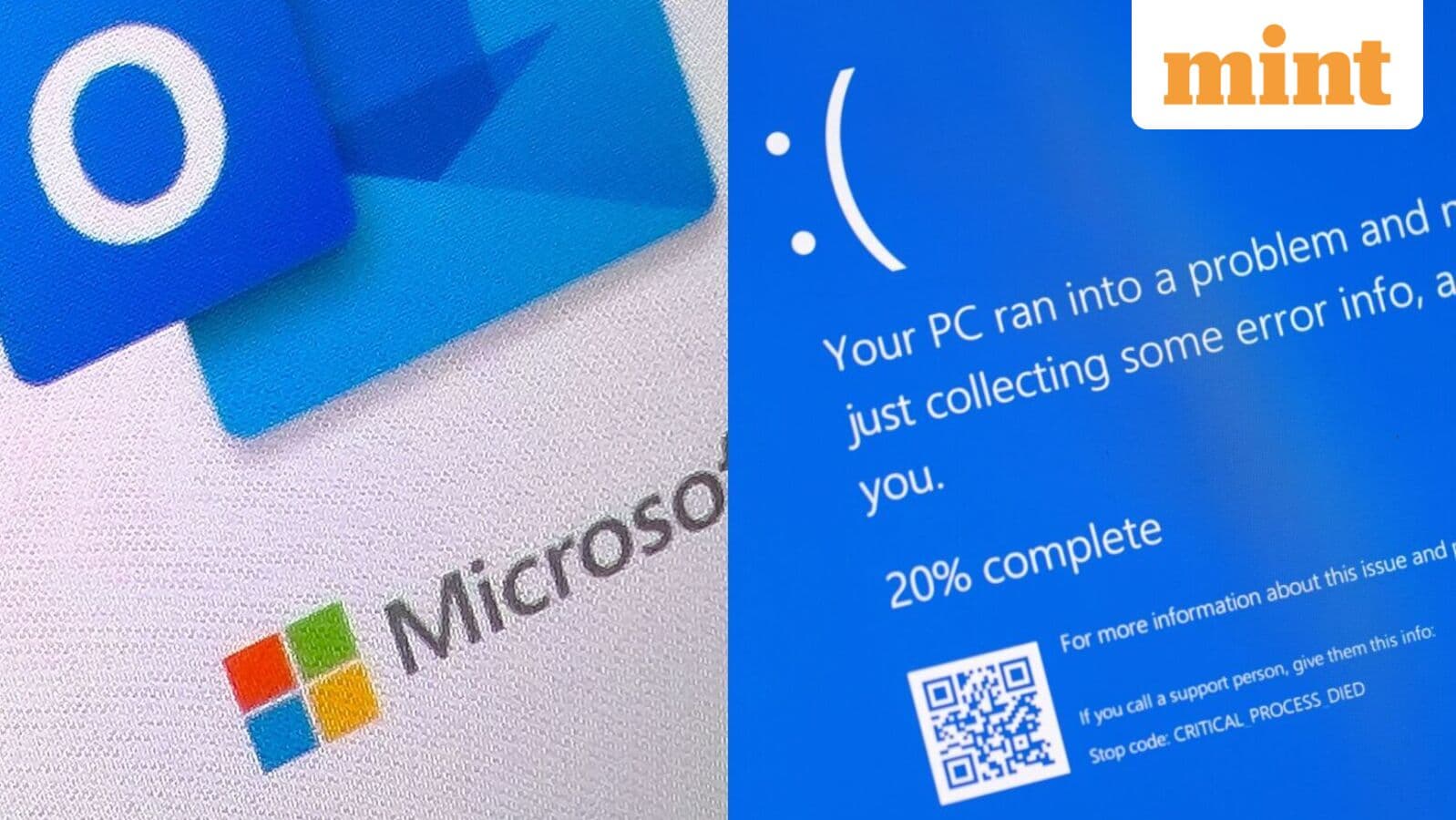
Microsoft restored Outlook, Teams and Copilot on November 15 after a three-day outage stranded users in over 70 countries. Courts halted trials, hospitals delayed procedures, and airlines canceled flights until engineers fixed the overload that had crippled Microsoft’s systems. The incident is part of a troubling pattern—CrowdStrike in 2024, AWS in 2025, Google in 2025—each failure exposing how quickly even the largest providers can stumble.

Editor, Lazyfounder
30 SEC SUMMARY
- Microsoft’s November outage knocked Outlook, Teams and Copilot offline for three days, stranding courts, hospitals and airlines in more than 70 countries.
- A single corrupt CrowdStrike update in 2024 crashed 8.5 million Windows machines, paralyzing airlines, banks and emergency rooms worldwide.
- Meta’s 2021 router misconfiguration took Facebook, Instagram and WhatsApp dark for nearly six hours, cutting off billions of users.
- AWS’s 15-hour meltdown in 2025 began when two internal systems clashed, knocking thousands of sites offline.
- Google’s June 2025 infrastructure collapse disabled Gmail, Drive and Meet in its largest global outage ever.
TABLE OF CONTENTS
- Microsoft 365 outage locks 70+ countries out for three days
- CrowdStrike update crashes 8.5 million Windows devices in 2024
- Meta router error silences billions for six hours in 2021
- AWS race condition blacks out US-East-1 for 15 hours in 2025
- Google’s 2025 infrastructure collapse disables Gmail and Meet
- Why startups must build for failure, not just scale
- What this means
- Key takeaways
- Sources
Microsoft 365 outage locks 70+ countries out for three days
Microsoft restored all Microsoft 365 services on November 15, ending a three-day outage that locked users in over 70 countries out of Outlook, Teams and Copilot. The company blamed the disruption on an “elevated load” that swamped its infrastructure. Courts postponed hearings, hospitals rescheduled non-emergency procedures, and airlines canceled flights until systems came back online, according to Mint.
The outage revealed how deeply entire sectors now depend on a single provider. When Microsoft’s servers stumbled, governments, hospitals and airlines froze.
CrowdStrike update crashes 8.5 million Windows devices in 2024
On July 19, 2024, a corrupted CrowdStrike update triggered the infamous “blue screen of death” on 8.5 million Windows devices worldwide. Airlines immediately grounded flights, hospitals diverted ambulances, and banks locked customers out of their accounts. Within hours, a single cybersecurity misstep became one of history’s largest IT meltdowns, Mint reports.
Because CrowdStrike’s Falcon sensor was installed on so many machines, its failure acted like a software stroke—knocking out critical systems across airlines, emergency rooms, and retail chains in minutes.
Meta router error silences billions for six hours in 2021
A misconfigured router command at Meta on October 4, 2021, wiped out the company’s DNS routes. Facebook, Instagram and WhatsApp vanished from the internet for nearly six hours. The blackout left billions of users unable to send messages, post updates or complete transactions, Mint notes.
Beyond social media, the outage crippled businesses that relied on WhatsApp for orders, emergency alerts and customer support.
AWS race condition blacks out US-East-1 for 15 hours in 2025
At 3:14 a.m. ET on October 20, 2025, AWS’s US-East-1 region began failing. Two automated systems—the DNS Planner and DNS Enactor—clashed in an unexpected race condition, pulling thousands of sites offline. Engineers spent nearly 15 hours restoring service. Mint’s report shows that even cloud giants remain vulnerable to latent software bugs.
Customers who assumed multi-region deployments would protect them discovered too late that their failover paths often shared the same underlying code.
Google’s 2025 infrastructure collapse disables Gmail and Meet
On June 12, 2025, an internal infrastructure collapse at Google took down Gmail, Google Calendar, Drive, Meet and the entire Google Cloud Platform. Businesses worldwide lost access to email and files; airlines briefly halted check-ins. Service was restored later the same day, but the incident marked Google’s most widespread outage to date, according to Mint.
The meltdown proved how a single point of failure in hyperscale architecture can trigger cascading failures across services that appear unrelated.
Why startups must build for failure, not just scale
Recent outages follow patterns seen across the tech industry. Lazyfounder’s earlier coverage showed how even well-funded ventures like Character.ai and Ollie can disappear overnight when infrastructure fails or funding dries up. A 2025 report on the AI power crisis also revealed how data centers’ reliance on fragile energy grids creates new single points of failure for cloud providers.
Contact-center AI provider NiCE Cognigy has since shifted its focus. Instead of chasing endless scale, it now designs tools that fail gracefully when systems crash. For founders, the message is clear: resilience is no longer optional—it’s the cost of staying in business.
What this means
Lazyfounder analysis — our interpretation, not reported fact.
When Microsoft, AWS or Google stumble, the real weak link isn’t their code—it’s the untested assumption that the cloud will always be there. Startups that build failover plans only after the first outage are already too late.
Key takeaways
- Governments and hospitals now treat Microsoft 365 like water or electricity; any startup serving regulated sectors must do the same.
- A single misconfigured file or unseen race condition can freeze millions of devices in minutes—map every hidden dependency in your stack before the next CrowdStrike or AWS event.
- Multi-region setups are useless if they all rely on the same underlying code; true resilience demands diverse, not duplicated, infrastructure.
Related on Lazyfounder
Sources
- Mint (Technology) · 2026-11-15
From Microsoft 365 to CrowdStrike - Biggest tech outages that almost brought the world to a standstill
This story is an original summary drafted with AI by Lazyfounder from the reporting listed above and checked by automated validation. Facts are attributed to their original publishers; sections marked as analysis are Lazyfounder's. Where a source is in another language, facts were machine-translated and quotations are reported, not reproduced. Read the original coverage via the links, and see our AI policy and corrections policy.

About the author
Editor, Lazyfounder
Tarun Mottlia edits LazyFounders, covering Indian startups, funding rounds, AI and product launches. Every story on the site is AI-assisted and checked against its cited sources before publication.
More stories by Tarun MottliaGet the LazyFounder Brief
Startup, funding and AI news in a five-minute read. Join the early-access list.