

Meta launches Muse Code, a terminal-based AI coding assistant
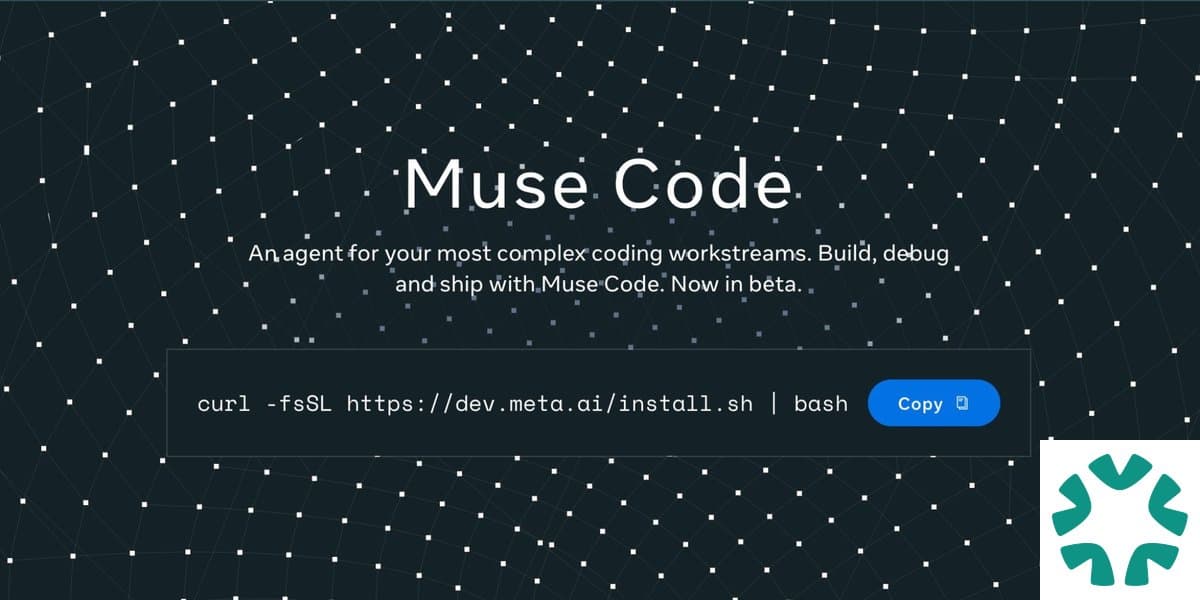
Meta has unveiled Muse Code, a beta AI-powered coding assistant designed to automate software engineering tasks directly from the terminal. The tool, powered by Meta’s Muse Spark 1.2 model, aims to handle entire workflows—from planning code changes to running tests—rather than just generating snippets. This launch positions Meta as a competitor to OpenAI and Anthropic in the growing market for AI-driven development tools.

Editor, Lazyfounder
30 SEC SUMMARY
- Meta has launched Muse Code, a terminal-based AI coding assistant powered by its Muse Spark 1.2 model.
- Muse Code aims to handle complete software engineering tasks, from planning code changes to running tests, unlike chatbot-style tools.
- The tool is designed for large software projects and supports persistent AI agents that remain active during coding sessions.
- Meta is entering a market dominated by OpenAI and Anthropic, with a focus on workflow integration and automation.
TABLE OF CONTENTS
KEY HIGHLIGHTS
- Muse Code is a beta AI coding agent that operates within the terminal and is powered by Meta’s Muse Spark 1.2 model.
- It automates multi-step software engineering tasks, including planning changes, editing files, running tests, and validating results.
- The tool supports persistent AI agents and isolated worktrees to manage parallel tasks without interfering with the main codebase.
- Meta’s approach differs from OpenAI and Anthropic by focusing on terminal-based workflows and broader task automation.
What Muse Code does
Muse Code is an AI-powered coding agent that operates within the terminal, a command-line environment used by many developers. According to YourStory, it is designed to handle complete software engineering tasks, such as planning code changes, editing files, running tests, and validating results across large code repositories. Unlike chatbot-style tools that generate snippets or answer prompts, Muse Code aims to automate broader workflows, reducing the need for manual intervention.
How it works
The tool is powered by Meta’s Muse Spark 1.2 model, which is optimized for "agentic" workflows. YourStory explains that this model can plan tasks, use development tools, monitor progress, and adjust its approach as work continues. This allows Muse Code to manage complex, multi-step processes rather than just responding to individual prompts.
Muse Code also supports persistent AI agents, which remain active during a coding session. These agents gather context, work on tasks in parallel, and provide updates as they progress. Meta uses isolated worktrees to allow multiple agents to work on different parts of a project without interfering with the main codebase, reducing the risk of conflicts.
Meta’s market challenge
Meta’s entry into the AI coding assistant market directly competes with tools from OpenAI and Anthropic, both of which have invested heavily in this space. YourStory notes that Anthropic’s Claude models and OpenAI’s ChatGPT and API offerings have gained traction among developers for coding, reviewing, and debugging tasks.
What sets Muse Code apart, according to YourStory, is its focus on terminal-based workflows and automation of larger development processes. While OpenAI and Anthropic emphasize chatbot-style interactions, Meta’s approach targets developers who prefer command-line efficiency and deeper integration with their existing tools.
What developers need to consider
Muse Code is currently in beta, so its performance in real-world projects will determine its long-term success. YourStory highlights that developers will likely evaluate factors such as coding accuracy, safety features, data handling policies, and integration with their existing workflows.
The tool’s ability to handle large, complex codebases without disrupting development processes will also be a key consideration for teams deciding whether to adopt it.
What this means
Lazyfounder analysis — our interpretation, not reported fact.
Meta’s launch of Muse Code reflects a shift in how AI coding assistants are evolving—from simple code generation to automating entire workflows. For founders and operators, this move underscores the importance of tools that not only suggest code but also manage multi-step tasks, potentially reducing manual oversight in software development. While OpenAI and Anthropic have focused on chatbot-style interactions, Meta’s terminal-based approach could appeal to teams that prioritize command-line efficiency and deeper integration with their existing processes. However, the real test will be how well Muse Code performs in real-world scenarios, particularly in terms of reliability and scalability for large projects.
Key takeaways
- Founders and operators in software development can evaluate Muse Code as a potential tool to reduce repetitive work and accelerate project timelines.
- The tool’s integration with terminal workflows may appeal to teams working on large, complex codebases.
- Meta’s entry into this space signals growing competition in AI-driven coding assistants, which could lead to more advanced and specialized tools.
- Developers should assess Muse Code’s accuracy, safety, and compatibility with their existing workflows before adoption.
Sources
This story is an original summary drafted with AI by Lazyfounder from the reporting listed above and checked by automated validation. Facts are attributed to their original publishers; sections marked as analysis are Lazyfounder's. Where a source is in another language, facts were machine-translated and quotations are reported, not reproduced. Read the original coverage via the links, and see our AI policy and corrections policy.

About the author
Editor, Lazyfounder
Tarun Mottlia edits LazyFounders, covering Indian startups, funding rounds, AI and product launches. Every story on the site is AI-assisted and checked against its cited sources before publication.
More stories by Tarun MottliaGet the LazyFounder Brief
Startup, funding and AI news in a five-minute read. Join the early-access list.
